If you have watched a Korean drama or walked through a Korean market, chances are you have seen tteokbokki (떡볶이): chewy rice cakes coated in a glossy red sauce, often bubbling beside fish cakes and vegetables.
It is bold, comforting, inexpensive, and unmistakably Korean. VisitKorea describes tteokbokki as a representative spicy Korean food and one of Korea’s most popular street foods. VISITKOREA – Imagine Your Korea
What Is Tteokbokki?
Modern street-style tteokbokki is usually made with cylinder-shaped rice cakes, gochujang, vegetables, and often eomuk (Korean fish cake). Its familiar flavor is sweet, savory, and spicy rather than simply hot.
The dish has a longer history than its bright red sauce suggests. According to the Korean Food Promotion Institute, earlier Joseon-era versions were soy sauce-based and could include beef. The gochujang-centered version became widely popular as an affordable street food after the Korean War. Today, cheese, ramyeon, cream, curry, and other variations coexist with the classic version. 한식진흥원
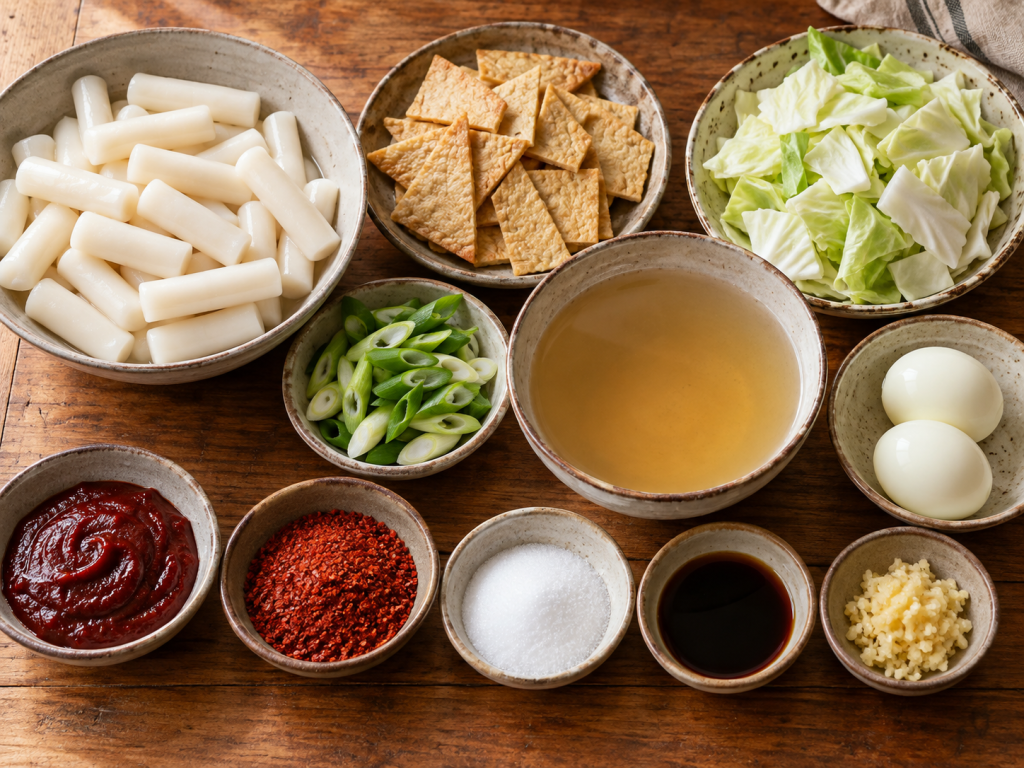
Ingredients — Serves 4
For the tteokbokki
- 1 lb (450 g) Korean cylinder-shaped rice cakes
- 5 oz (140 g) Korean fish cake sheets, cut into pieces
- 2 cups (about 140 g) chopped green cabbage
- 2 green onions, sliced
- 3 cups (710 ml) water or unsalted anchovy-kelp broth
- 2 hard-boiled eggs, optional
For the sauce
- 3 tbsp gochujang
- 1 tbsp gochugaru, optional
- 2 tbsp sugar
- 1 tbsp soy sauce
- 1 tsp minced garlic
How to Make Tteokbokki
1. Prepare the Rice Cakes
If refrigerated or frozen rice cakes feel firm, soak them in cool or lukewarm water for 10–20 minutes and drain. Fresh, soft rice cakes can usually go directly into the pan.
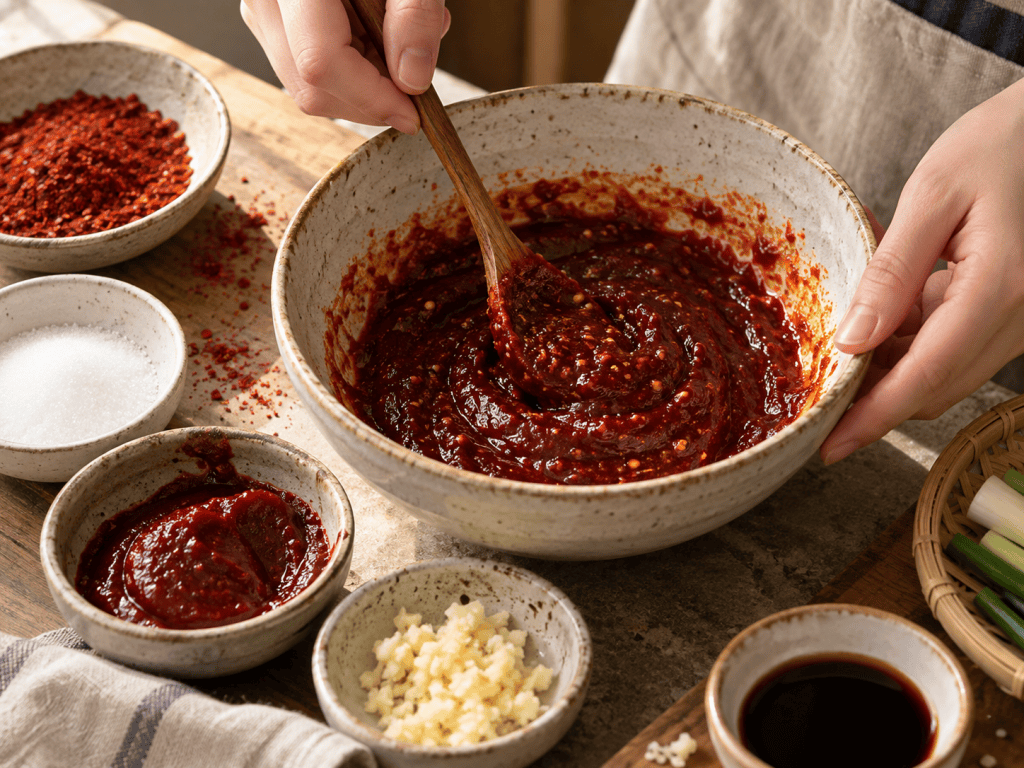
2. Make the Sauce
Combine the water or broth, gochujang, gochugaru, sugar, soy sauce, and garlic in a wide pan.
Whisk until the gochujang is mostly dissolved, then bring the mixture to a gentle boil.
3. Cook the Rice Cakes
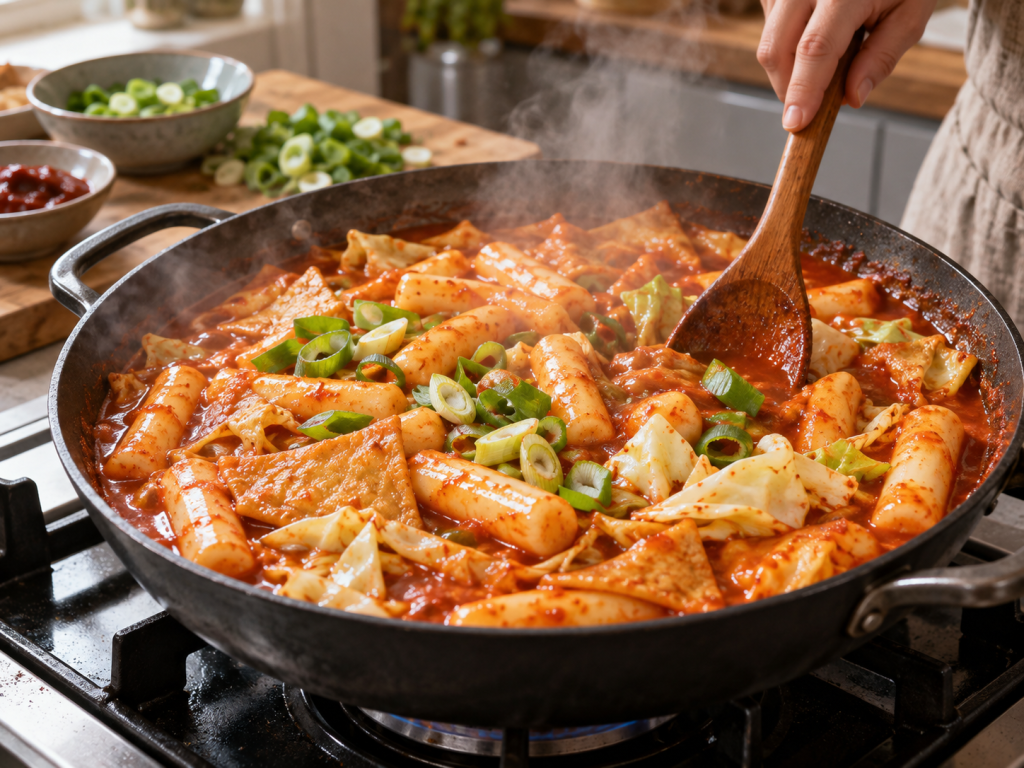
Add the rice cakes and simmer over medium heat, stirring frequently so they don’t stick.
As they cook, released starch helps transform the liquid into the thick, glossy sauce associated with tteokbokki.
4. Add the Vegetables and Fish Cake
Once the rice cakes begin to soften, add the cabbage, fish cake, and most of the green onions.
Continue simmering for roughly 5–8 minutes, depending on your rice cakes, until they are pleasantly chewy and well coated.
If the sauce becomes too thick before the rice cakes soften, add a splash of water. If it remains too thin, simmer uncovered a little longer.
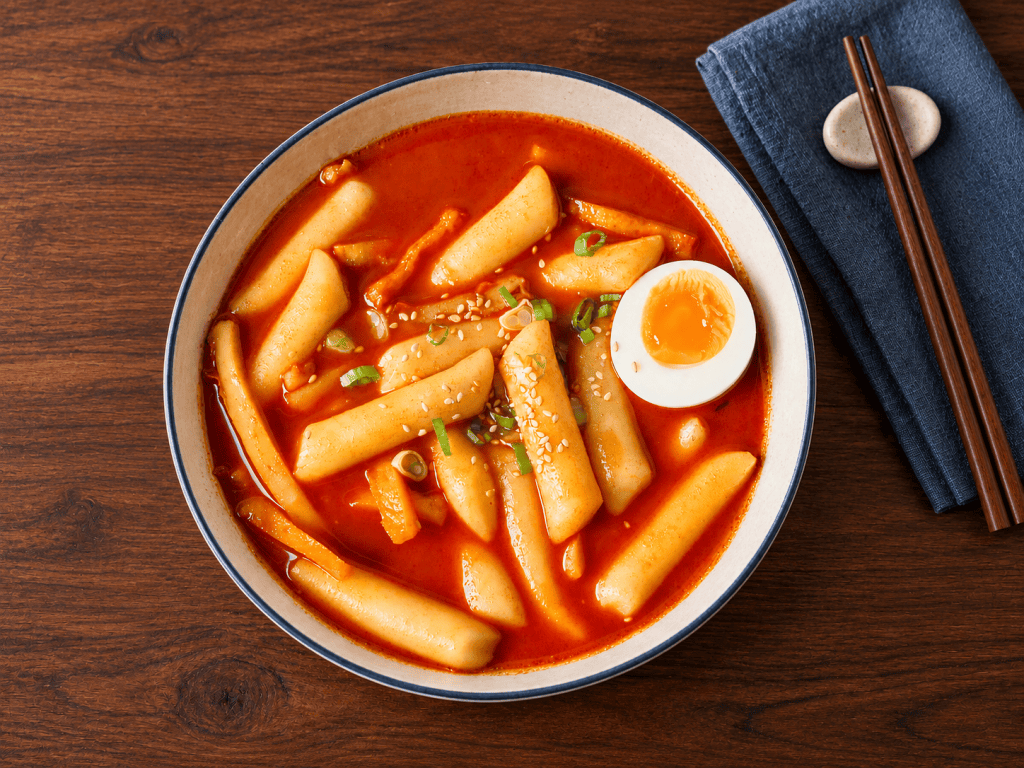
5. Serve Immediately
Add the optional hard-boiled eggs and remaining green onion.
Tteokbokki is best eaten hot, while the rice cakes are soft and chewy.
Easy Substitutions Outside Korea
Look for packages labeled “tteokbokki rice cakes,” “Korean rice cakes,” or “cylinder rice cakes” at Korean or Asian supermarkets.
Fish cake adds savory flavor but isn’t essential. For a vegetarian version, leave it out and use vegetable or kelp broth.
Can’t handle much heat? Reduce or omit the gochugaru first rather than removing all the gochujang, since gochujang provides important fermented flavor as well as heat. VisitKorea also documents rosé tteokbokki, where cream, milk, or cheese creates a milder sauce. VISITKOREA – Imagine Your Korea
Common Tteokbokki Mistakes
The biggest mistake is overcooking the rice cakes. They should be tender and chewy, not mushy.
Also, don’t walk away from the pan. Rice cakes and thickening sauce can stick quickly, so stir regularly.
Finally, wait before adding extra seasoning. As the sauce reduces, both saltiness and sweetness become stronger.
Calories & Nutrition per Serving
Estimated for 1 of 4 servings, including fish cake but excluding the optional egg:
| Nutrition | Estimated Amount |
|---|---|
| Calories | ~390 kcal |
| Carbohydrates | ~73 g |
| Protein | ~9 g |
| Fat | ~6 g |
| Fiber | ~3 g |
| Sodium | ~1,050 mg |
These are estimated values, not laboratory-tested nutrition facts. The calculation uses the exact recipe quantities above, representative packaged nutrition values for Korean rice cakes, gochujang, and fish cake, together with generic ingredient profiles consistent with USDA FoodData Central. FoodData Central includes calories, fat, sodium, carbohydrates, fiber, protein, and other nutrient data. 식품 데이터 센트럴
Actual nutrition can vary considerably by brand, especially because gochujang, soy sauce, and fish cake can differ substantially in sodium. Rice-cake formulation, portion size, substitutions, and the amount of sauce eaten will also affect the result.
FAQ
Is tteokbokki very spicy?
It can be, but homemade tteokbokki is easy to adjust. Reduce or omit gochugaru first for a milder version.
Can I make it without fish cake?
Yes. Add extra cabbage or mushrooms and use vegetable or kelp broth.
Are tteokbokki rice cakes gluten-free?
Not necessarily. Some rice cakes contain wheat, and gochujang, soy sauce, and fish cake may also contain wheat. Check individual labels if gluten is a concern.
Why do leftover rice cakes become hard?
Tteok naturally firms as it cools. Reheat leftovers gently with a splash of water, although freshly cooked tteokbokki has the best texture.


Leave a comment