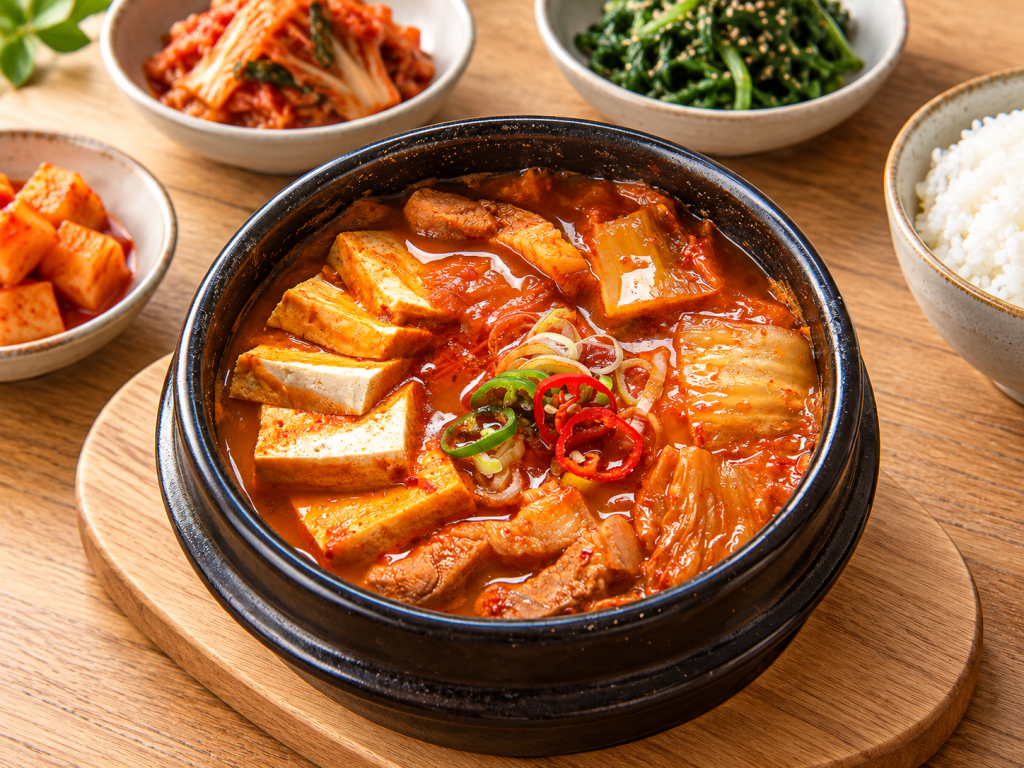
Kimchi jjigae (김치찌개) is one of the most familiar everyday stews in Korean home cooking. It is hot, savory, tangy, and deeply satisfying, especially when made with well-fermented kimchi. Unlike dishes that depend on a long list of specialty ingredients, kimchi jjigae turns a Korean refrigerator staple into a complete meal with just a few additions.
The Korean Food Promotion Institute discusses jjigae as part of Korea’s distinctive soup-and-stew culture, while VISITKOREA includes kimchi jjigae among Korean home-cooking dishes taught to international visitors. 한식진흥원 Served with steamed rice and usually shared at the table, it is an excellent recipe for anyone who wants to explore everyday Korean food beyond barbecue and street food.
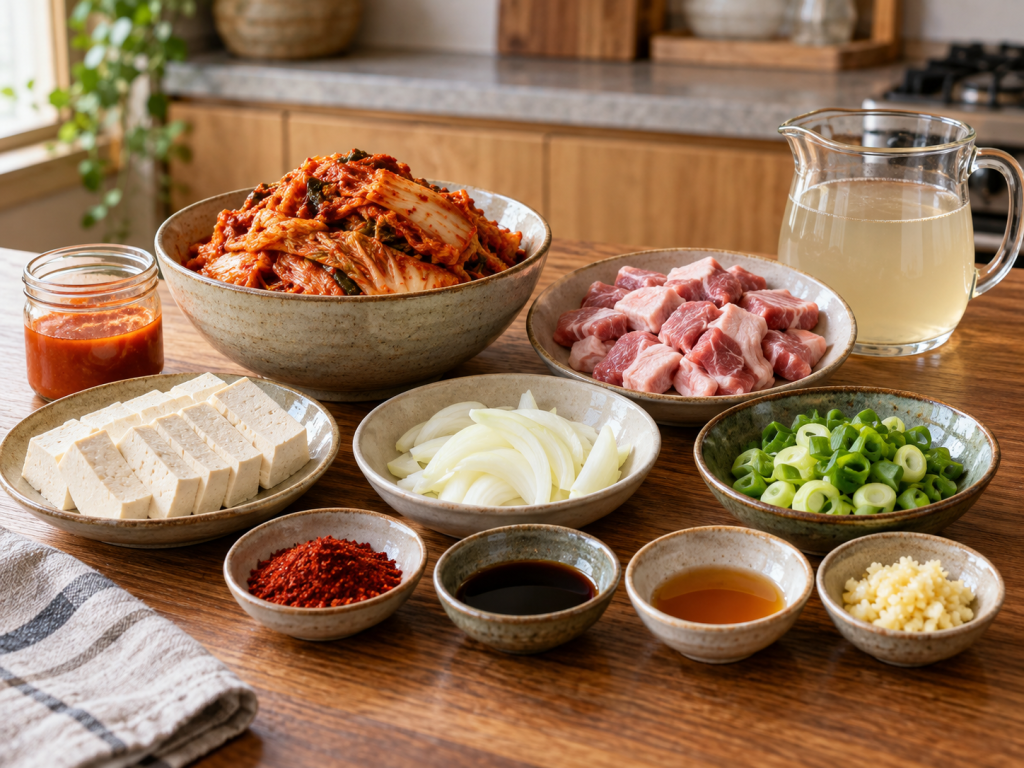
Ingredients — Serves 4
- 10.5 oz (300 g) well-fermented napa cabbage kimchi, chopped
- 7 oz (200 g) pork shoulder or pork belly, bite-size pieces
- 10.5 oz (300 g) firm tofu, sliced
- 1/2 medium onion (about 100 g), sliced
- 2 green onions, sliced
- 2 cups (475 ml) water or unsalted anchovy-kelp broth
- 1 tbsp gochugaru (Korean red pepper flakes)
- 1 tbsp soy sauce
- 1 tsp sesame oil
- 1 tsp minced garlic
- 2–3 tbsp kimchi brine, if available
How to Make Kimchi Jjigae
1. Start with Well-Fermented Kimchi
Older, sour kimchi is ideal because fermentation gives the stew much of its characteristic depth. Fresh kimchi can be used, but the finished broth will usually taste lighter and less tangy.
Cut the kimchi into manageable pieces and save a few tablespoons of brine from the container.
2. Cook the Pork and Kimchi
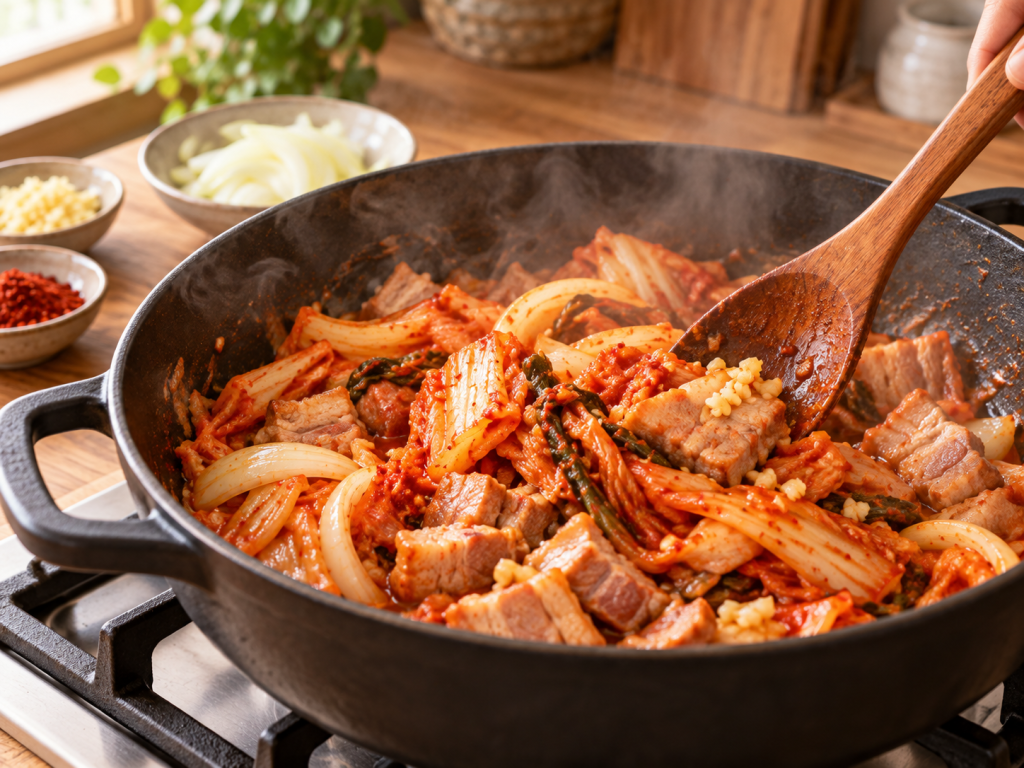
Heat a medium pot over medium heat. Add the sesame oil and pork and cook for several minutes until the outside of the meat is no longer pink.
Add the kimchi, onion, and garlic. Stir and cook for another 3–4 minutes. Briefly cooking the kimchi before adding liquid helps build a richer base.
3. Add the Broth and Seasoning
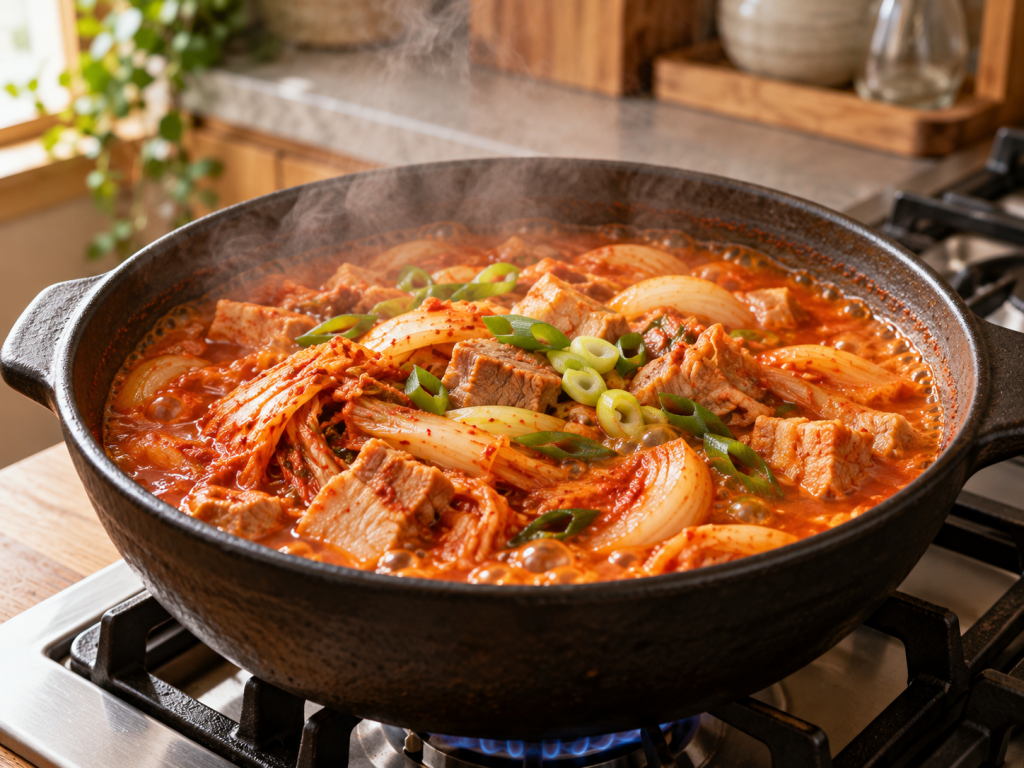
Pour in the water or unsalted anchovy-kelp broth. Add gochugaru, soy sauce, and kimchi brine.
Bring everything to a boil, reduce the heat, and simmer gently for about 15–20 minutes. The kimchi should soften while the broth becomes richer.
4. Add the Tofu
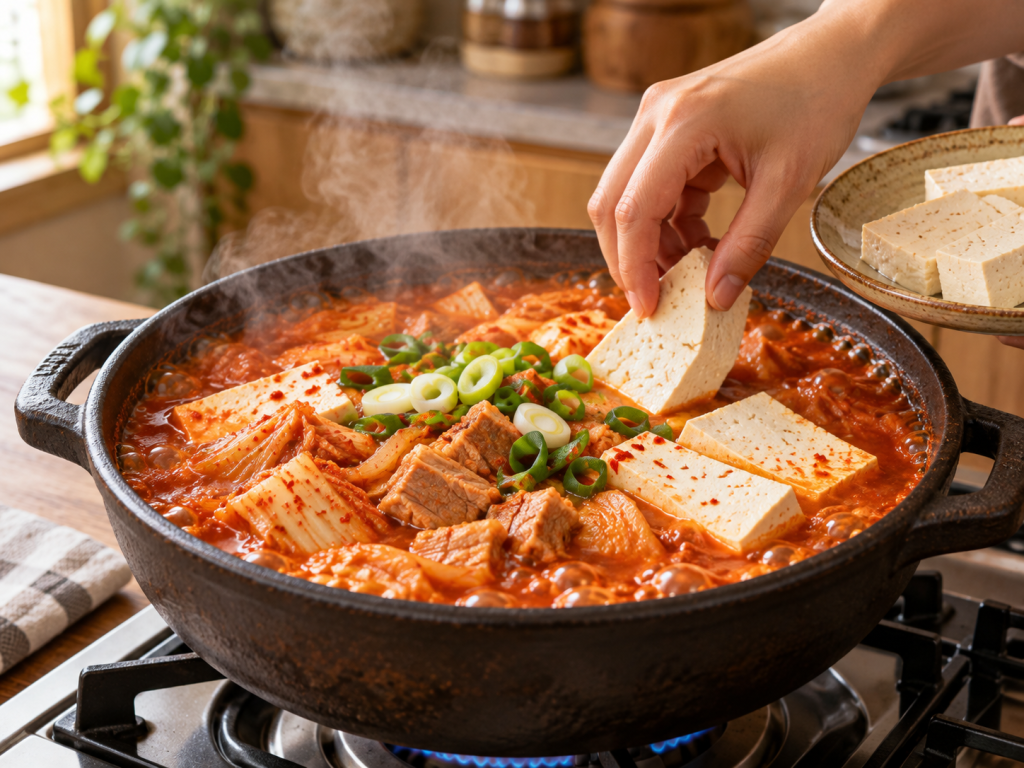
Arrange the tofu slices over the stew and simmer for another 5 minutes. Avoid aggressive stirring after adding tofu so the pieces remain intact.
Finish with sliced green onion. Taste before adding any additional salt or soy sauce, then serve bubbling hot with steamed rice.
Easy Substitutions Outside Korea
Pork shoulder provides a good balance of flavor and fat, while pork belly creates a richer stew. For a lighter variation, use lean pork or canned tuna.
If you cannot make anchovy-kelp broth, plain water works surprisingly well because fermented kimchi already contributes significant flavor. For a vegetarian version, omit the pork, use kelp or mushroom broth, and make sure the kimchi itself does not contain fish sauce or salted seafood.
Gochugaru is preferable to generic chili powder because its flavor and heat profile are different. If you plan to cook Korean food regularly, it is one specialty ingredient worth keeping in your pantry.
Common Kimchi Jjigae Mistakes
The most common problem is using kimchi that is too fresh. Very young kimchi lacks the acidity that gives the stew its familiar balance.
Another mistake is seasoning too early. Kimchi, kimchi brine, and soy sauce can all contribute considerable sodium, while simmering concentrates the broth. Taste near the end before adding more seasoning.
Finally, don’t rush the simmer. Kimchi jjigae develops a more cohesive flavor when the pork, kimchi, and broth have time to cook together.
Calories & Nutrition per Serving
Estimated for 1 of 4 servings, excluding rice:
| Nutrition | Estimated Amount |
|---|---|
| Calories | ~310 kcal |
| Carbohydrates | ~12 g |
| Protein | ~22 g |
| Fat | ~20 g |
| Fiber | ~3 g |
| Sodium | ~1,000 mg |
These values are estimates based on the quantities above, generic ingredient nutrient profiles consistent with USDA FoodData Central, and typical packaged values for kimchi and tofu. FoodData Central provides composition data covering calories, fat, sodium, carbohydrates, fiber, protein, and other nutrients. 식품 데이터 센트럴
Actual values can vary substantially depending on the kimchi and tofu brands, soy sauce, pork cut, substitutions, serving size, and how much broth is consumed. Rice is not included.
FAQ
Is kimchi jjigae very spicy?
It is usually moderately spicy, but heat varies with the kimchi and gochugaru. Reduce the gochugaru for a milder stew.
What is the best kimchi for kimchi jjigae?
Well-fermented, noticeably sour napa cabbage kimchi is generally the most flavorful choice.
Can I make kimchi jjigae without pork?
Yes. Tuna is a popular alternative, while tofu and mushrooms work well for a meat-free version.
Can I reheat kimchi jjigae?
Yes. Refrigerate leftovers promptly and reheat until steaming hot.


Leave a comment