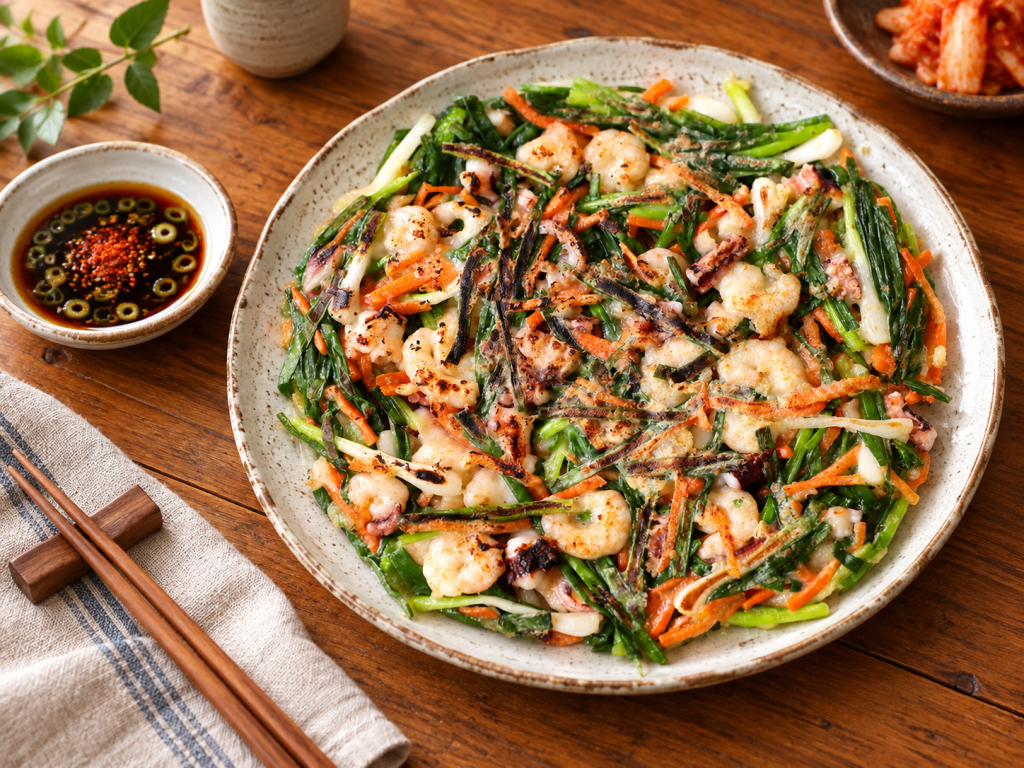
Pajeon (파전) is a savory Korean pancake packed with green onions and fried until its edges turn crisp and golden. A hot slice dipped in tangy soy sauce makes an excellent appetizer, light lunch, or shareable snack.
In Korea, pajeon has a special association with rainy days. The Korea Tourism Organization describes the dish as scallions mixed with wheat-flour batter and shallow-fried, traditionally enjoyed with rice wine.
What Makes Pajeon Different?
Unlike sweet American breakfast pancakes, pajeon is savory and relies on vegetables for flavor. Some versions add shrimp, squid, or clams and are called haemul pajeon (해물파전).
This everyday version keeps scallions front and center. A little cornstarch and very cold water help the batter fry up crisp rather than becoming thick and bready.
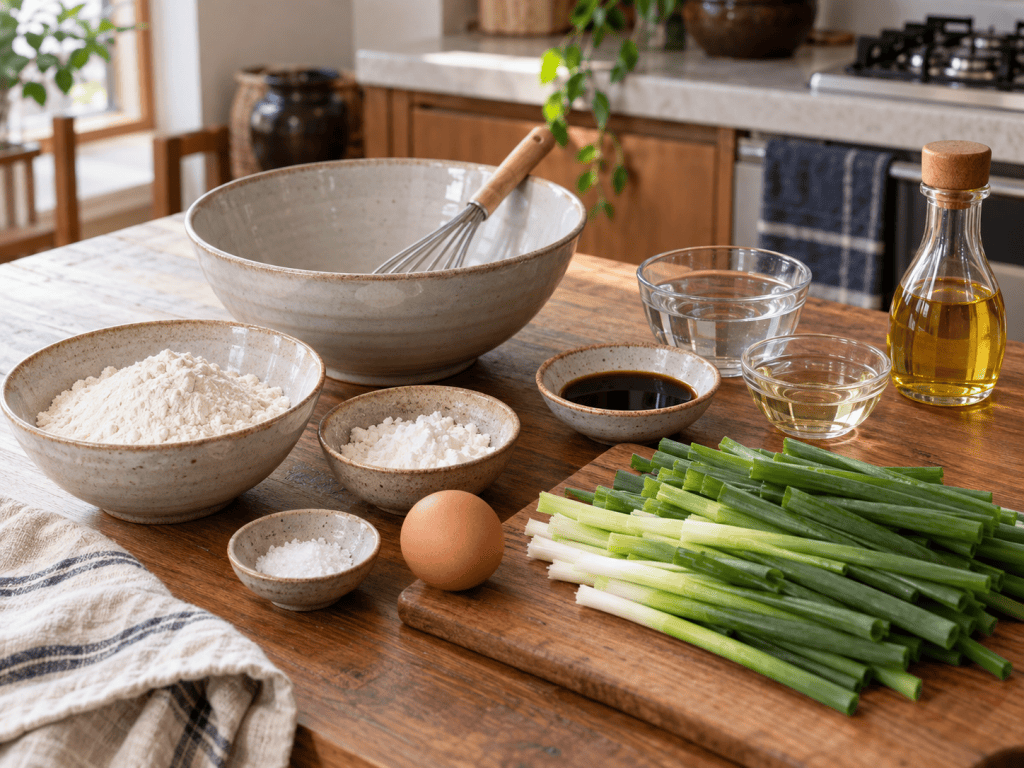
Ingredients — 4 Servings (2 Medium Pancakes)
For the Pancakes
- 1 cup (120 g) all-purpose flour
- 1/4 cup (30 g) cornstarch
- 1 large egg (about 50 g without shell)
- 1 cup (240 ml) ice-cold water
- 7 oz (200 g) scallions, trimmed and cut into 5-inch (12-cm) lengths
- 1/4 tsp (1.5 g) fine salt
- 2 tbsp (27 g) neutral soybean or vegetable oil, divided
For the Dipping Sauce
- 1 tbsp (15 g) regular soy sauce
- 1 tbsp (15 g) plain white vinegar
- 1 tbsp (15 ml) water
How to Make Pajeon
Step 1. Prepare the Scallions
Wash the scallions thoroughly, especially near the roots, and dry them well.
Cut thick white sections lengthwise so they cook at roughly the same rate as the green tops. Divide the scallions into two equal piles for two pancakes.
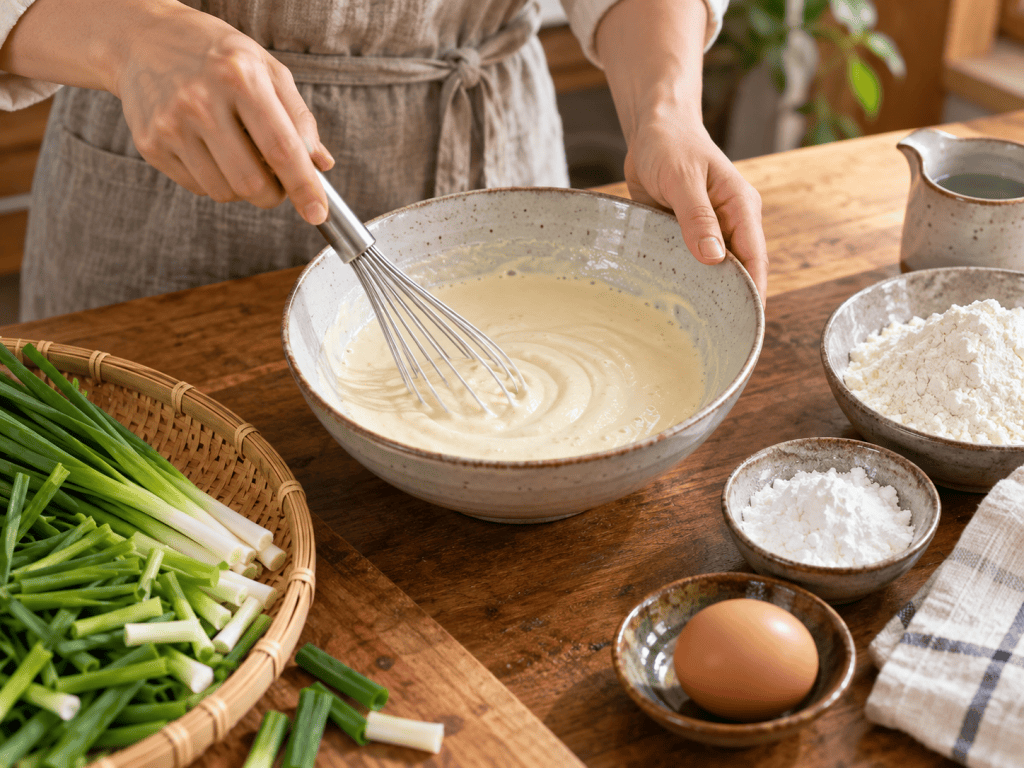
Step 2. Mix the Batter
Whisk the flour, cornstarch, egg, cold water, and salt until just combined.
A few small lumps are fine. The batter should pour easily, similar to a thin pancake batter. Avoid overmixing, which can make the finished pancake chewy rather than crisp.
Step 3. Heat the Pan
Place a 10-inch (25-cm) nonstick skillet over medium-high heat.
Add half of the measured oil and swirl it around the pan. Arrange one pile of scallions in a mostly parallel layer, then pour half of the batter evenly over them, allowing some of the batter to run between the stalks.
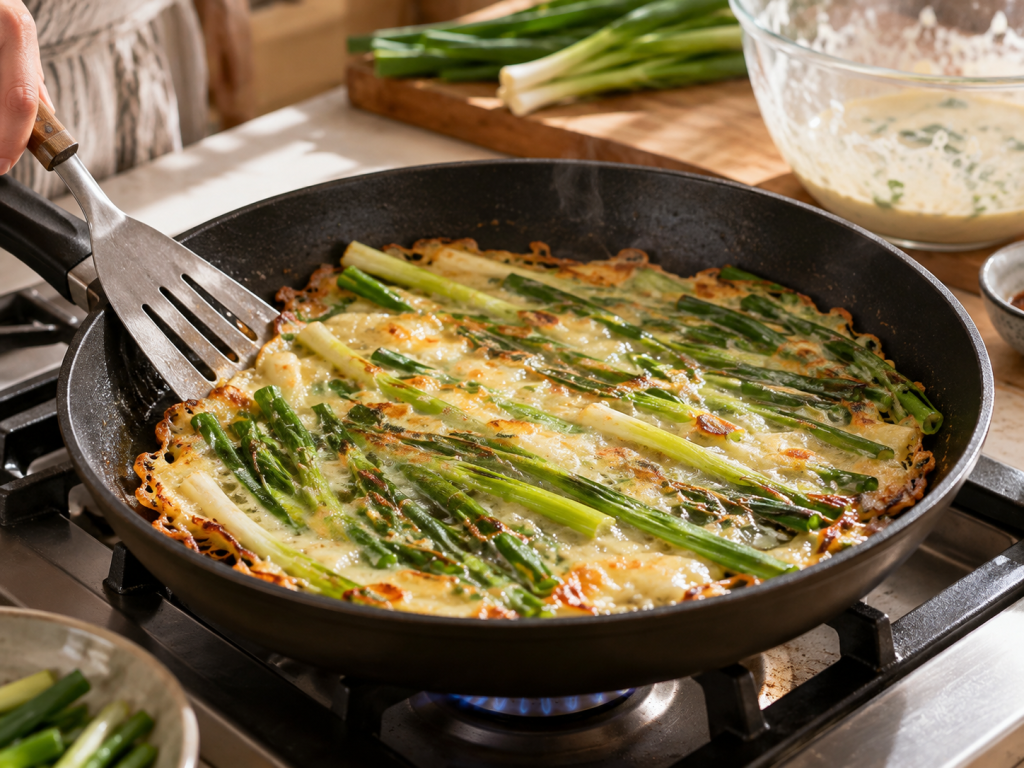
Step 4. Fry and Flip
Cook for about 3–4 minutes, until the underside is golden and the edges begin to release from the pan.
Carefully flip the pancake with a broad spatula and cook for another 3–4 minutes. Press it gently against the pan to encourage even browning.
The egg batter should be fully cooked with no wet center. Repeat with the remaining scallions, batter, and oil.
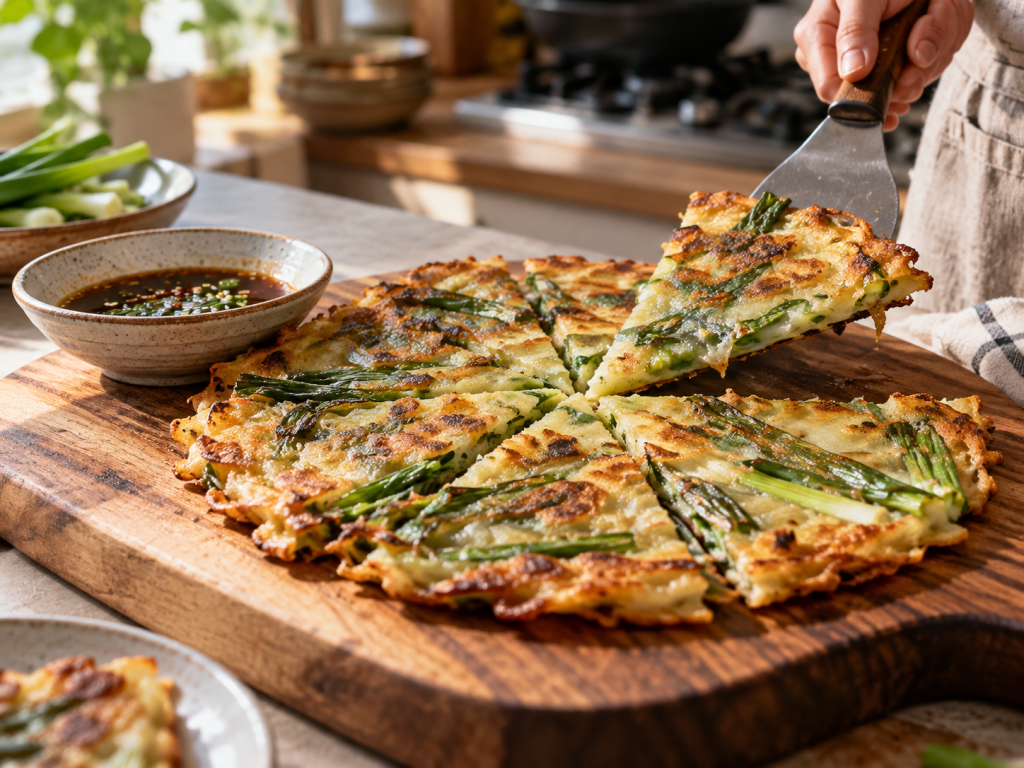
Step 5. Make the Dipping Sauce
Mix the soy sauce, vinegar, and water in a small bowl.
Transfer the pancakes to a cutting board, cut them into wedges, and serve immediately with the dipping sauce.
Easy Substitutions
If you don’t have cornstarch, replace it with an equal weight of all-purpose flour. The pancake will still work, although it may be slightly less crisp.
Thin green onions are easiest to use, but thicker scallions also work if you split the white portions lengthwise.
For a seafood variation, add small pieces of shrimp or squid. Seafood changes both the cooking requirements and the nutritional values, so make sure it is thoroughly cooked.
For an egg-free version, omit the egg and add a little more cold water until the batter reaches an easily pourable consistency.
Common Mistakes to Avoid
Too much batter creates a thick, doughy pancake. Keep the batter layer thin enough that the scallions remain clearly visible.
A pan that isn’t hot enough, or using too little oil, can also prevent the surface from becoming properly golden and crisp. Let the first side develop a firm crust before attempting to flip it.
Drying the scallions is also important. Excess water encourages steaming instead of frying.
Pajeon is best served immediately because its crispy surface gradually softens as it sits. If you need to reheat leftovers, use a dry skillet rather than a microwave for a better texture.
Calories & Nutrition per Serving
Estimated nutrition for one-quarter of the complete recipe, including one-quarter of the dipping sauce:
| Nutrition | Estimated Amount |
|---|---|
| Calories | ~235 kcal |
| Carbohydrates | ~34 g |
| Protein | ~6 g |
| Fat | ~8 g |
| Fiber | ~2 g |
| Sodium | ~380 mg |
These figures were calculated by scaling generic USDA FoodData Central ingredient values to the quantities used in this recipe and dividing the total into four servings.
The estimate assumes that all 27 g of cooking oil and all of the dipping sauce are consumed. If some oil remains in the pan, the actual calorie and fat content will be lower.
Nutrition values are estimates rather than laboratory-tested figures and can vary depending on ingredient brands, portions, substitutions, and cooking methods.
Why Do Koreans Eat Pajeon on Rainy Days?
Pajeon is famously associated with rainy weather in Korea.
There are several popular explanations for this connection, but culturally the important point is simple: rainy days have become strongly linked with the idea of eating hot, freshly fried jeon, often alongside makgeolli (막걸리), a traditional Korean rice-based alcoholic drink.
Today, suggesting “pajeon and makgeolli” when rain begins is a familiar cultural reference in Korea rather than a strict dining rule.
FAQ
Is Pajeon Spicy?
No. This basic pajeon contains no chili, so it is generally mild.
If you prefer some heat, you can add a small amount of gochugaru to the dipping sauce.
Can I Make the Batter Ahead of Time?
You can measure and combine the dry ingredients in advance, but adding the cold water shortly before cooking helps maintain a better texture.
Is Pajeon Gluten-Free?
Not as written. Both wheat flour and regular soy sauce normally contain gluten.
A gluten-free version requires suitable tested substitutes for both ingredients.
What’s the Difference Between Pajeon and Haemul Pajeon?
Pajeon refers broadly to scallion pancakes.
Haemul pajeon (해물파전) adds seafood such as squid, shrimp, or shellfish, making it richer and often more substantial.
A Simple Korean Dish Worth Eating Straight from the Pan
Pajeon doesn’t require complicated equipment or difficult cooking techniques. Flour, scallions, a simple batter, and a hot skillet are enough to create one of Korea’s most recognizable savory pancakes.
The key is keeping the pancake relatively thin, using enough heat and oil to develop crisp edges, and serving it quickly.
Pajeon is at its best straight from the skillet, when the scallions are tender and the golden edges still crackle.


Leave a comment