Soft, savory, and comforting, gyeran jjim (계란찜) is the Korean steamed egg dish that turns a handful of everyday ingredients into a silky side. It often arrives bubbling at Korean restaurants, but you do not need a traditional earthenware pot to make it. This beginner-friendly version uses a heatproof bowl and a covered saucepan, making it practical for home cooks anywhere.
What Is Gyeran Jjim?
Gyeran means egg, while jjim refers to steaming. According to the Korea Tourism Organization, whisked eggs are combined with water and salt, then steamed until tender. Some cooks use anchovy broth for extra savory flavor. The result is delicate and spoonable rather than firm like an omelet. Serve it alongside rice, kimchi, or grilled dishes; its mild taste is especially welcome beside spicy Korean food. VISITKOREA – Imagine Your Korea
Ingredients — 2 Servings
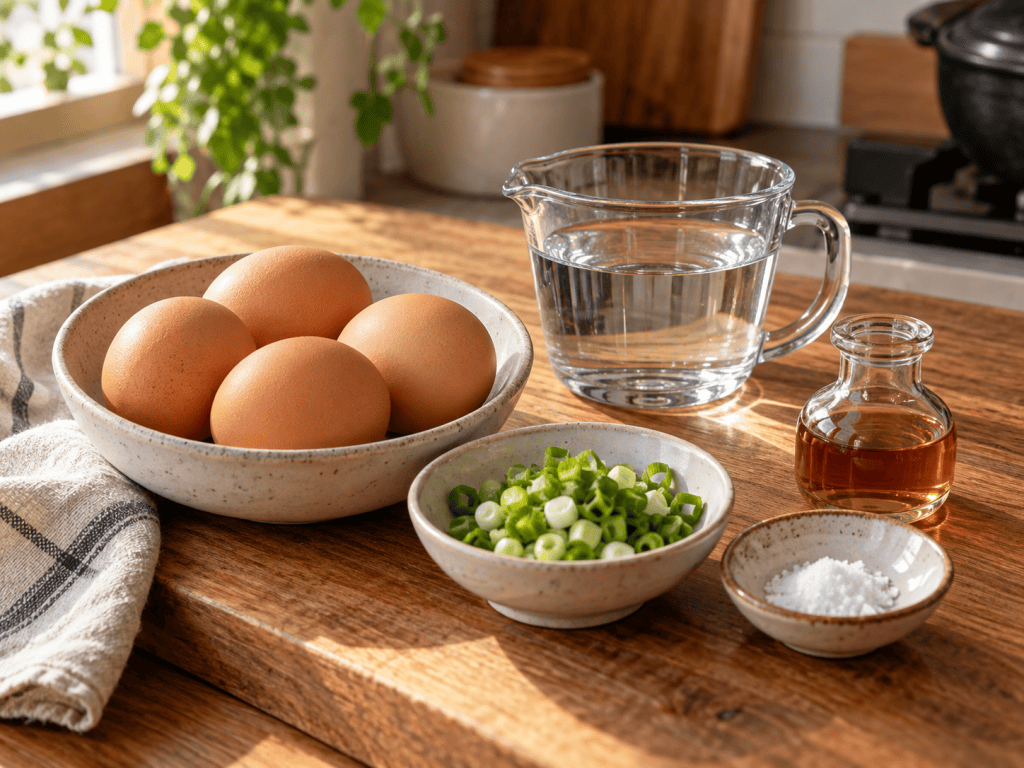
- 4 large eggs (about 200 g without shells)
- 1 cup (240 ml) water, or unsalted anchovy-kelp broth
- 1 green onion (15 g), finely chopped
- 1/4 tsp fine table salt (about 1.5 g)
- 1 tsp toasted sesame oil (4.5 g), for the bowl and finishing
How to Make Korean Steamed Eggs
Step 1. Prepare the Steamer
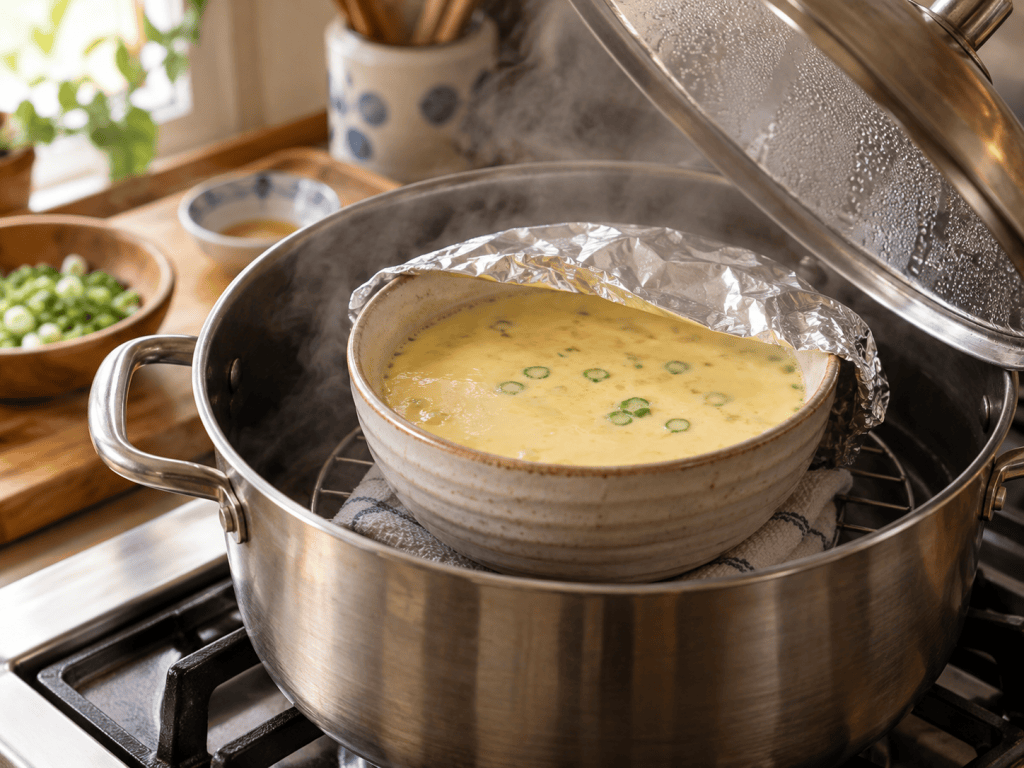
Choose a heatproof bowl that holds at least 3 cups (700 ml). Lightly coat its interior with some of the measured sesame oil. Place a rack or folded clean kitchen towel inside a wide saucepan, then add enough water to reach about one-third of the bowl’s height. Bring the water to a gentle simmer.

Step 2. Whisk the Eggs
Crack the eggs into a mixing bowl. Add the measured water and salt, then whisk until the yolks and whites are evenly combined. For an especially smooth texture, pass the mixture through a fine-mesh strainer. Stir in most of the chopped green onion, saving a pinch for garnish.
Step 3. Steam Gently
Pour the mixture into the prepared bowl and loosely cover it with foil to keep condensation from dripping onto the surface. Set the bowl on the rack, cover the saucepan, and steam over low to medium-low heat for roughly 18–25 minutes. Check near the end: the center should be softly set, not liquid. For food safety, egg dishes should reach 160°F (71°C) in the center. FoodSafety.gov
Step 4. Finish and Serve
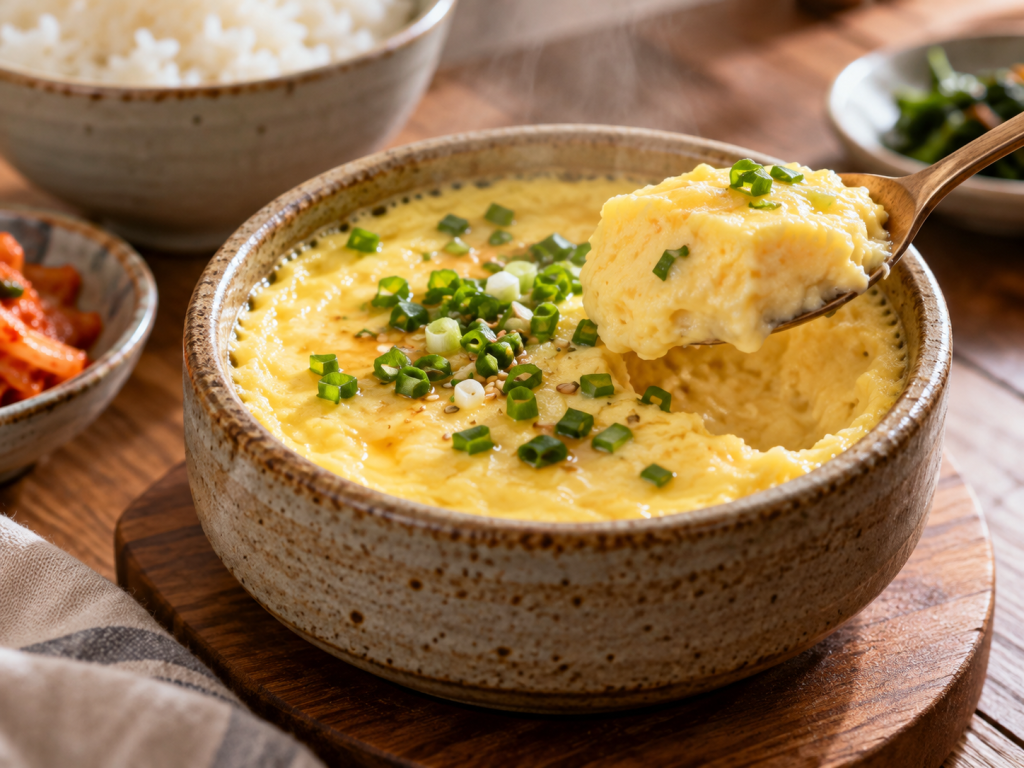
Carefully lift out the hot bowl. Drizzle on the remaining sesame oil, scatter the reserved green onion over the top, and serve immediately with warm rice. The texture should be moist and tender, with a gentle wobble. This steamed-bowl method makes a custard-like version; the dramatically puffed restaurant-style version uses a different, direct-heat technique.
Easy Substitutions and Flavor Variations
No Korean broth? Plain water is completely appropriate and keeps the egg flavor clean. For a richer taste, substitute unsalted anchovy-kelp broth, but note that anchovies make the dish unsuitable for vegetarians. You can add finely diced carrot or a few small mushrooms, provided they are cooked and cut small enough to heat through. A little gochugaru on top adds color and heat without changing the basic method.
Common Mistakes to Avoid
A vigorous boil can create a porous, rubbery texture, so keep the steaming water at a gentle simmer. Too much liquid may prevent the eggs from setting on schedule; measure the water instead of estimating. Also avoid lifting the lid repeatedly, which releases steam and extends cooking time. If using salted broth or fish sauce, reduce the added salt and recalculate sodium.
Calories & Nutrition per Serving
Estimated for half the recipe, excluding rice and optional additions:
| Nutrition | Estimated Amount |
|---|---|
| Calories | 165 kcal |
| Carbohydrates | 1.3 g |
| Protein | 12.7 g |
| Fat | 11.8 g |
| Fiber | 0.2 g |
| Sodium | 435 mg |
These estimates use USDA FoodData Central ingredient profiles for 200 g whole egg, 15 g scallion, 4.5 g sesame oil, and 1.5 g table salt, divided into two portions. Water contributes no meaningful nutrients; the calculation assumes all the oil and salt are consumed. Actual values vary with egg size, brands, portions, substitutions, and cooking methods. They are calculated estimates, not laboratory-tested nutrition facts. WhatYouEat
FAQ
Is Gyeran Jjim Spicy?
No. The basic version is mild, although chili flakes can be added if you like.
Do I Need a Korean Earthenware Pot?
Not for this recipe. A heatproof bowl and covered saucepan are enough.
Can I Save Leftovers?
Yes. Refrigerate promptly and reheat gently until thoroughly hot. The texture may become firmer after chilling.
Gyeran jjim is an easy introduction to Korean home cooking: simple ingredients, careful heat, and a soothing result that complements almost any Korean meal.



Leave a Reply