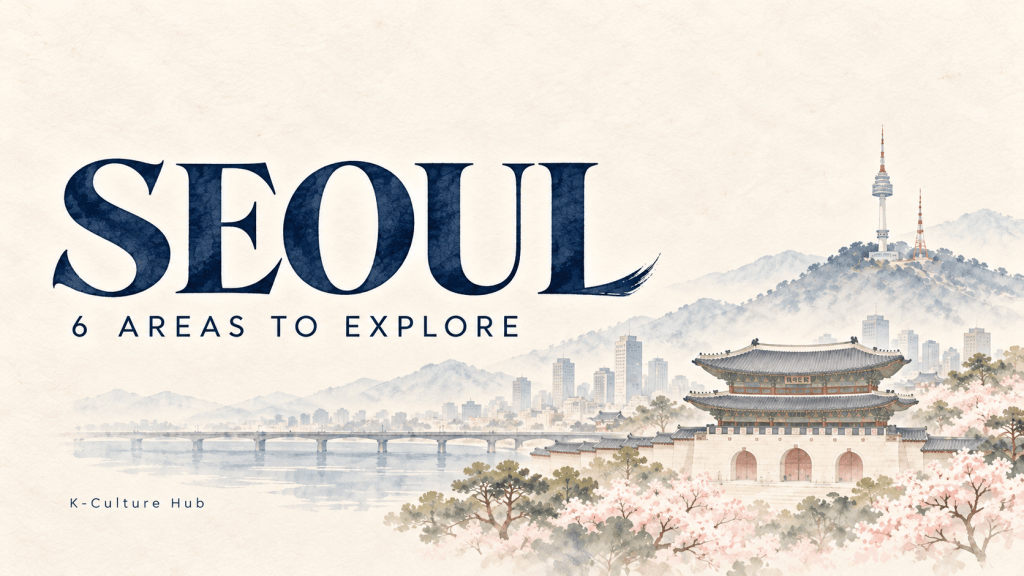
Seoul makes more sense when you plan by area instead of chasing scattered landmarks. This Seoul neighborhood guide groups the city into six practical sightseeing zones, helping you combine palaces, shopping streets, museums, cafés, and river views without spending the whole day in transit.
Start with Jongno for history and the Myeongdong area for central sightseeing. Add Hongdae for music and cafés, Yongsan for museums, Seongsu for design and green space, and the south bank for temples and skyline views. These are travel groupings, not official administrative boundaries.
Seoul’s Main Tourist Areas at a Glance
| Area | Best for | Start with |
|---|---|---|
| Jongno and the historic center | Palaces and traditional architecture | Gyeongbokgung |
| Myeongdong to Dongdaemun | Shopping and urban landmarks | Myeongdong |
| Hongdae and Yeonnam | Music, cafés, and evening browsing | Hongdae streets |
| Yongsan, Itaewon, and Namsan | Museums, dining, and city views | National Museum of Korea |
| Seongsu and Seoul Forest | Design shops and a park break | Seoul Forest |
| Gangnam, Jamsil, and the south bank | Temples, towers, and riverside scenery | COEX or Jamsil |
1. Jongno: Palaces, Hanok, and Traditional Crafts
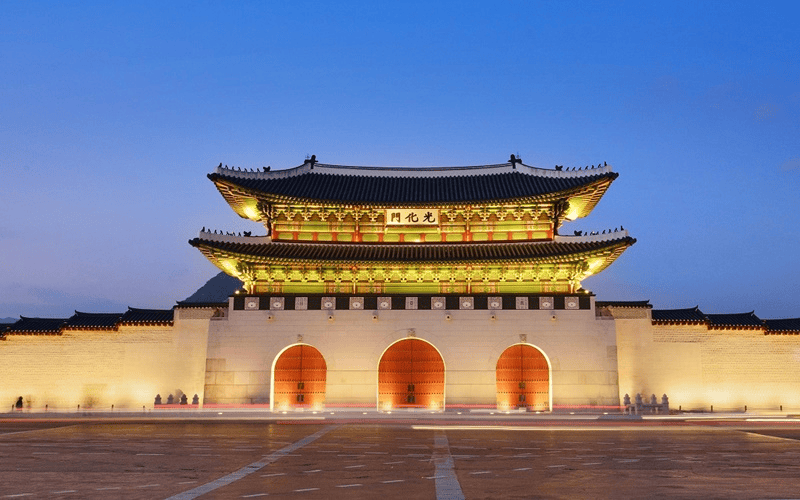
Gyeongbokgung Palace introduces Seoul’s royal history through ceremonial gates, courtyards, and palace buildings. Bukchon Hanok Village adds a different perspective: lanes lined with hanok, traditional Korean houses. Insadong is a useful next stop for craft shops and galleries. Together, they show several sides of the historic center. [1][2][3]
Choose one palace as your main visit, then explore nearby streets. Bukchon is also a residential neighborhood: keep voices low, avoid photographing private interiors, and follow posted visitor restrictions. Traditional-looking surroundings are not automatically public attractions. Leave room for a break instead of rushing from one photo stop to another.
2. Myeongdong to Dongdaemun: Shopping and City Landmarks
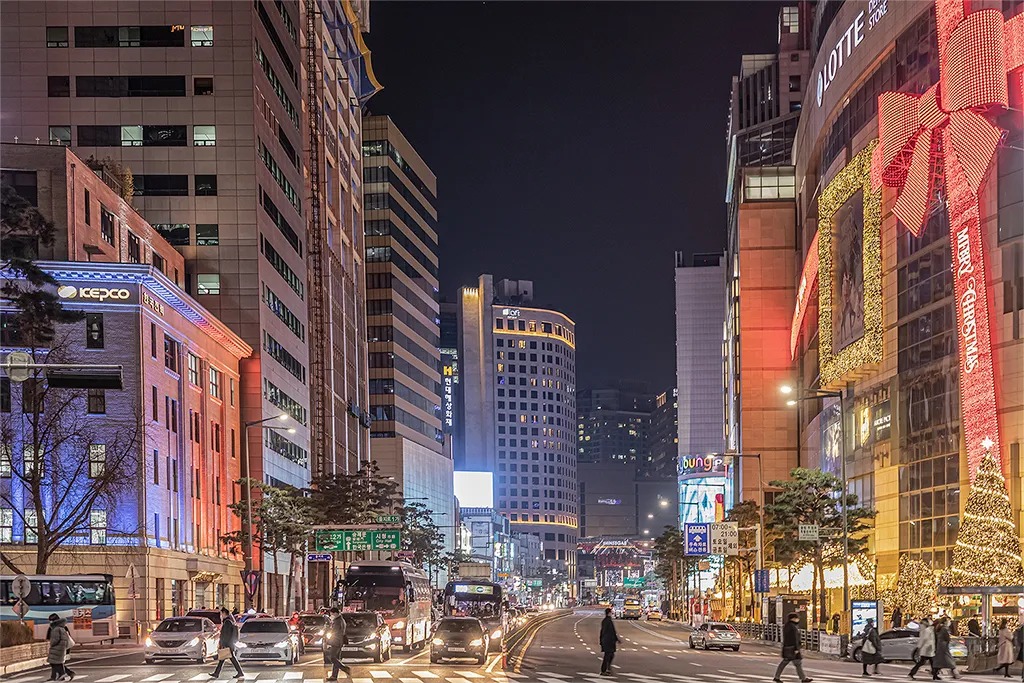
Myeongdong suits travelers interested in beauty shopping, department stores, and street-food browsing. Cheonggyecheon Stream offers a waterside walking route through downtown, while Dongdaemun Design Plaza (DDP) brings curved architecture and design exhibitions into the mix. These are different stops across the center, rather than one compact shopping street. [3]
Pick the part that matches your interests: browse Myeongdong’s shops, walk a section of the stream, or make DDP your architecture stop. You do not need to walk the entire route. Using transit between selected sights leaves more time to enjoy them.
3. Hongdae and Yeonnam: Music, Cafés, and Street Life
Hongdae, the area associated with Hongik University, is known for music, street performances, shopping, and nightlife. Nearby Yeonnam-dong offers café streets and access to Gyeongui Line Forest Park, a green corridor following a former railway route. It is a good pairing for visitors who enjoy exploring between scheduled attractions. [1][4]
Try a park stroll and café break before heading toward Hongdae’s busier streets. Treat busking as a possible bonus, not a guaranteed performance. The area’s creative reputation does not mean every block is a nightlife district; your experience changes as you move between main roads and smaller streets.
A street view of the Hongdae area, photographed in 2026. Photo: Qhairy, CC BY 4.0. Unmodified.
4. Yongsan, Itaewon, and Namsan: Museums and Views
The National Museum of Korea provides a broad introduction to Korean history and art. Itaewon offers international dining, while Namsan Seoul Tower is an option for views above the city. These stops work as a central-southern sightseeing zone north of the Hangang River, but require separate journeys. [1][5]
Make the museum your main daytime stop, then choose dinner in Itaewon or a visit to Namsan. Trying to fit both around a full museum visit can make the day feel hurried. Allow for the hill when planning access to Namsan.
5. Seongsu and Seoul Forest: Industrial Heritage Meets Design
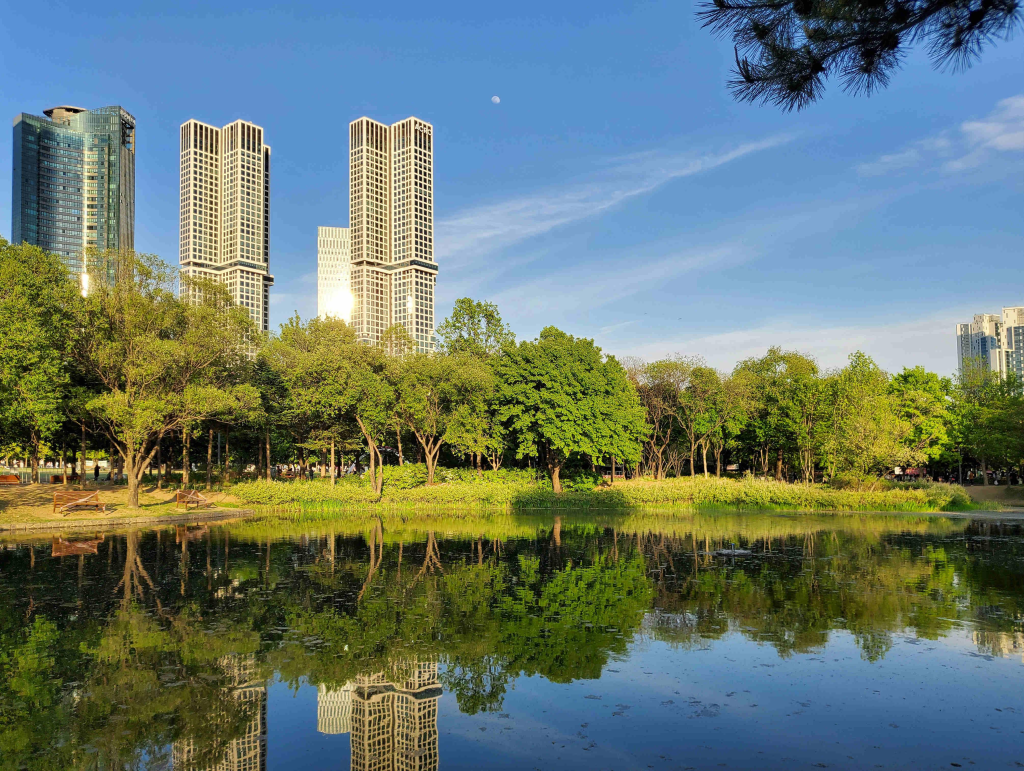
Seongsu-dong combines an industrial past with cafés and creative spaces, including reused factories and warehouses. Seoul Forest offers a substantial park break nearby. This pairing is especially appealing if your ideal afternoon involves browsing, coffee, and outdoor time rather than another major monument. [6][7]
Start with the park, then explore the café streets. Leave room for discoveries instead of building the afternoon around a single temporary event. The neighborhood’s reused buildings provide context beyond its photogenic interiors: contemporary Seoul often develops by adapting older spaces.
6. Gangnam, Jamsil, and the South Bank: Temples and Skylines
In Gangnam, pair COEX Mall with nearby Bongeunsa Temple. Farther east, Jamsil offers Seoul Sky at Lotte World Tower and walking paths around Seokchon Lake. Banpo Hangang Park, farther west, is another option for riverside views. These form a broad south-bank grouping, not a walking loop. [3][8][9]
Choose Gangnam or Jamsil as your main cluster, adding Banpo only if your schedule allows. Check attraction opening days, reservations, and any fountain schedule before traveling. For a first visit, one main zone and one nearby addition per day is a more useful starting point than trying to cover all six.
Frequently Asked Questions
Which Seoul area should I visit first?
Start with Jongno if palaces and traditional architecture are your priority. Choose Myeongdong for a shopping-focused introduction to central Seoul.
Can I visit all six areas in one day?
That would leave little time for the attractions. Choose one main zone and add a nearby stop if you have time and energy.
Are Hongdae and Seongsu the same area?
No. Hongdae is in western Seoul, while Seongsu is farther east. Plan separate outings unless crossing the city is part of your itinerary.
Are Gangnam and Jamsil the same neighborhood?
No. They are separate areas south of the Hangang River. This guide groups them for orientation, not because every attraction is close enough to walk between.
Where can I combine sightseeing with outdoor time?
Pair Seongsu with Seoul Forest, explore Yeonnam’s section of Gyeongui Line Forest Park, or plan a separate riverside break at Banpo Hangang Park.
Sources and Further Reading
The six-zone grouping and pacing suggestions are K-Culture Hub editorial recommendations.
- Visit Seoul — About Seoul: historic sights, Hongdae, Itaewon, museums, and Namsan.
- Korea Tourism Organization — Bukchon Hanok Village: traditional houses, residents, and visitor restrictions.
- Visit Seoul — If You Are a Cultural Traveler: Insadong, Myeongdong, Cheonggyecheon, DDP, Bongeunsa, COEX, and Seoul Sky.
- Visit Seoul — Gyeongui Line Forest Park: Yeonnam section and railway heritage; page edited May 7, 2026.
- Korea Tourism Organization — National Museum of Korea: museum collections.
- Seoul Metropolitan Government — Seongsu-dong Cafe Street: industrial buildings and regeneration.
- Korea Tourism Organization — Seoul Forest: park setting.
- Korea Tourism Organization — Seokchonhosu Lake: lake and walking trails.
- Korea Tourism Organization — Banpo Hangang Park: south-bank location and river scenery.


Leave a Reply