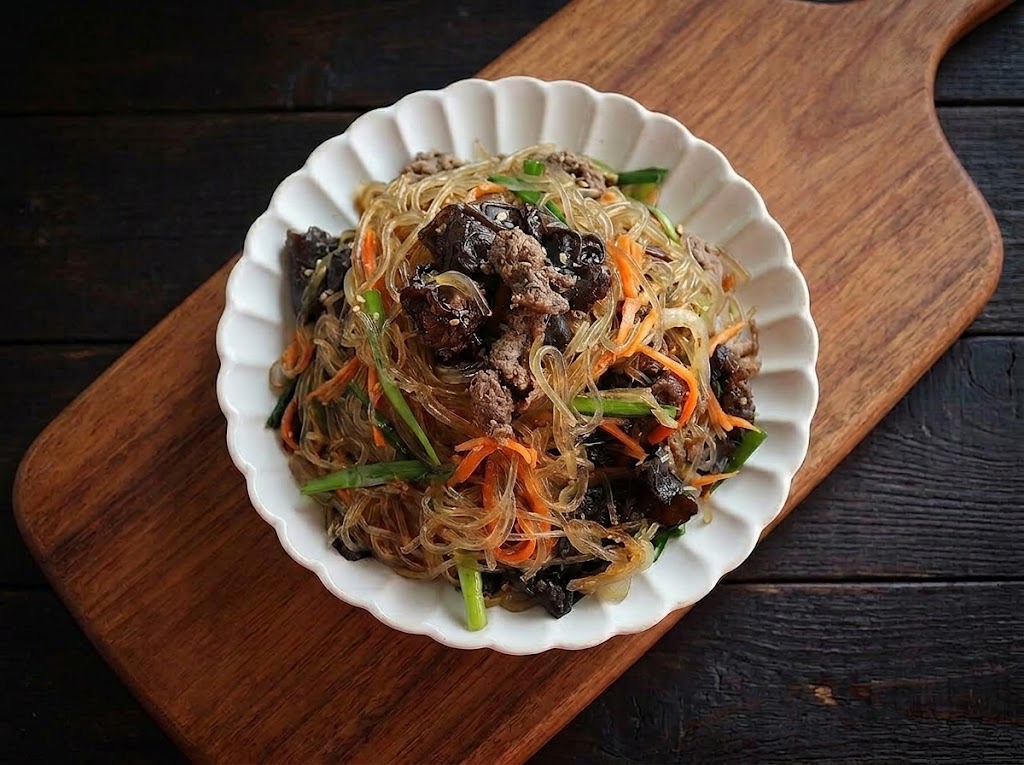
Japchae (잡채) is one of Korea’s most recognizable noodle dishes: glossy sweet potato glass noodles tossed with colorful vegetables, mushrooms, and often thin slices of beef in a lightly sweet and savory soy-based seasoning.
It is especially approachable for people who are new to Korean cooking because it delivers plenty of flavor without relying on chili heat. Japchae is also flexible—you can serve it warm or at room temperature, as a side dish or as part of a larger Korean meal. VisitKorea describes it as a colorful classic made with glass noodles, beef, mushrooms, and vegetables and notes its connection with gatherings and special occasions. VISITKOREA – Imagine Your Korea
What Is Japchae?
The noodles used in modern japchae are called dangmyeon (당면). They are commonly made from sweet potato starch, giving them a pleasantly chewy texture and translucent appearance after cooking.
Interestingly, japchae has not always been centered on noodles. The Korean Food Promotion Institute discusses earlier forms built around assorted vegetables and other ingredients, showing how the dish evolved over time. Modern dangmyeon-based japchae is the version most international diners are likely to recognize today. 한식진흥원
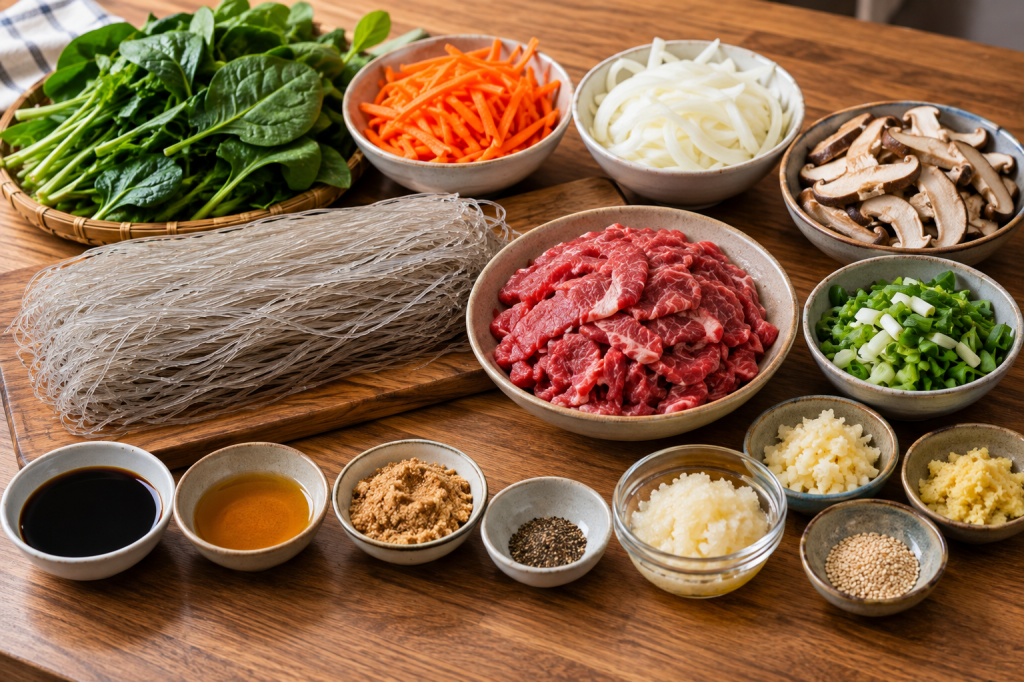
Ingredients (Serves 4)
For the japchae:
- 7 oz (200 g) Korean sweet potato glass noodles (dangmyeon)
- 7 oz (200 g) lean beef sirloin, thinly sliced
- 5 oz (150 g) spinach
- 1 medium carrot (about 100 g), julienned
- 1 medium onion (about 150 g), thinly sliced
- 3.5 oz (100 g) shiitake or button mushrooms, sliced
- 2 garlic cloves, minced
- 1 tablespoon neutral cooking oil
- 1 teaspoon toasted sesame seeds
For the seasoning:
- 4 tablespoons reduced-sodium soy sauce
- 2 tablespoons sugar
- 2 tablespoons sesame oil
- Black pepper to taste
How to Make Japchae
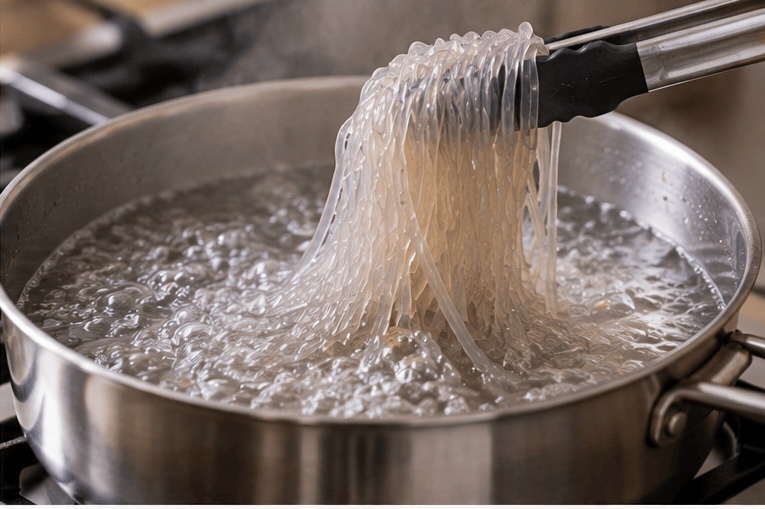
1. Cook the Noodles
Bring a large pot of water to a boil and cook the dangmyeon according to the package directions. Cooking times vary by brand, so follow the package rather than relying on one fixed cooking time.
Drain thoroughly. If the noodles are very long, cut them a few times with kitchen scissors for easier eating.
2. Prepare the Spinach
Blanch the spinach briefly in boiling water until just wilted. Drain, rinse with cool water, and gently squeeze out excess moisture.
Season lightly with a small amount of the soy-sesame seasoning.
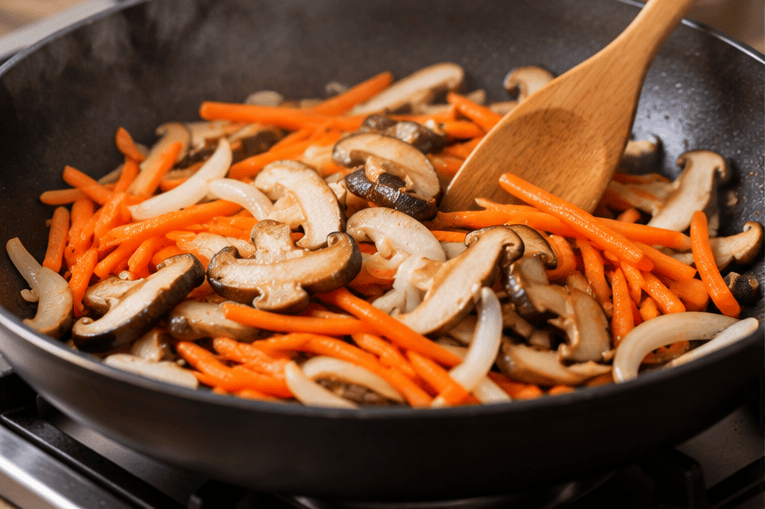
3. Cook the Vegetables
Heat a large skillet over medium-high heat. Add a little neutral oil and cook the onion, carrot, and mushrooms until tender but not mushy.
Preparing the vegetables separately or in quick succession helps preserve their different colors and textures.
4. Cook the Beef
Add the thinly sliced beef and garlic to the skillet and cook until the beef is fully cooked.
Avoid overcrowding the pan. Too much moisture can cause the ingredients to steam rather than develop lightly browned edges.
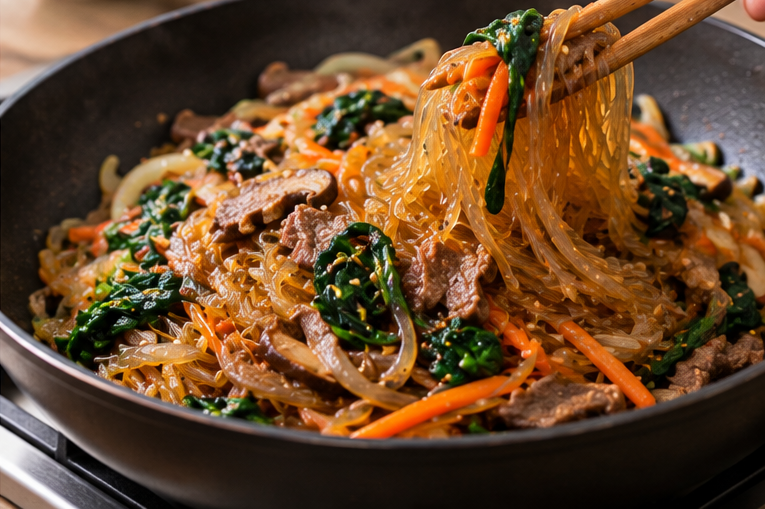
5. Toss Everything Together
Combine the noodles, spinach, vegetables, and beef in the skillet or a large mixing bowl.
Add the soy sauce, sugar, sesame oil, and black pepper. Toss thoroughly until the noodles are evenly coated and glossy. Taste before adding extra soy sauce, then finish with sesame seeds.
Soy sauce-based seasoning is widely used across Korean dishes, including japchae, according to the Korean Food Promotion Institute. 한식진흥원
Easy Substitutions Outside Korea
The one ingredient worth seeking out is dangmyeon. Look for packages labeled “sweet potato noodles,” “sweet potato glass noodles,” or “Korean vermicelli” at a Korean or Asian grocery store.
Shiitake mushrooms can be replaced with cremini or button mushrooms. For a vegetarian version, omit the beef and add more mushrooms or tofu. For a gluten-free version, choose a gluten-free tamari-style seasoning and check the noodle package carefully.
Common Japchae Mistakes
The biggest mistake is overcooking the noodles. Dangmyeon should be tender and chewy rather than soft enough to fall apart.
Another common problem is adding too much seasoning at once. Japchae should taste balanced rather than overwhelmingly salty or sweet. Soy sauces vary considerably in sodium and intensity, so taste before adjusting.
Calories & Nutrition per Serving
Estimated nutrition for 1 of 4 servings:
| Nutrition | Estimated Amount |
|---|---|
| Calories | ~450 kcal |
| Carbohydrates | ~59 g |
| Protein | ~15 g |
| Fat | ~17 g |
| Fiber | ~4 g |
| Sodium | ~1,000 mg |
These figures are estimates rather than laboratory-tested nutrition values. They are based on the recipe quantities above, generic ingredient nutrient profiles consistent with USDA FoodData Central data, and typical labeled values for Korean sweet potato noodles. FoodData Central provides nutrient information including calories, carbohydrates, protein, fat, fiber, and sodium. 식품 데이터 센트럴
Actual values can change substantially depending on the noodle and soy sauce brands, beef fat content, substitutions, serving size, and the amount of seasoning remaining after cooking.
Why Japchae Matters on a Korean Table
Japchae is more than a restaurant noodle dish. Its association with shared meals and special occasions helps explain why visitors may encounter it at celebrations and gatherings as well as Korean restaurants. VISITKOREA – Imagine Your Korea
Its history also illustrates an important point about Korean food: familiar dishes can evolve. The vegetable-centered forms discussed in historical food writing differ from the glass-noodle japchae widely recognized today. 한식진흥원
For a home cook outside Korea, that makes japchae a particularly interesting recipe. It is accessible, adaptable, visually colorful, and offers a small glimpse into how Korean food traditions continue to change.
FAQ
Is japchae spicy?
No. Standard japchae is mainly seasoned with soy sauce, sesame oil, and sugar, giving it a savory-sweet flavor rather than chili heat.
Can I make japchae without beef?
Yes. Mushrooms work particularly well, and firm tofu is another practical option.
What are japchae noodles made from?
The dangmyeon commonly used for modern japchae are typically made from sweet potato starch. Check the package because formulations can vary by manufacturer.
Can I make japchae ahead of time?
Yes. Refrigerate it promptly after cooking and reheat gently. A small splash of water can help loosen noodles that have firmed up in the refrigerator.


Leave a comment