Bulgogi (불고기) is one of the easiest Korean dishes to introduce to someone who is new to Korean food. Thin slices of beef are marinated in a soy sauce-based mixture, then quickly cooked until tender and deeply savory.
Unlike many Korean dishes associated with red chili paste, classic beef bulgogi is usually mild rather than spicy. Korea Tourism Organization describes it as a popular Korean dish and notes that modern bulgogi is often cooked in a pan, although grilling has long been part of the dish’s story. Visit Korea
That makes bulgogi particularly practical for home cooks outside Korea: you don’t need a Korean barbecue grill to make it.
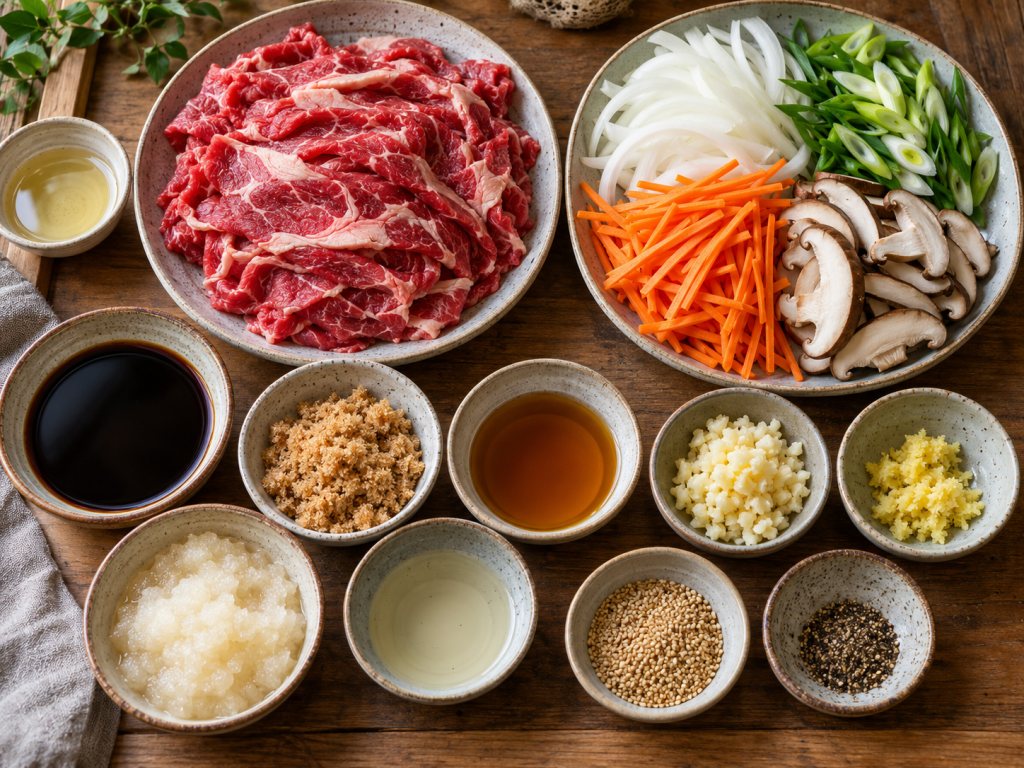
Ingredients (Serves 4)
For the beef
- 1 lb (450 g) thinly sliced beef ribeye or sirloin
- 1/2 medium onion (about 100 g), thinly sliced
- 2 green onions, sliced
- 1/2 medium carrot (about 60 g), julienned
- 4 oz (115 g) mushrooms, sliced
- 1 teaspoon neutral cooking oil
For the marinade
- 4 tablespoons low-sodium soy sauce
- 1 1/2 tablespoons brown sugar
- 1 tablespoon sesame oil
- 2 garlic cloves, minced
- 1 teaspoon finely grated fresh ginger
- 2 tablespoons grated Asian pear or apple
- 1 tablespoon mirin or water
- 1 teaspoon toasted sesame seeds
- Black pepper to taste
How to Make Bulgogi
1. Slice the Beef Thinly
Bulgogi cooks quickly, so thin beef is important.
If you cannot find pre-sliced beef, place the meat in the freezer for about 30–45 minutes until firm but not frozen solid. This makes it easier to slice thinly across the grain.
2. Make the Marinade
Combine soy sauce, brown sugar, sesame oil, garlic, ginger, grated pear or apple, mirin, sesame seeds, and black pepper.
Add the beef, onion, green onion, carrot, and mushrooms and gently mix until everything is coated.
Refrigerate for at least 30 minutes. A few hours will give the seasoning more time to penetrate, but very thin beef doesn’t require an overnight marinade.
3. Cook Over High Heat
Heat a large skillet over medium-high to high heat and add a small amount of neutral oil.
Cook the beef in batches rather than adding everything at once. Overcrowding the pan releases too much liquid, causing the beef to steam instead of developing lightly browned edges.
Cook until the beef is fully cooked, usually about 3–5 minutes per batch depending on thickness and pan temperature.
4. Serve Immediately
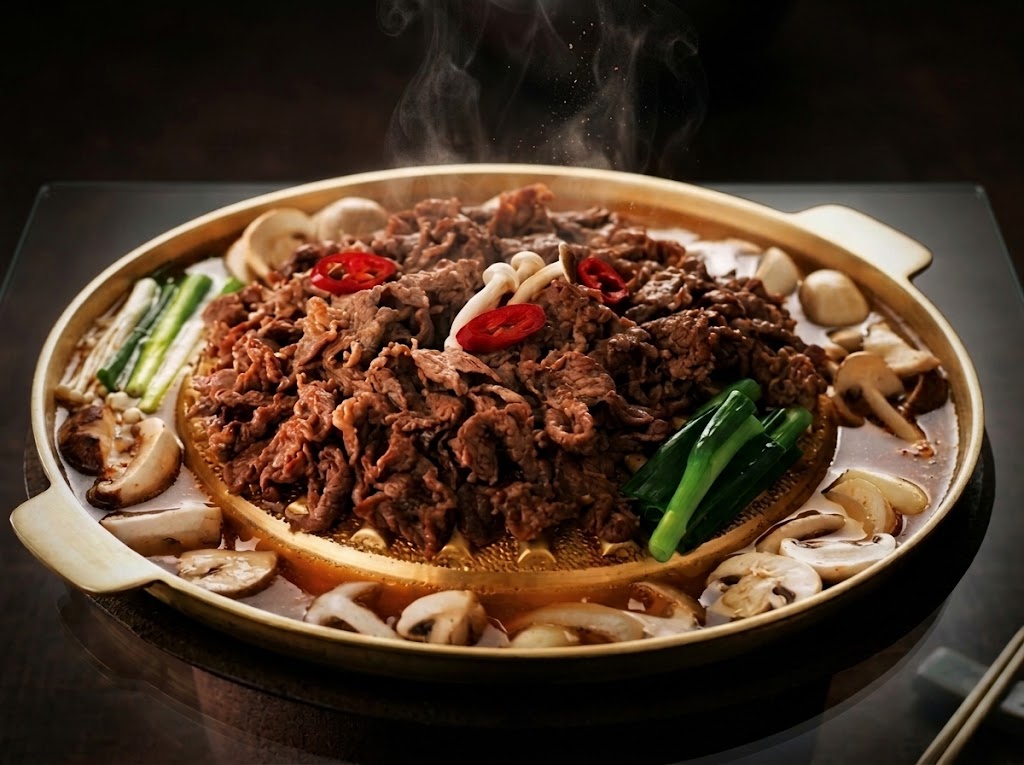
Serve the bulgogi with steamed short-grain rice and, if you like, kimchi or other banchan (반찬), the small side dishes commonly served with Korean meals.
You can also place some rice and bulgogi inside lettuce leaves for an easy Korean-style wrap.
What Does Bulgogi Mean?
The word bulgogi combines bul (불), meaning “fire,” and gogi (고기), meaning “meat.”
The name reflects the dish’s connection with cooking marinated meat over heat. Korea Tourism Organization describes bulgogi as thin beef marinated in a sweet soy sauce mixture before grilling and also notes its historical associations with earlier Korean meat dishes. Visit Korea
Today, however, bulgogi isn’t limited to restaurant tabletop grills. Pan-cooked versions are common and convenient, especially for home cooking. Visit Korea
Easy Substitutions Outside Korea
Ribeye is flavorful, but sirloin works well and is often less expensive.
Asian pear can be replaced with a crisp sweet apple. If mirin isn’t available, use a little water instead of buying a specialty ingredient for a single recipe.
Shiitake, button, cremini, or oyster mushrooms can all work.
For a lower-sodium version, use reduced-sodium soy sauce and avoid adding extra salt. For gluten-free bulgogi, use a gluten-free tamari-style sauce and check the labels of other bottled seasonings.
Common Bulgogi Mistakes
The biggest mistake is overcrowding the pan. Cook the meat in batches so it browns rather than boils in its marinade.
Also avoid slicing the beef too thickly, which changes both the cooking time and texture.
Finally, taste before increasing the sugar. Pear, apple, mirin, and different soy sauces can all affect the final sweetness.
Calories & Nutrition per Serving
For 1 of 4 servings, excluding rice and side dishes:
| Nutrition | Estimated Amount |
|---|---|
| Calories | ~330 kcal |
| Carbohydrates | ~15 g |
| Protein | ~29 g |
| Fat | ~18 g |
| Fiber | ~1.5 g |
| Sodium | ~800 mg |
These figures are estimates, calculated from the recipe quantities using generic ingredient nutrient profiles consistent with USDA FoodData Central data. FoodData Central provides nutrient information including calories, carbohydrates, protein, fat, fiber, and sodium. fdc.nal.usda.gov
Actual nutrition can vary substantially depending on the cut and fat content of the beef, soy sauce brand, substitutions, serving size, and how much marinade remains after cooking. Rice and banchan are not included.
FAQ
Is bulgogi spicy?
Usually not. Classic beef bulgogi is primarily seasoned with soy sauce and has a sweet-savory flavor, making it approachable for people who aren’t comfortable with spicy Korean food. Visit Korea
Can I make bulgogi without Korean pear?
Yes. Apple is an easy substitute. You can also omit the fruit and adjust the sweetness to taste.
Do I need a Korean BBQ grill?
No. A regular skillet or frying pan works very well, and pan-cooked bulgogi is also common in contemporary Korean cooking. Visit Korea
What should I serve with bulgogi?
Steamed rice is the easiest choice. Kimchi, lettuce, and simple Korean side dishes can turn it into a fuller Korean-style meal.


Leave a comment