Busan Area Guide: 6 Best Areas for First-Time Visitors
Busan is easier to enjoy when you plan by area. Its beaches, hillside neighborhoods, markets, and coastal temples are spread across the city, so a long list of attractions can quickly turn into a long day in transit. For a first visit, start with Haeundae for the beach, Nampo for markets, and Gwangalli for an evening by the sea. Add Seomyeon, Yeongdo, or Gijang according to your interests.
This Busan area guide divides the main visitor destinations into six practical travel zones. These are planning groups, not official administrative boundaries, and they do not cover every corner of the city. Use them to choose a base, group nearby sights, and leave enough time for the places you most want to experience.
Busan’s Main Tourist Areas at a Glance
| Travel area | Best for | Main sights | Useful starting point |
|---|---|---|---|
| Haeundae and the eastern beach corridor | A classic seaside visit | Haeundae Beach, Dongbaek, Blueline Park | Haeundae or Dongbaek, Line 2 |
| Gwangalli and Millak | Beach cafés and evening views | Gwangalli Beach, Gwangan Bridge views, Millak waterfront | Gwangan or Geumnyeonsan, Line 2 |
| Seomyeon and Jeonpo | Transport connections, cafés, shopping | Seomyeon streets, Jeonpo Café Street | Seomyeon, Lines 1 and 2; Jeonpo, Line 2 |
| Nampo, Gamcheon, and Songdo | Markets, hillside scenery, port-side history | Jagalchi, Gukje Market, Gamcheon, Songdo | Nampo, Jagalchi, or Toseong, Line 1; onward road transport |
| Yeongdo | Coastal scenery and neighborhood walks | Huinnyeoul Culture Village, Taejongdae | Bus or taxi from the mainland |
| Gijang and Osiria | A seaside temple and a longer outing | Haedong Yonggungsa, Lotte World Adventure Busan | Osiria, Donghae Line; onward transport as needed |
The station names help you choose a starting point, not necessarily a doorstep arrival. Beaches, hillside villages, and coastal attractions often require walking or a bus connection. The official metro map is useful for checking the relationship between Lines 1 and 2 and the Donghae Line. [1]
1. Haeundae: The Classic Busan Beach Experience
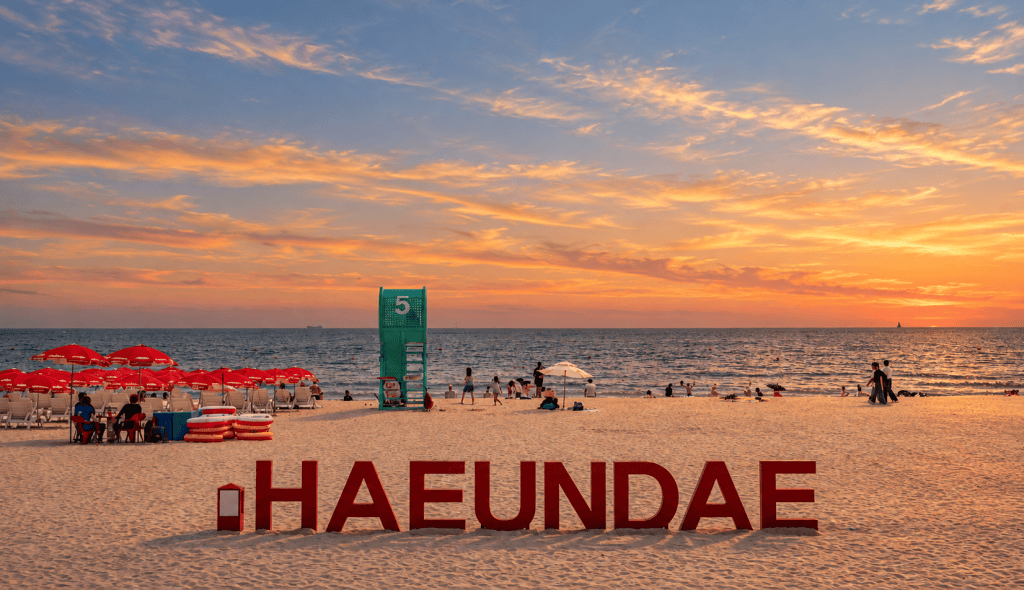
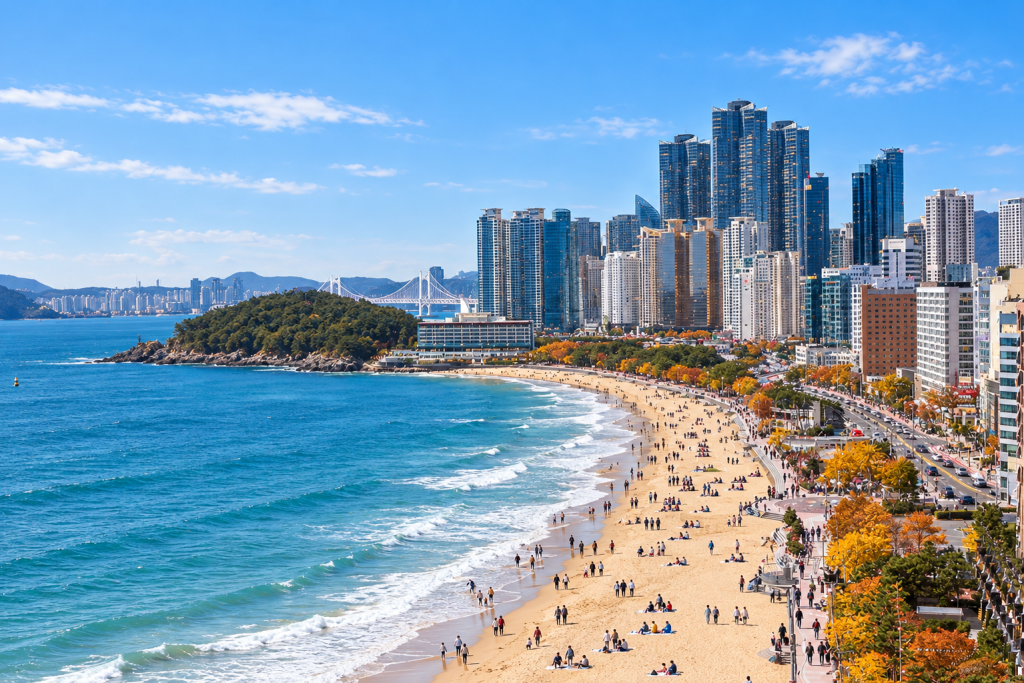
Haeundae is a natural starting point if the sea is central to your idea of Busan. Begin at Haeundae Beach, where the broad shoreline gives you space to walk even when swimming is not part of the plan. At the western end, Dongbaek Island offers a coastal walk and a different perspective on the skyline. This combination makes a satisfying half day without needing to book several attractions.
For a longer coastal outing, head toward Mipo for Haeundae Blueline Park. The Sky Capsule runs between Mipo and Cheongsapo; it does not continue all the way to Songjeong. The Beach Train is a different service, so check the route, departure station, and ticket type before booking. Reserve the attraction you actually want and allow time for boarding queues. Haeundae works well as a beach-focused base, but reaching the old downtown involves a cross-city journey. [2]
2. Gwangalli and Millak: Beach Views After Dark
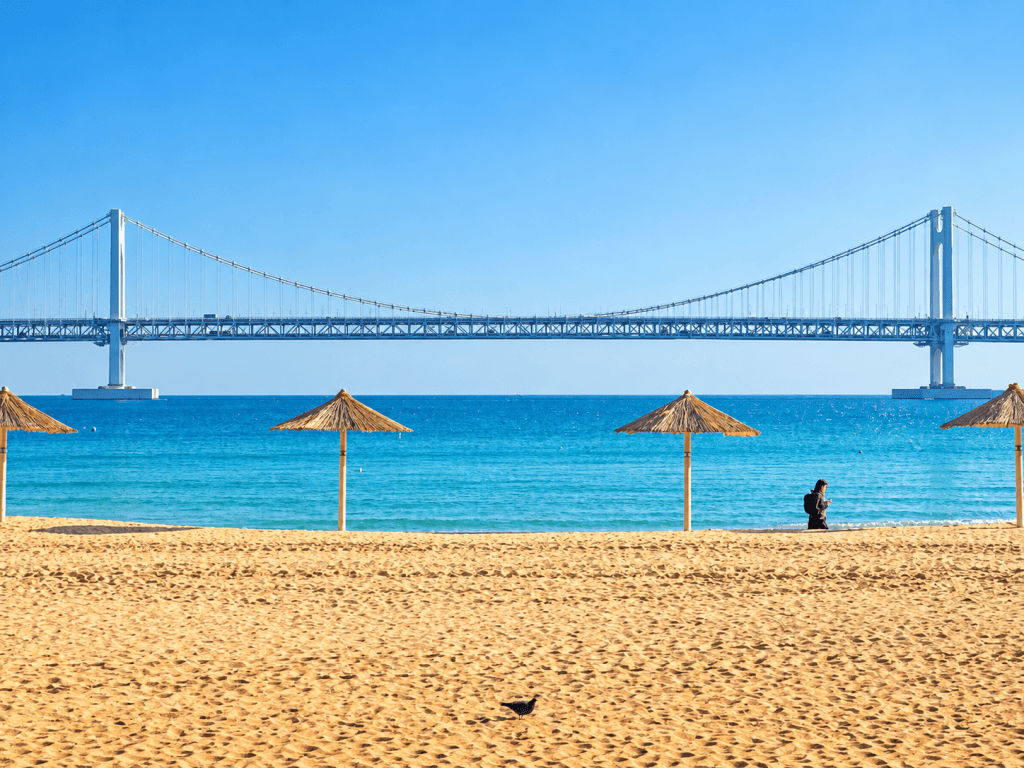
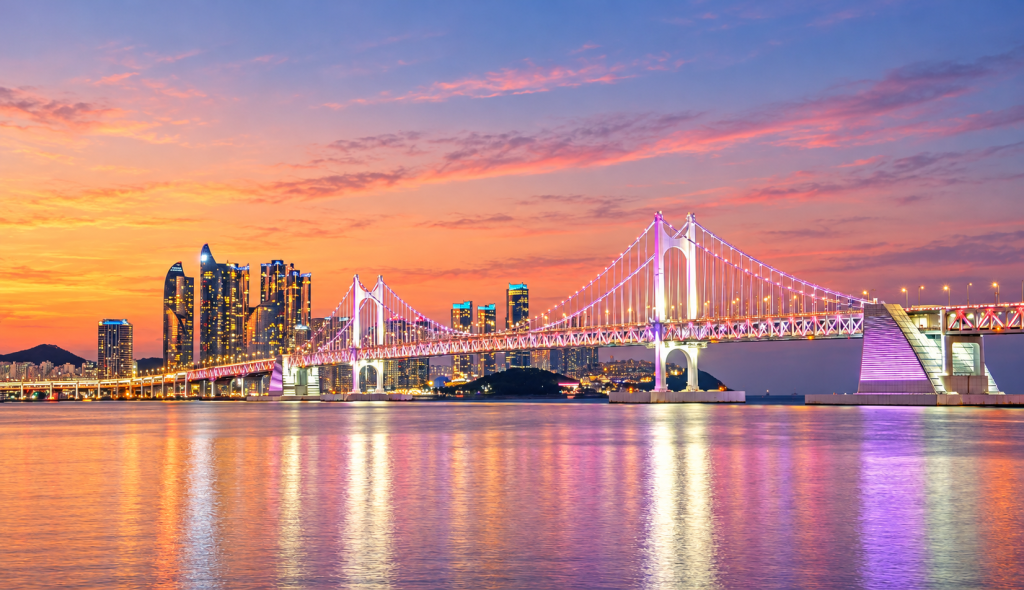
At Gwangalli Beach, the defining view is Gwangan Bridge, also called Gwangandaegyo, stretching across the water. The beachfront is lined with cafés and restaurants, making it an easy place to slow down after sightseeing. Come before dark if you want to see the coastline in daylight, then stay as the bridge lights change the scene. This is a good choice for visitors who prefer a long seaside evening to another ticketed attraction. [3]
The Millak side of the bay extends the waterfront outing and is known for seafood dining. Choose one place to eat rather than trying to sample an entire neighborhood in an hour. Ask about the total price and any preparation or table charges before ordering seafood. Use Gwangan or Geumnyeonsan Station on Line 2 according to your destination, then walk toward the beach. Gwangalli and Haeundae are separate beaches; allow a transit leg between them rather than treating them as one promenade.
3. Seomyeon and Jeonpo: City Life, Coffee, and Connections
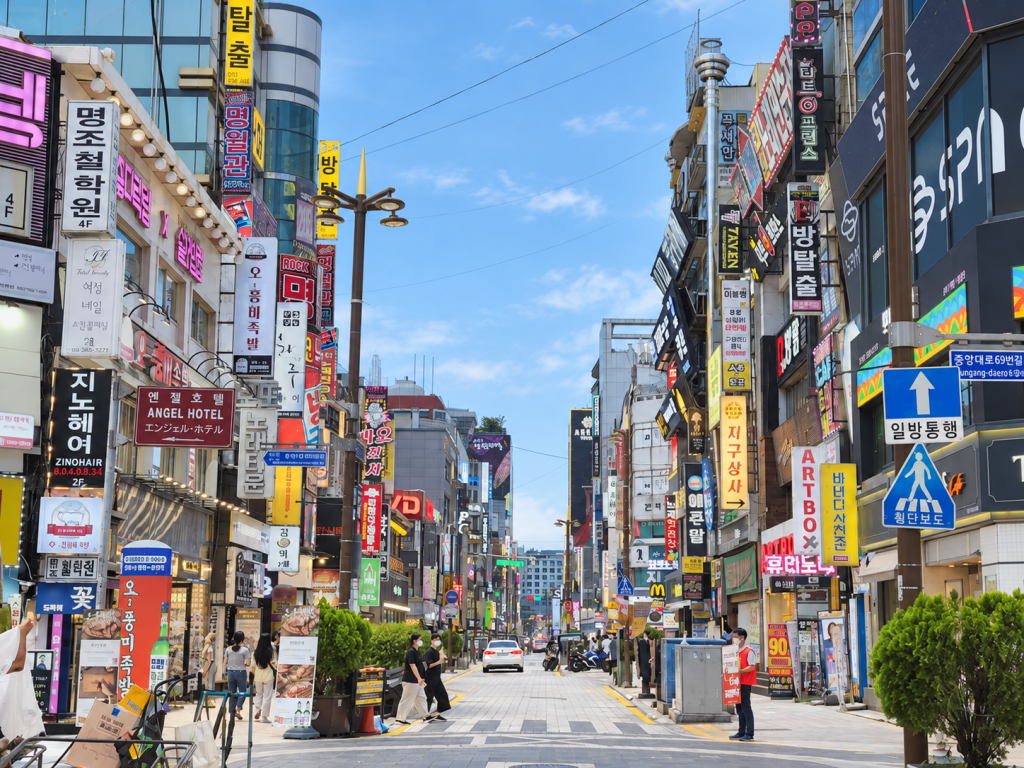
Seomyeon is a practical base for a trip covering both the old downtown and eastern beaches because Lines 1 and 2 meet here. Its shopping streets and restaurants offer a city-center experience rather than a beach-resort atmosphere. If you expect to be out sightseeing most of the day and want a convenient place to return for dinner, start your accommodation search near this interchange. [1]
Nearby Jeonpo Café Street is worth visiting for its cafés, bakeries, and smaller streets. Some businesses occupy converted houses, factories, and warehouses, making the surroundings part of the appeal. Spend an afternoon choosing a café and exploring at your own pace instead of chasing a fixed list of photogenic interiors. Individual opening days differ, so check a particular shop before making it the centerpiece of your visit. Jeonpo Station on Line 2 is another useful access point. [4]
4. Nampo, Gamcheon, and Songdo: Markets and Hillside Busan
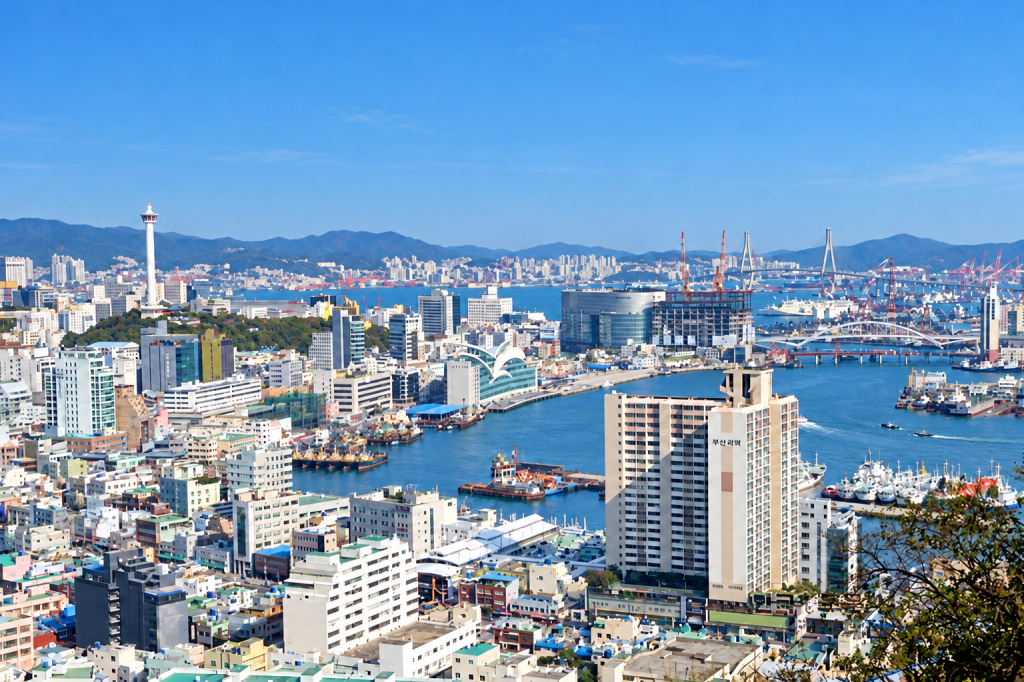
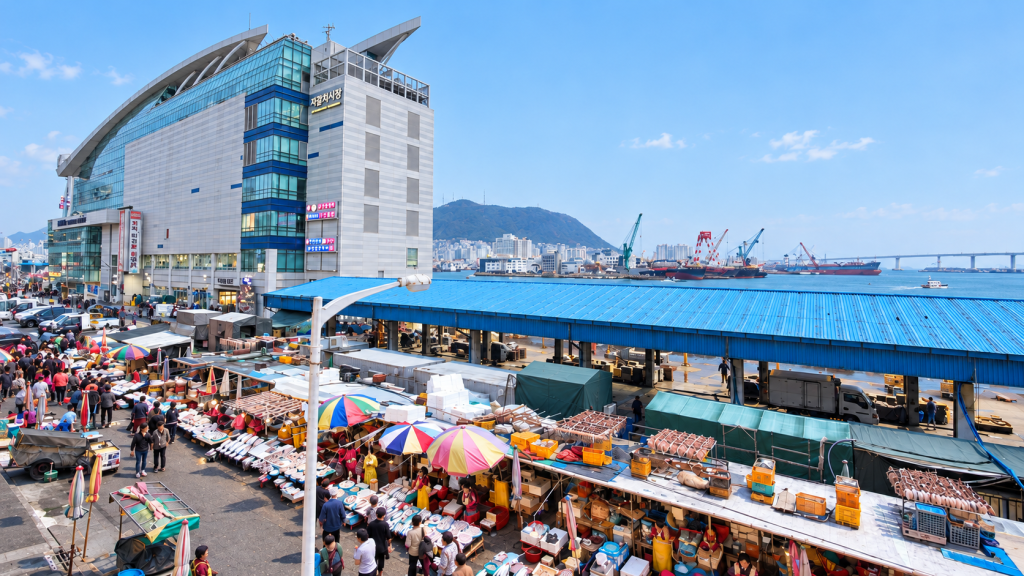
Start around Nampo or Jagalchi Station for Jagalchi Market, where seafood trading reveals the city’s connection to the port. Nearby, Gukje Market offers general market browsing, while Bupyeong Kkangtong Market and the streets around BIFF Square are good places to look for snacks. These central market stops can form a walking outing. Ask before photographing vendors, and agree on what is included before ordering a seafood meal. [5]
For a different view, take onward transport to Gamcheon Culture Village, whose terraced homes and lanes are tied to Busan’s wartime and postwar settlement history. It remains a residential neighborhood: keep voices low and stay out of private doorways. Songdo is another separate outing, with a beach and the paid Busan Air Cruise cable car over the water. Choose Gamcheon or Songdo as your main addition to the markets on a shorter visit; neither should be presented as a quick, flat walk from Nampo. [6][7]
5. Yeongdo: Coastal Neighborhoods and Dramatic Cliffs
Yeongdo is an island linked to the mainland by bridges, with a different rhythm from the resort beaches. Huinnyeoul Culture Village combines residential lanes, small cultural spaces, and sea-facing views. Its redevelopment includes older homes adapted for cultural uses, but the neighborhood is still lived in. Visit during the day, keep photography considerate, and remember that steps and sloping paths can make an apparently short route demanding. [8]
Farther around the island, Taejongdae is the choice for cliffs and open-water scenery. Give it its own block of time rather than squeezing it into a brief café stop. Yeongdo’s main sights are not connected by metro, so plan bus or taxi legs and check your return journey. For a first trip, combine Nampo with one Yeongdo destination; attempting both Huinnyeoul and Taejongdae after a full market-and-Gamcheon day is likely to feel rushed. [9]
6. Gijang and Osiria: A Seaside Temple and a Full-Day Option
The northeastern coast is worth the journey when you want a destination beyond the central beaches. Haedong Yonggungsa Temple stands beside the sea, giving its temple buildings a setting quite different from a mountain monastery. Walk through it as a place of worship, not simply a photo location: follow access signs, respect services, and expect stairs. The temple is in Gijang, so it belongs in an eastern itinerary rather than as an easy extra after visiting Nampo. [10]
Nearby in the wider Osiria tourism area, Lotte World Adventure Busan is a separate choice for rides and entertainment. If a theme park is a priority, devote most of the day to it and check tickets and ride conditions in advance. Osiria Station on the Donghae Line is useful for this area, but individual attractions still require a walk, bus, or taxi. A temple visit plus a relaxed coastal stop is one kind of day; a full theme-park visit is another. [1][11]
Where Should First-Time Visitors Stay in Busan?
| Your priority | Area to consider | Main trade-off |
|---|---|---|
| Seeing both eastern and western sights | Seomyeon | Convenient interchange, but no beach outside the hotel |
| Waking up near a major beach | Haeundae | Easy seaside time; longer journeys to Nampo and Yeongdo |
| Beach cafés and evening bridge views | Gwangalli | Appealing evening setting; check the walk to the metro |
| Markets and the old downtown | Nampo | Convenient for the port-side cluster; farther from Gijang |
These are itinerary-based recommendations, not hotel rankings. Check the actual address: an accommodation advertised with a neighborhood name may be much farther from its station or beach than you expect. For a short stay, choosing one well-located base usually keeps the trip simpler than moving hotels.
How Many Days Do You Need in Busan?
Three full sightseeing days are a useful starting point, rather than a promise that you can see everything. Spend one day on Nampo’s markets plus Gamcheon or one Yeongdo stop; use another for Haeundae and a booked coastal ride, finishing at Gwangalli if energy allows. On the third, choose Gijang, a longer Yeongdo outing, or Seomyeon and Jeonpo. Your choice should reflect what you enjoy, not the number of pins saved on your map.
With only one full day, pick an eastern beach day or an old-downtown day. For four or more days, add the alternative you skipped and leave time for weather changes. Avoid combining an early departure, two opposite ends of Busan, and a late intercity train without checking the complete door-to-door journey.
Getting Around and Arriving in Busan
Busan Station connects to Metro Line 1, which is useful for Nampo and for transferring at Seomyeon to Line 2. From Gimhae International Airport, the Busan–Gimhae Light Rail links to Line 2 at Sasang. Save your accommodation and attractions before traveling, then check the current route and final service for the day. [1]
The metro covers many major starting points, but it does not remove the need for buses, taxis, or uphill walking. Group nearby sights and avoid repeatedly crossing the city. Coastal services can also be affected by weather: confirm a booked ride’s operating notice, and keep a café, shopping, or market alternative available instead of relying on one outdoor activity.
Frequently Asked Questions
Is Haeundae or Gwangalli better for a first visit?
Choose Haeundae for a classic beach outing with access to the Mipo coastal attractions. Choose Gwangalli for a beach evening centered on bridge views and dining. You can visit both without staying in both areas.
Can I explore Busan without renting a car?
Yes. The main itinerary can be built around metro, buses, and occasional taxis. Yeongdo and some Gijang attractions need more onward planning than central metro stops.
Are Gamcheon and Huinnyeoul the same village?
No. Gamcheon is a terraced hillside neighborhood in Saha-gu; Huinnyeoul is on Yeongdo. Both have residents, so visit respectfully and allow time for the terrain.
Is Busan only worth visiting in summer?
No. Markets, cafés, temple visits, and coastal views can be enjoyed outside swimming season. Choose activities for the weather and follow current beach and attraction guidance.
Sources and Visitor Updates
Researched October 15, 2026. Check current transport routes, attraction notices, and reservation conditions before visiting. Suggested day allocations are editorial planning advice.
- Busan Transportation Corporation: Official network map
- Haeundae Blueline Park: Official visitor information
- Korea Tourism Organization: Gwangalli Beach
- Korea Tourism Organization: Jeonpo Café Street
- Korea Tourism Organization: Busan by subway—markets and neighborhoods
- Korea Tourism Organization: Gamcheon and Busan walking culture
- Korea Tourism Organization: Busan Air Cruise
- Korea Tourism Organization: Huinnyeoul Culture Village
- Korea Tourism Organization: Taejongdae coastal scenery
- Korea Tourism Organization: Haedong Yonggungsa
- Korea Tourism Organization: Lotte World Adventure Busan


Leave a Reply