You bought a jar of kimchi, enjoyed it with rice or Korean barbecue, and now half of it is sitting in your refrigerator.
What should you do with the rest?
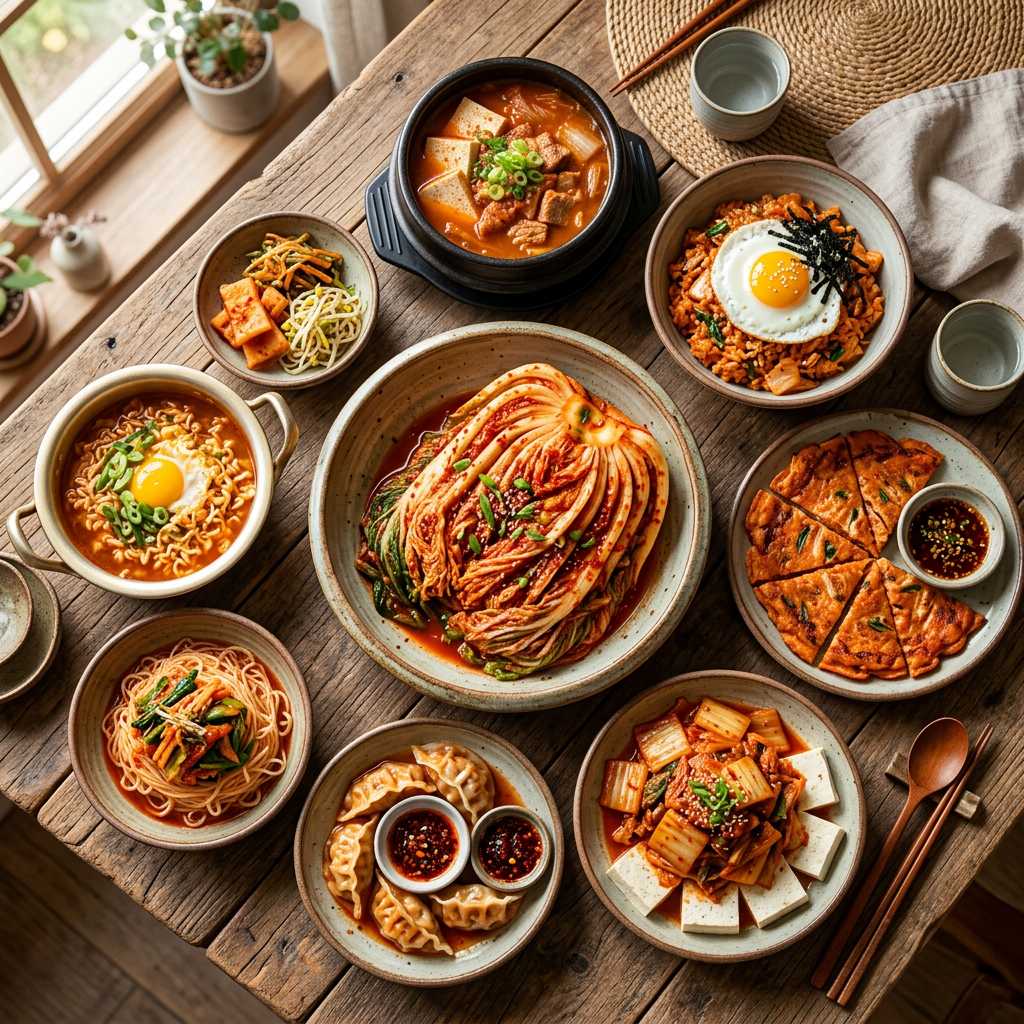
In Korean cooking, kimchi is much more than a side dish. It can become the base of a stew, the star of fried rice, a crispy pancake, or even a dumpling filling. Better yet, kimchi that has become too sour to eat on its own can be excellent for cooking.
Here are eight delicious ways to turn kimchi into another Korean meal.
1. Kimchi Jjigae (김치찌개) — Kimchi Stew
Kimchi jjigae is one of the most familiar Korean comfort foods. Well-fermented kimchi is simmered with ingredients such as pork, tofu, onion, and green onion to create a spicy, savory, and slightly sour stew.
Older, sour kimchi works especially well because its stronger flavor develops beautifully when cooked.
Serve it bubbling hot with plain steamed rice—the mild rice balances the intense flavor of the stew.
Best kimchi: Well-fermented napa cabbage kimchi
2. Kimchi Bokkeumbap (김치볶음밥) — Kimchi Fried Rice
If you have leftover rice and kimchi, you already have the foundation for kimchi bokkeumbap.
Chopped kimchi is stir-fried with rice, and you can add pork, tuna, ham, green onions, or whatever you have in the refrigerator.
One popular finishing touch is a fried egg. Break the soft yolk over the spicy rice and mix everything together.
For someone cooking Korean food for the first time, this is one of the easiest dishes to try.
Best kimchi: Moderately or well-fermented kimchi
3. Kimchi Jeon (김치전) — Kimchi Pancake
Crispy around the edges and soft inside, kimchi jeon turns fermented kimchi into a simple savory pancake.
Chopped kimchi is mixed into a flour-based batter and pan-fried until golden and crispy. Some versions also include pork, squid, or other seafood.
In Korea, jeon is popularly associated with rainy days, often enjoyed with makgeolli (막걸리), a traditional Korean rice drink.
Best kimchi: Sour, well-fermented kimchi
4. Dubu Kimchi (두부김치) — Tofu with Kimchi
Dubu kimchi is all about contrast.
Warm tofu is soft and mild, while stir-fried kimchi is spicy, salty, and tangy. A common version combines kimchi with pork and serves the mixture alongside slices of warm tofu.
Take a piece of tofu, top it with the kimchi mixture, and eat them together.
For a vegetarian version, skip the pork—but remember that some kimchi itself contains fish sauce or salted seafood.
Best kimchi: Well-fermented kimchi
5. Kimchi Jjim (김치찜) — Braised Kimchi
Kimchi jjim shows what happens when aged kimchi is cooked slowly.
Large pieces of fermented napa cabbage are braised, often with pork, until the kimchi becomes tender and deeply flavorful.
Unlike kimchi jjigae, which contains more broth, kimchi jjim is richer and more concentrated. The kimchi itself becomes one of the main components of the meal rather than a small side dish.
Best kimchi: Aged napa cabbage kimchi
6. Kimchi Mandu (김치만두) — Kimchi Dumplings
Mandu are Korean dumplings, and kimchi makes a flavorful filling.
Finely chopped kimchi can be combined with tofu, vegetables, glass noodles, pork, or other ingredients before being wrapped in dumpling skins.
Kimchi mandu can then be steamed, boiled, or pan-fried.
They are also a practical way to use a relatively small amount of leftover kimchi.
Best kimchi: Well-fermented kimchi
7. Kimchi Guksu (김치국수) — Kimchi Noodles
Kimchi also pairs naturally with noodles.
One simple version combines noodles with chopped kimchi and a spicy, tangy sauce. Cold variations are particularly refreshing during Korea’s hot summer months.
The combination works because of contrast: soft noodles meet crunchy kimchi, while the fermented acidity keeps the dish bright and flavorful.
Best kimchi: Flavorful fermented kimchi
8. Kimchi Ramyeon (김치라면) — The Easiest Upgrade
This might be the easiest kimchi dish of all.
Prepare Korean instant ramyeon and simply add some kimchi.
The kimchi gives the broth extra acidity, spice, and fermented flavor. Add an egg, green onion, tofu, mushrooms, or other ingredients to turn instant noodles into a more satisfying meal.
It may not require an elaborate recipe, but that’s exactly the point. Kimchi is also part of simple everyday cooking.
Best kimchi: Almost any napa cabbage kimchi
Fresh or Sour Kimchi: Which Is Better for Cooking?
One of the most useful things to understand about kimchi is that its flavor keeps changing as it ferments.
Fresh kimchi tends to be crisp and bright. As it ages, it becomes more acidic and develops a stronger fermented flavor.
A simple guide is:
| Kimchi | Try It With |
|---|---|
| Fresh and crunchy | Rice, Korean BBQ, banchan |
| Moderately fermented | Fried rice, noodles, ramyeon |
| Sour and well-fermented | Kimchi jjigae, kimchi jeon, kimchi jjim |
These aren’t strict rules—recipes and preferences vary between households—but they show how fermentation changes the way kimchi can be used.
Don’t Throw Away Sour Kimchi Too Quickly
When kimchi becomes noticeably sour, someone unfamiliar with fermented Korean food might assume it is time to throw it away.
But that sourness can make it even more useful in cooking.
Aged kimchi gives kimchi jjigae its characteristic depth, adds stronger flavor to fried rice, and works beautifully inside a crispy kimchi pancake.
So the next time you find an aging jar of kimchi in your refrigerator, don’t think only of it as a side dish.
Heat a pan, make some rice, or put a pot on the stove.
Your kimchi may simply be ready for its next dish.


Leave a comment