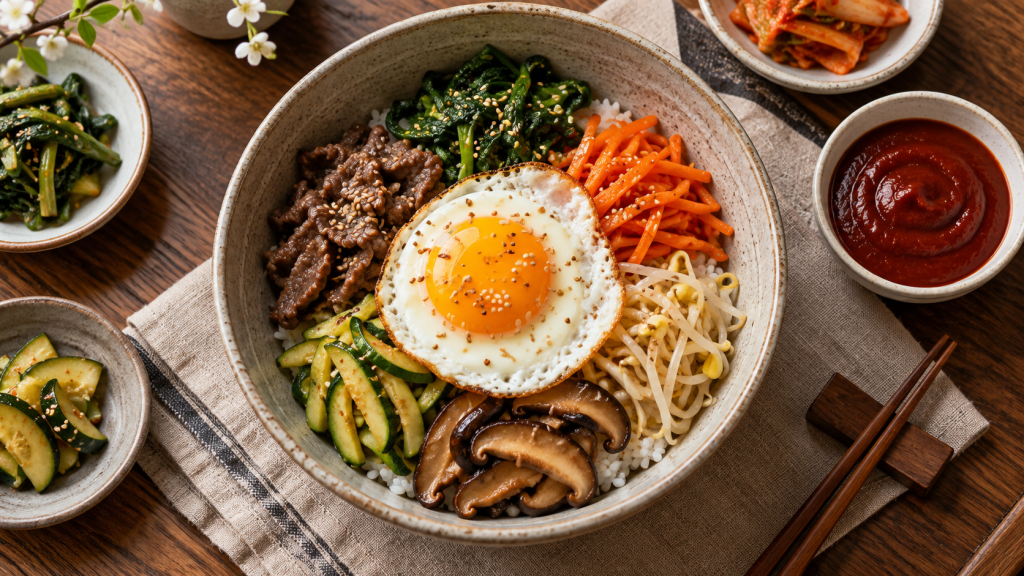
If you’ve ever visited a Korean restaurant, you’ve probably seen bibimbap: a colorful bowl of rice topped with vegetables, meat, a fried egg, and a bright red sauce.
It looks impressive, but here’s the good news: bibimbap is surprisingly easy to make at home.
Unlike dishes that require complicated cooking techniques, bibimbap is all about preparing simple ingredients and bringing them together in one bowl.
It’s also highly customizable, making it an excellent introduction to Korean home cooking.
What Is Bibimbap?
Bibimbap (비빔밥) literally means “mixed rice” in Korean. Bibim means mixing, and bap means cooked rice.
The dish typically consists of steamed rice topped with seasoned vegetables, meat, an egg, and gochujang (고추장), a Korean fermented red chili paste.
Before eating, everything is mixed together so that the ingredients and sauce coat the rice.
Bibimbap is closely associated with Korean food culture because it brings together different flavors, colors, and textures in a single meal.
One particularly famous variation is Jeonju bibimbap, named after the Korean city of Jeonju, which is widely known for its culinary traditions.
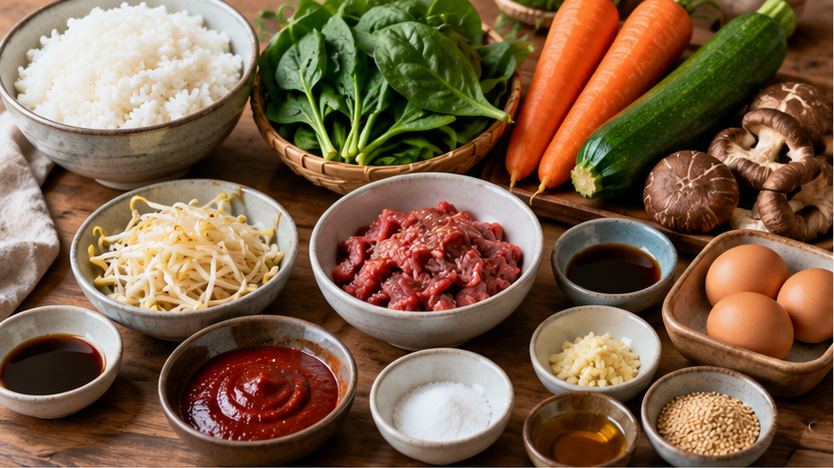
Ingredients (Serves 2)
You can find most of these ingredients at a regular supermarket or an Asian grocery store.
For the rice bowl:
- 2 cups cooked short-grain rice
- 150 g (5.3 oz) ground beef or thinly sliced beef
- 1 small carrot, julienned
- 1 small zucchini, julienned
- 100 g (3.5 oz) spinach
- 100 g (3.5 oz) bean sprouts
- 4 shiitake mushrooms, sliced
- 2 eggs
- 2 teaspoons sesame oil
- 1 tablespoon vegetable oil
- Salt and pepper to taste
- Sesame seeds for garnish
For the beef marinade:
- 1 tablespoon soy sauce
- 1 teaspoon sugar
- 1 teaspoon sesame oil
- 1 minced garlic clove
For the bibimbap sauce:
- 2 tablespoons gochujang
- 1 tablespoon sesame oil
- 1 teaspoon sugar or honey
- 1 teaspoon rice vinegar
- 1 tablespoon water
How to Make Bibimbap: Step-by-Step
Step 1. Prepare the Rice
Cook the rice according to the package instructions.
Short-grain Korean or Japanese rice works particularly well because its slightly sticky texture makes the ingredients easier to mix.
Keep the rice warm while preparing the toppings.
Step 2. Prepare the Vegetables
Blanch the spinach in boiling water for about 30 seconds. Drain, rinse briefly under cold water, and squeeze out the excess moisture.
Season it with a little salt and sesame oil.
Blanch the bean sprouts for approximately 2–3 minutes, until cooked but still slightly crunchy. Drain and season lightly.
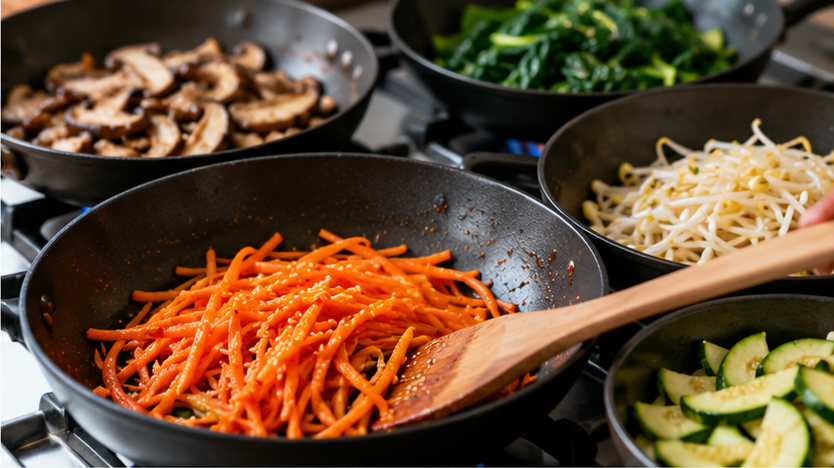
In a frying pan, sauté the carrot, zucchini, and mushrooms separately with small amounts of vegetable oil and salt until tender.
Cooking the vegetables separately helps preserve their individual flavors and textures.
Step 3. Cook the Beef
Combine the beef with soy sauce, sugar, sesame oil, and minced garlic.
Heat a frying pan over medium-high heat and cook the beef until browned and fully cooked.
For a vegetarian version, replace the beef with sautéed mushrooms or firm tofu.
Step 4. Prepare the Sauce
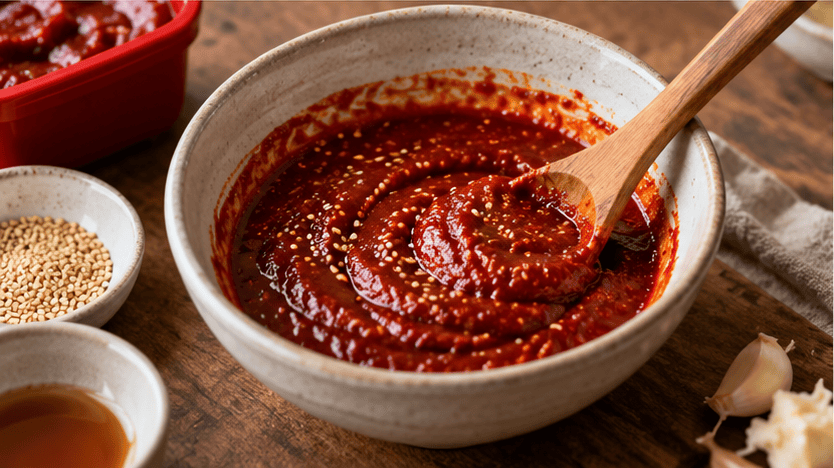
Mix the gochujang, sesame oil, sugar or honey, rice vinegar, and water in a small bowl.
Stir until smooth.
If you prefer a milder flavor, start with less gochujang and adjust according to your taste.
Step 5. Fry the Eggs
Heat a lightly oiled frying pan and cook the eggs sunny-side up until the whites are set.
A soft yolk is popular because it creates a creamy texture when mixed with the rice, but you can cook the eggs to your preferred doneness.
Step 6. Assemble Your Bibimbap
Divide the warm rice between two bowls.
Arrange the prepared vegetables and beef in separate sections over the rice. Place a fried egg in the center.
Add the gochujang sauce and sprinkle sesame seeds over the top.
Your bibimbap is ready!
How Do Koreans Eat Bibimbap?
One common mistake among first-time diners is eating the toppings separately.
The name bibimbap tells you exactly what to do: mix everything together before eating.
Use a spoon to combine the rice, vegetables, meat, egg, and sauce until the ingredients are evenly distributed.
The result is a balanced combination of savory, sweet, spicy, and nutty flavors.
Bibimbap is also sometimes served in a heated stone bowl, known as dolsot bibimbap (돌솥비빔밥). The hot bowl creates a delicious crispy layer of rice at the bottom.
Tips for Making Better Bibimbap
- Use warm rice: It makes the ingredients easier to combine.
- Don’t overcook the vegetables: A little crunch improves the overall texture.
- Adjust the sauce: Start with a small amount and add more after tasting.
- Use what you have: Bell peppers, cucumber, mushrooms, or leftover vegetables can work well.
- Prepare ingredients in advance: Cook the toppings ahead of time and assemble the bowl when you’re ready to eat.
A Korean Dish You Can Make Your Own
One of the best things about bibimbap is its flexibility.
Although traditional versions have their own ingredients and preparation methods, homemade bibimbap can easily be adapted to different tastes and dietary preferences.
You don’t need expensive ingredients or specialized cooking equipment. A frying pan, a pot of rice, and a few fresh vegetables are enough to get started.
And once you’ve learned the basic method, you can experiment with different toppings and sauces.
Bibimbap is more than a colorful Korean rice bowl. It’s a simple, satisfying way to bring Korean flavors into your everyday cooking.


Leave a comment