Kongbiji jjigae (콩비지찌개) does not have the glossy red appearance of tteokbokki or the colorful toppings of bibimbap. Instead, it is thick, rustic, nutty, and closely connected to one of the most important ingredients in Korean cooking: the soybean.
Kongbiji is soybean pulp associated with the process of making soy milk and tofu. Korean cultural material on tofu explains that soaked soybeans are ground and cooked, then the soybean pulp is separated before the liquid is coagulated into tofu.
What Is Kongbiji Jjigae?
Traditional kongbiji jjigae makes practical use of soybean pulp rather than treating it as waste. Modern home cooks may use fresh okara from tofu or soy milk production, or simply blend soaked soybeans into a creamy puree.
The soybean base is mild and nutty, so kimchi and pork are commonly added for acidity, spice, and savory depth. The finished stew is thicker than many Korean jjigae and is especially satisfying with plain rice.
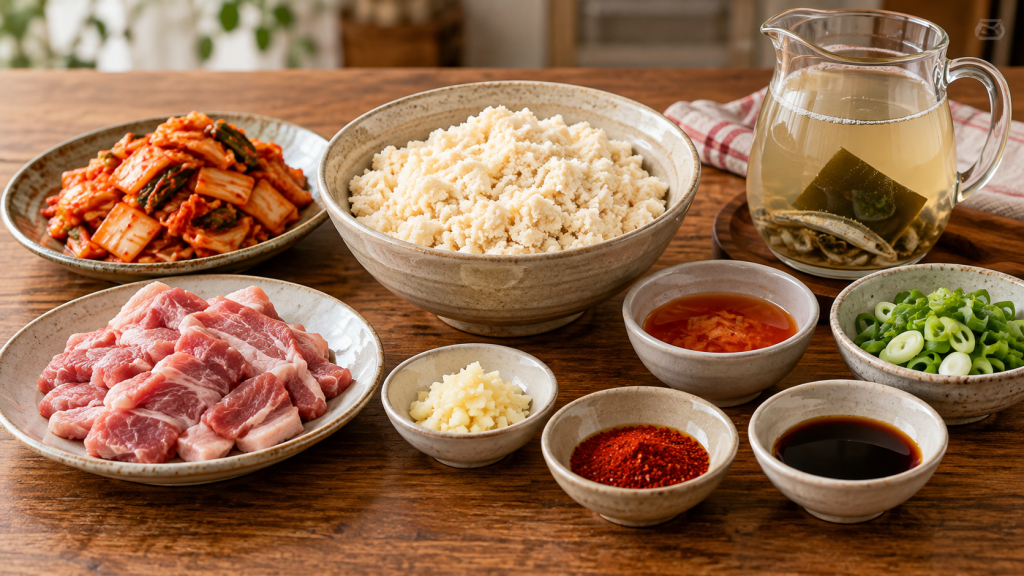
Ingredients — Serves 4
- 17.6 oz (500 g) fresh soy pulp (okara/kongbiji)
- 5.3 oz (150 g) pork shoulder or ground pork
- 8.8 oz (250 g) well-fermented kimchi, chopped
- 2 cups (475 ml) unsalted anchovy-kelp broth or water
- 2–3 tbsp kimchi brine
- 2 green onions, sliced
- 2 garlic cloves, minced
- 1 tbsp sesame oil
- 1 tbsp Korean soup soy sauce
- 1 tsp gochugaru, optional
- Salt only if needed
How to Make Kongbiji Jjigae
Step 1. Prepare the Soy Pulp
Fresh okara can be used directly. If you cannot find it, soak dried soybeans overnight, drain them, and blend them with enough water to create a thick, creamy puree.
Modern Korean home recipes also commonly use finely ground soaked soybeans when fresh tofu-making pulp is unavailable.
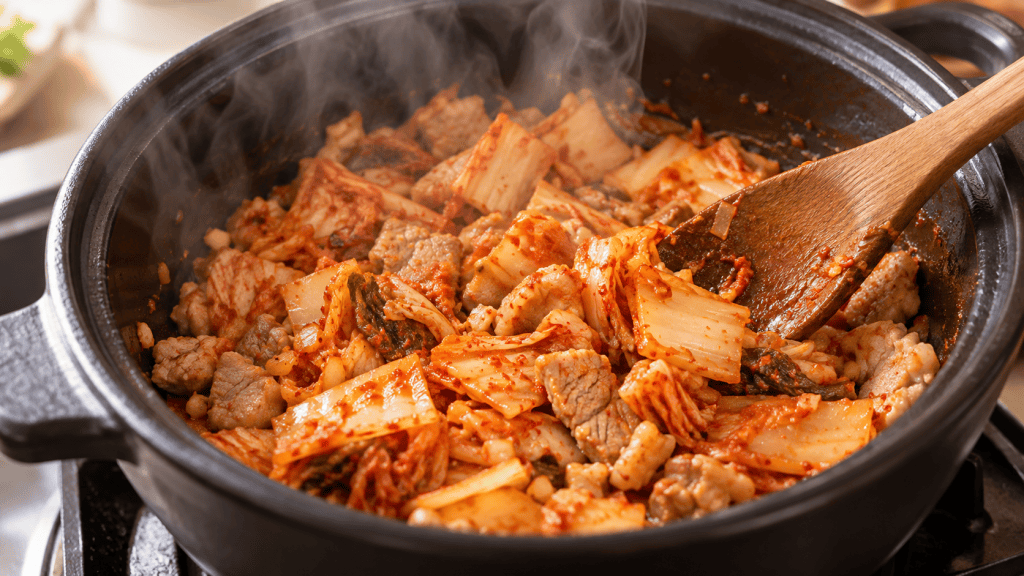
Step 2. Cook the Pork and Kimchi
Heat a heavy pot over medium heat and add the sesame oil. Cook the pork until lightly browned.
Add the garlic and kimchi and stir-fry for about 3–4 minutes. Cooking the kimchi first builds a stronger savory base before the mild soy pulp is added.
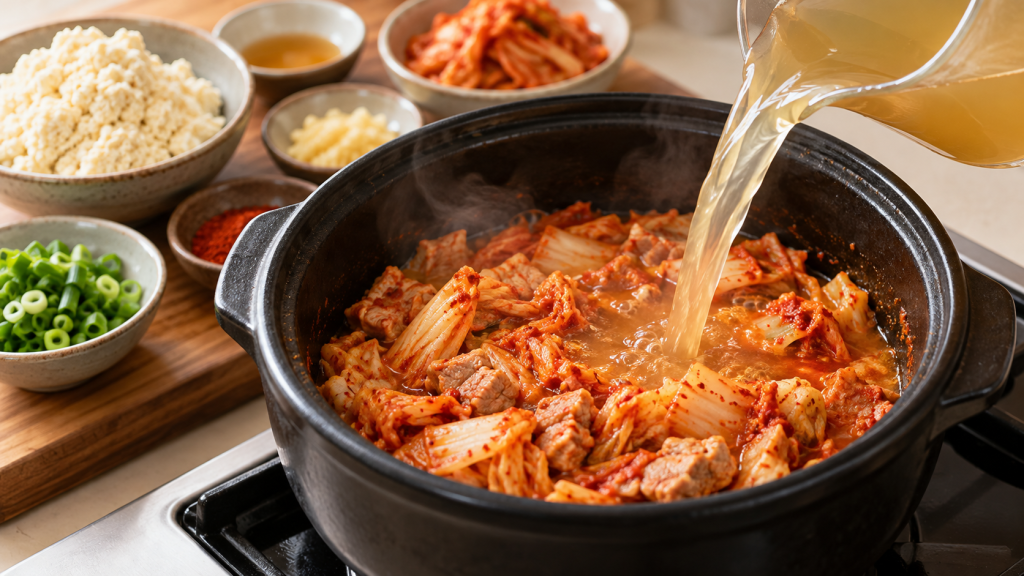
Step 3. Add the Broth
Pour in the broth or water and kimchi brine. Add the optional gochugaru and bring everything to a gentle boil.
Simmer for about 5 minutes so the pork and kimchi flavor the liquid.
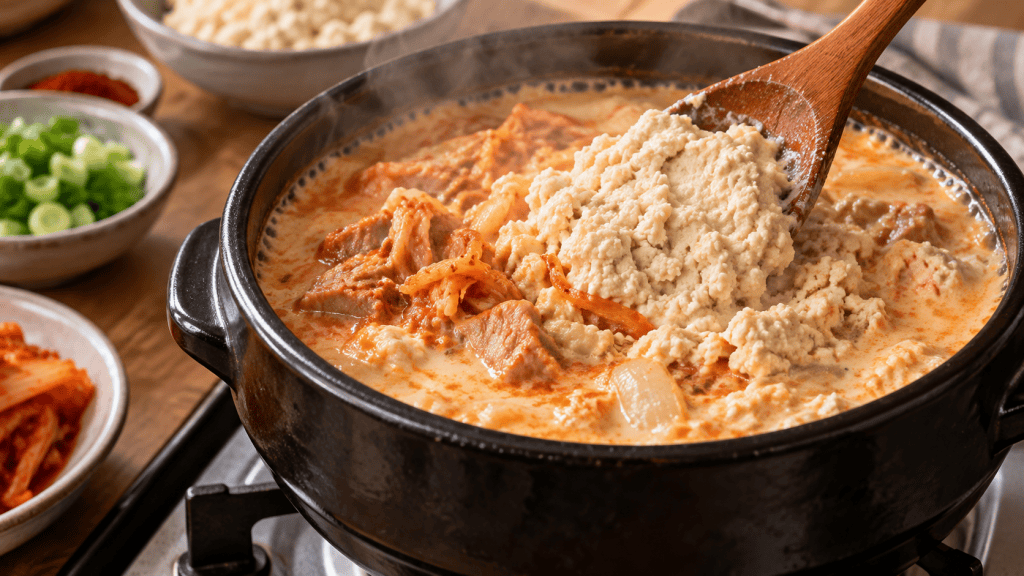
Step 4. Add the Kongbiji
Spoon the soy pulp into the pot and reduce the heat to medium-low. Stir gently along the bottom so the thick mixture does not scorch.
Simmer uncovered for about 10–15 minutes, or until the soybean mixture is fully heated and the stew has thickened.
Season with soup soy sauce, add green onions, and taste before adding salt.
The Connection Between Kongbiji and Tofu
For international readers familiar with tofu, kongbiji offers an interesting way to understand the whole soybean-making process.
In tofu production, soybeans are soaked, ground, cooked, and filtered. The liquid becomes the base for tofu, while the fibrous soybean pulp is known internationally as okara and in Korean as biji or kongbiji.
Rather than being merely a by-product, that pulp can become a meal of its own. This practical use of soybeans is part of why kongbiji jjigae feels closely tied to Korean home cooking rather than restaurant spectacle.
Common Mistakes to Avoid
The biggest problem is scorching. Soy pulp is thick and can stick to the bottom quickly, so use moderate heat and stir gently.
Also use a large enough pot. Ground soybean mixtures can foam and rise as they heat.
Finally, avoid oversalting at the beginning. Kimchi, kimchi brine, and soup soy sauce all add sodium, and their saltiness varies widely by brand and household recipe.
Calories & Nutrition per Serving
Estimated for one-quarter of the recipe, excluding rice:
- Calories: ~255 kcal
- Carbohydrates: ~20 g
- Protein: ~16 g
- Fat: ~13 g
- Fiber: ~19 g
- Sodium: ~560 mg
Fiber is the least certain value because the composition and moisture content of fresh soy pulp vary substantially. Actual nutrition depends heavily on the soy pulp, pork cut, kimchi, and soy sauce used.
FAQ
Is Kongbiji the Same as Tofu?
No. Kongbiji is soybean pulp associated with tofu and soy milk production; tofu is made from the extracted soybean liquid after coagulation.
Can I Make Kongbiji Jjigae Without Pork?
Yes. Mushrooms can provide extra savory flavor, but also check that your kimchi and broth are vegetarian.
Where Can I Buy Soy Pulp?
Korean tofu shops, Asian markets, or soy milk makers may sell fresh okara. You can also make a similar base from soaked and blended soybeans.
Is Kongbiji Jjigae Spicy?
It is usually less intensely spicy than many red Korean stews. The heat depends mainly on the kimchi and optional gochugaru.
Kongbiji jjigae is not Korea’s flashiest dish, but that is part of its appeal. It turns a humble soybean ingredient into a warm, substantial meal and gives international cooks a glimpse of Korean home cooking beyond the foods most often seen on restaurant menus.


Leave a Reply