Easy Gyeran Mari Recipe: Korean Rolled Omelet with Vegetables
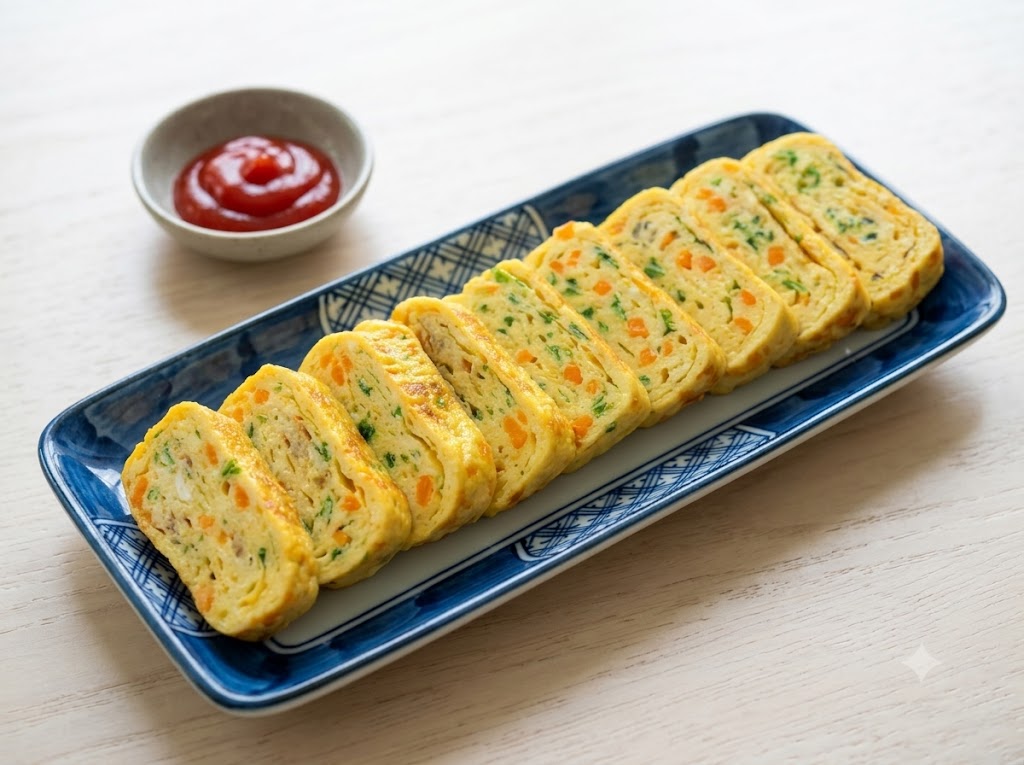
Golden and dotted with vegetables, gyeran mari (계란말이) turns eggs into a familiar Korean side dish. Instead of folding an omelet once, you roll thin layers into a compact log and slice it into spirals. No specialty Korean ingredients are required, making this an excellent beginner recipe.
What Is Gyeran Mari?
Gyeran means egg, and mari refers to something rolled. The Korea Tourism Organization describes rolled omelet as beaten eggs, sometimes mixed with chopped vegetables, cooked in layers and sliced thickly. It appears beside rice and soup as banchan (a shared side dish), in dosirak lunchboxes, and as a casual snack.
Unlike a fluffy Western breakfast omelet, gyeran mari takes shape gradually in the skillet. Carrot and scallion add color without overpowering the eggs. The slices are mild, savory, and easy to share.
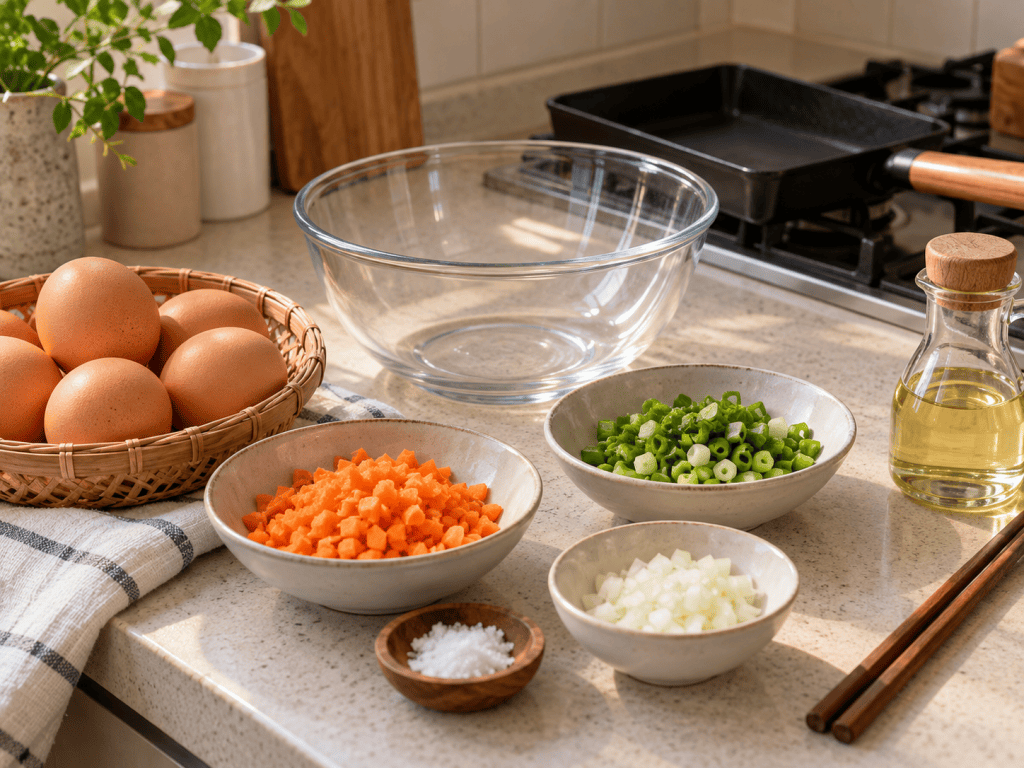
Ingredients — Serves 4 as a Side Dish
• 6 large eggs (about 300 g without shells)
• 1 small carrot portion (40 g), finely diced
• 2 scallions (30 g), finely chopped
• 2 tbsp diced onion (30 g)
• 2 tsp neutral vegetable oil (10 g)
• 1/6 tsp fine salt (about 1 g)
• Pinch of ground black pepper
Equipment: An 8- to 10-inch (20–25 cm) nonstick skillet, flexible spatula, mixing bowl, and sharp knife.
How to Make Korean Rolled Omelet
Step 1. Prepare the Vegetables
Dice the carrot, scallions, and onion finely. Large pieces interrupt the egg layers and make rolling difficult. Pat the vegetables dry if necessary. Have a cutting board ready for the finished roll.
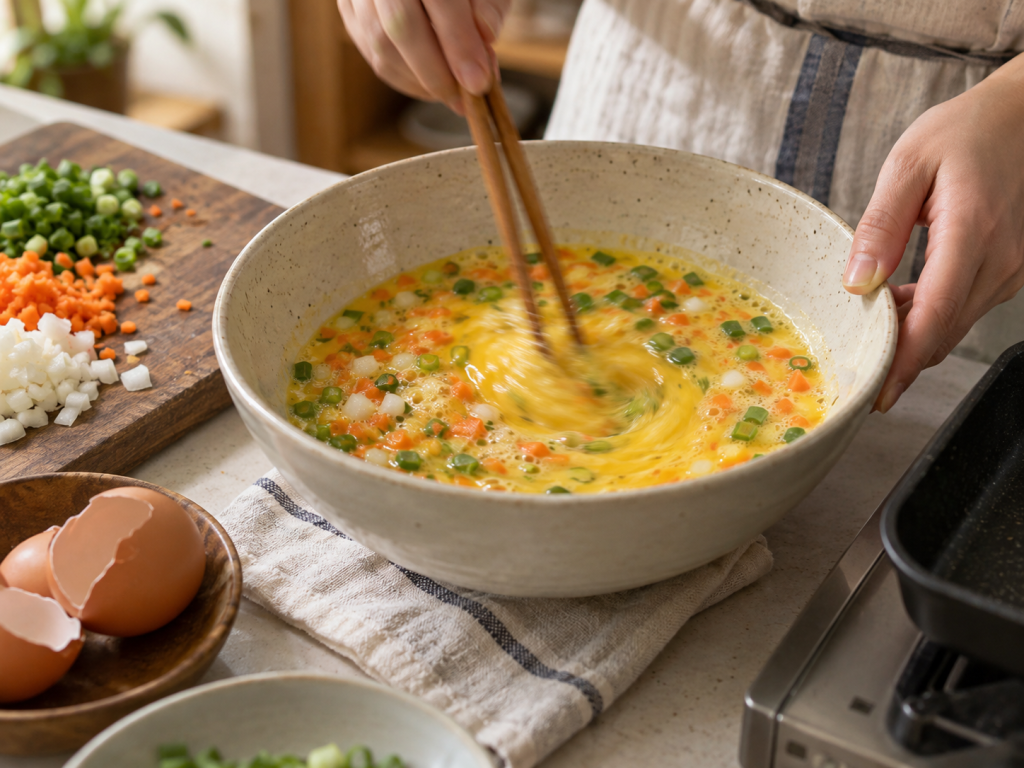
Step 2. Beat and Season the Eggs
Crack the eggs into a bowl. Beat gently with a fork until yolks and whites are combined, without whipping in too much air. Stir in the vegetables, salt, and pepper. A smooth mixture spreads more evenly than one with streaks of egg white.
Step 3. Cook the First Layer
Heat the skillet over medium-low heat. Brush with a little of the measured oil. Pour in about one-quarter of the egg mixture and tilt the pan into a thin layer. Cook until the underside sets but the surface remains slightly moist, approximately 60–90 seconds.
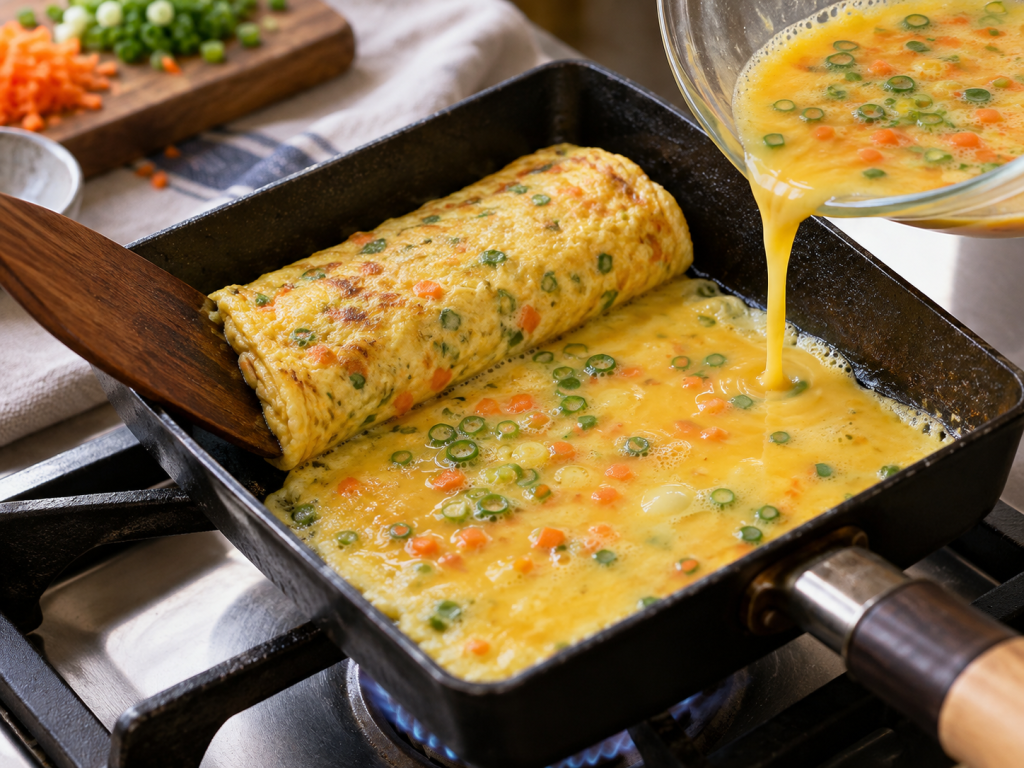
Step 4. Roll and Add More Egg
Using a spatula, fold one edge inward and roll toward the opposite side. Slide the roll back toward its starting edge. Lightly oil the exposed skillet, pour in another quarter of the mixture, and lift the roll so fresh egg flows underneath it. When the new layer is almost set, roll again. Repeat until all the egg is used.
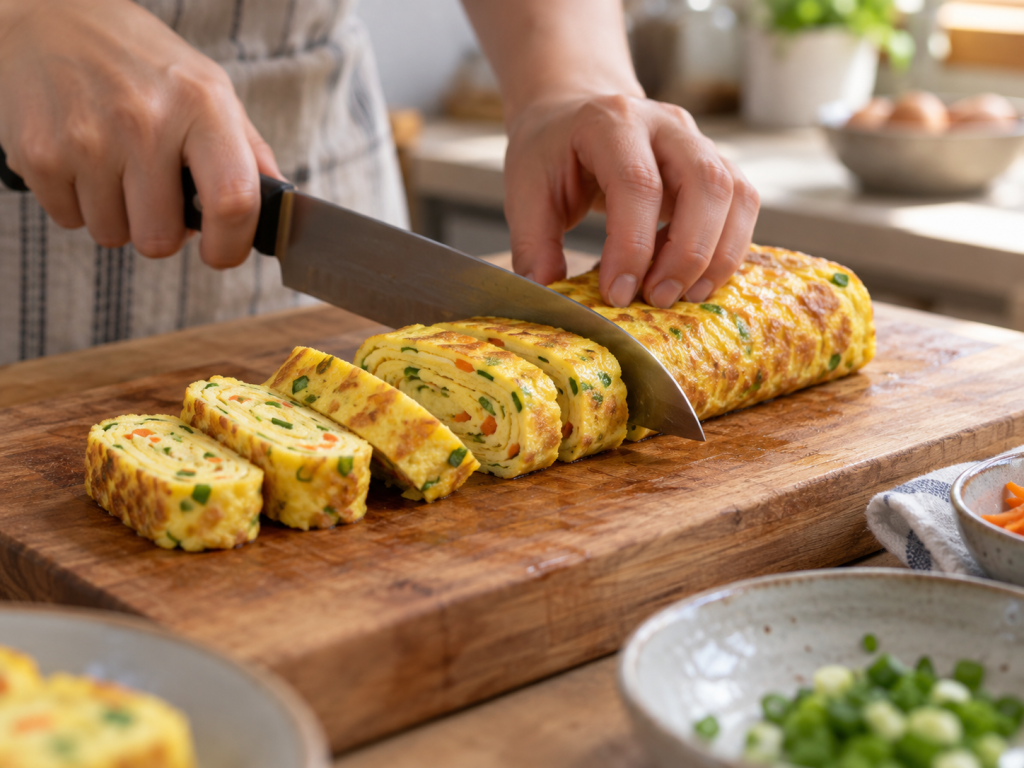
Step 5. Rest and Slice
Turn the completed log gently over low heat until its sides and center are fully set. Transfer to a board and rest five minutes. Slice crosswise into 3/4-inch (2 cm) pieces. Serve warm with rice or cool promptly before packing into a lunchbox.
Practical Substitutions
No scallions? Use chopped chives. Red bell pepper adds sweetness, while a thin sheet of gim (roasted seaweed) creates a contrasting spiral. Finely chopped zucchini also works if you squeeze out excess moisture.
For a richer version, add a little shredded cheese, but avoid overfilling. The basic recipe contains no meat or wheat ingredients; check packaged additions if you need to avoid gluten.
Common Mistakes to Avoid
High heat browns the underside too quickly, causing cracks and rubbery eggs. Cook patiently over gentle heat. Rolling when the top is completely liquid creates a messy center, but waiting until it is dry prevents layers from bonding. Aim for a slightly moist surface.
Too many vegetables also make the roll fragile. Thin, flexible layers matter more than a heavily stuffed omelet.
Calories & Nutrition per Serving
Estimated for one-quarter of the recipe: approximately 140 kcal, 2.7 g carbohydrates, 9.7 g protein, 9.7 g fat, 0.6 g fiber, and 215 mg sodium.
These estimates use USDA FoodData Central reference values for six large eggs (300 g), carrot (40 g), scallions (30 g), onion (30 g), oil (10 g), and salt (1 g). They assume all measured oil and salt are consumed. Actual values vary with brands, egg sizes, portions, substitutions, and cooking methods. Rice and optional fillings are excluded.
FAQ
Is Gyeran Mari the Same as a Japanese Rolled Omelet?
They look similar, but Korean gyeran mari is usually savory and often contains chopped vegetables. Recipes vary by household.
Can I Make It Ahead?
Yes. Refrigerate promptly in a covered container and use within three to four days. Reheat thoroughly before serving hot.
Do I Need a Rectangular Pan?
No. A round nonstick skillet works; guide the edges inward as you roll.
Gyeran mari shows how a Korean side dish can be both practical and beautiful.
More to read
• Gyeran Jjim : another easy savory side dish.
Easy Gyeran Jjim Recipe: Korean Steamed Eggs at Home
• Japchae: a colorful Korean dish for family meals
Easy Japchae Recipe: Korean Glass Noodles at Home


Leave a Reply