Seochon is one of the most rewarding neighborhoods to explore near Gyeongbokgung Palace: a place where tiled roofs, neighborhood food stalls, small galleries and mountain scenery fit into a single afternoon. This Seochon Seoul guide follows a walk from Tongin Market through residential lanes to Park No-soo Art Museum and Suseongdong Valley, with time for a café break.
Come for the hanok, but look beyond the roof tiles. The interesting story is how homes, shops and cultural spaces share a compact neighborhood—and how the streets gradually climb toward Inwangsan Mountain.
What Kind of Neighborhood Is Seochon?
Seochon means “western village,” referring to its position west of Gyeongbokgung. It is a neighborhood rather than a single gated attraction. Its streets combine traditional houses, later brick buildings and contemporary storefronts, with a history connected to artists and writers. Korea Tourism Organization’s neighborhood overview provides useful background.
Choose Seochon if you enjoy looking closely: an eave sheltering a doorway, a small courtyard glimpsed from a public café, or a mountain appearing between buildings. For a broader comparison of traditional homes and their contemporary uses, read our Bukchon and Seochon hanok guide.
How to Get to Seochon
Start at Gyeongbokgung Station on Subway Line 3, Exit 2. Walk north along Jahamun-ro toward Tongin Market; allow roughly 10 minutes. Save the Korean names 경복궁역 and 통인시장 for navigation. Google Maps links identify each stop; a local navigation app can help you check current walking and transit directions.
Walking essentials: Allow 3–4 hours and approximately 3 km, depending on alley detours and your return route. The lower neighborhood is easier underfoot; the approach to Suseongdong climbs. Narrow lanes, thresholds and uneven surfaces mean this is not a verified step-free itinerary. Wear comfortable shoes and leave extra time if using a stroller.
Tongin Market: Build a Korean Lunchbox
Tongin Market makes a practical first stop around lunchtime. Its dosirak experience lets visitors exchange money for tokens and use them at participating stalls to assemble a lunchbox. Check the current package and price at the service counter before buying, and look for participating-store signs rather than assuming every vendor accepts tokens.
Try gireum tteokbokki, rice cakes fried with seasoning rather than served in the familiar pool of red sauce. Balance spicy choices with rice, egg dishes or vegetables when available. Ask “Maewoyo?”—“Is it spicy?”—before ordering; vegetable dishes can still contain seafood or meat ingredients.
Aim for late morning or early afternoon. Market stalls and the lunchbox service have different schedules. Official listings currently conflict on operating weekdays, although Monday and third-Sunday closures are commonly listed. Confirm through Tongin Market’s official account before making the token experience essential to your day. You can still plan an ordinary restaurant lunch nearby.

Nuha-dong and Ogin-dong: Read the Hanok Alleys
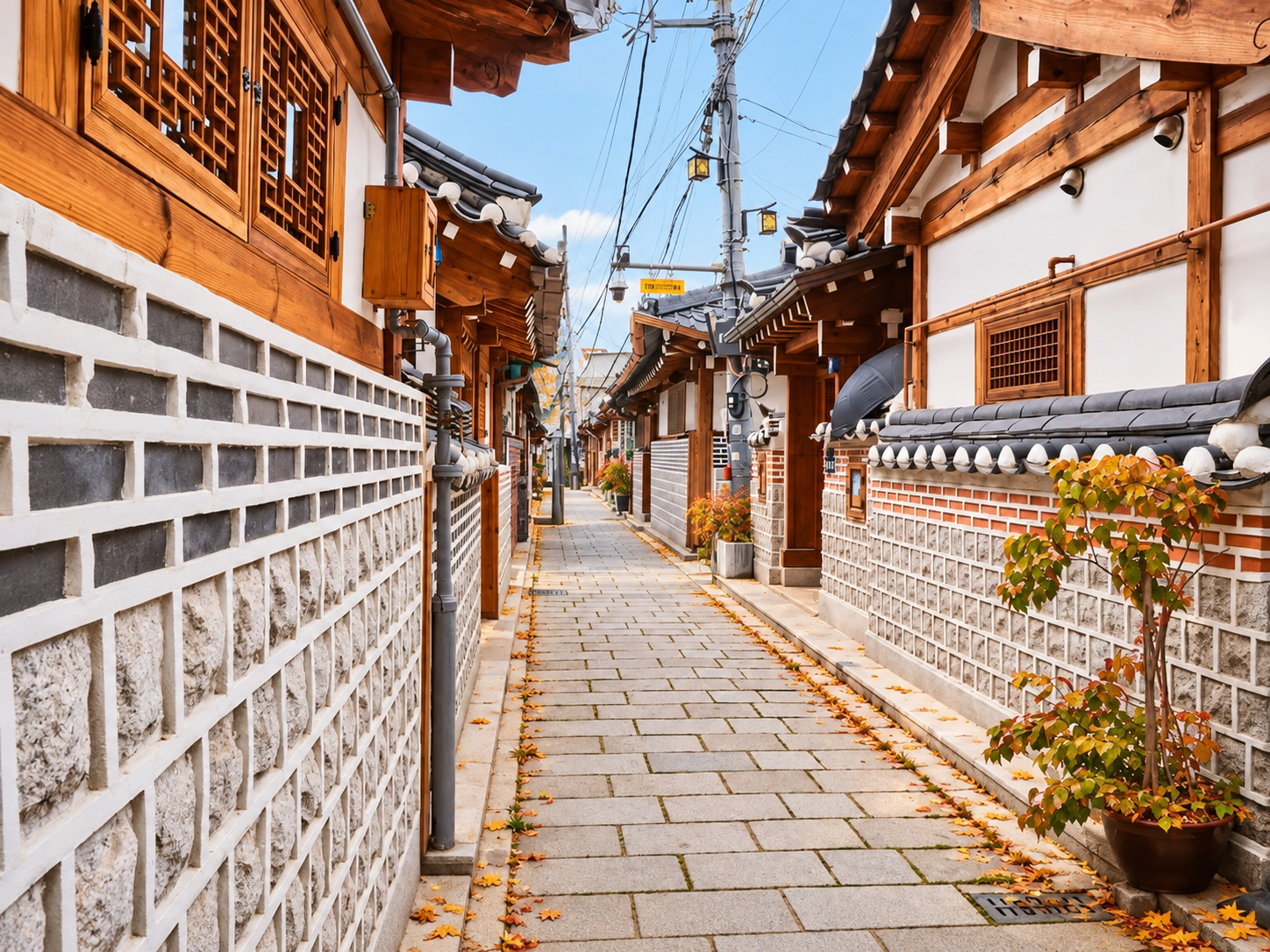
After lunch, take a short detour through the lanes around Nuha-dong and Ogin-dong before continuing toward the museum. This is the section to explore without chasing a single photo spot.
Look at how buildings meet the street. A tiled roof may sit behind a high boundary wall; a newer shopfront may open directly onto the lane. These differences shape what you can see and how public life meets private space. A café entrance does not automatically make the adjoining courtyard or neighboring house accessible.
For photographs, use the public lane and frame rooflines with the street ahead. Avoid pointing cameras into windows or stopping in doorways. Soft daylight can bring out timber and plaster textures without requiring a dramatic sunset. Keep voices low: the neighborhood remains someone’s home.
Park No-soo Art Museum: Art at the Scale of a Home
Park No-soo Art Museum offers a more intimate encounter with art than a large institutional gallery. The painter’s former home became a museum in 2013. Its two-story house and garden add another architectural layer to a walk often described only in terms of hanok.
Notice how moving between smaller rooms changes your viewing pace. Rather than treating the building as a backdrop, consider the relationship between paintings, domestic proportions and the garden outside. Follow the exhibition’s photography rules and current visitor route.
For the exhibition scheduled through December 6, 2026, Seoul’s official culture listing gives Tuesday–Sunday hours of 10:00–18:00, last admission at 17:30, and standard adult admission of ₩3,000. Recheck for exhibition changeovers and holiday closures. Allow around 30–45 minutes.
Suseongdong Valley: Where the Neighborhood Meets Inwangsan
Continue uphill toward Suseongdong Valley. Here the enclosed feeling of the lanes gives way to exposed rock, vegetation and mountain views. The landscape appears in work by the Joseon painter Jeong Seon, giving the stop a natural connection to the museum visit.
The valley also tells a story of urban change: apartment buildings once occupied the area before their removal restored the open landscape. Visit Seoul’s valley guide explains that history.
Stay on established paths and allow 20–30 minutes for the lower valley. Stream flow depends on weather, so do not expect a waterfall-like scene throughout the year. This stop is not an Inwangsan summit hike; a mountain ascent needs additional time, suitable footwear and a separate route plan.
A Relaxed Half-Day Seochon Walking Itinerary
11:00: Leave Gyeongbokgung Station and browse the lower streets. 11:30: Lunch at Tongin Market. 12:30: Explore the residential lanes and Park No-soo Art Museum. 13:30: Continue to Suseongdong Valley. 14:00 onward: Walk back downhill for coffee and return to the station.
These are planning estimates, not a timed tour. Allow roughly 10–15 minutes between the market and museum with minor detours, another 10–15 minutes toward the valley, and 25–35 minutes from the valley back to the station without a café stop. For additional palace and neighborhood options, see our Jongno travel guide.
Seochon Travel FAQ
Is Seochon the same as Bukchon?
No. Seochon lies west of Gyeongbokgung; Bukchon is farther east, between the palace areas. Both have hanok, but they are separate neighborhoods.
Can I combine Seochon with Gyeongbokgung?
Yes, but add separate palace visiting time rather than squeezing both into this half-day route. Check the palace’s operating calendar before choosing your date.
Is Seochon worth visiting without a museum stop?
Yes. The market, architecture and lower streets make an enjoyable shorter outing. Choose your café by its atmosphere and available seating, and treat the hillside section as optional.
Visitor information checked October 30, 2026. Walking distances and times are estimates; individual venues may change their schedules.
Sources and Visitor Information
Korea Tourism Organization: Seochon and Bukchon · Visit Seoul: Tongin Market · Visit Seoul: Seochon walking tour · Seoul Culture Portal: Park No-soo exhibition · Visit Seoul: Suseongdong Valley
Leave a Reply