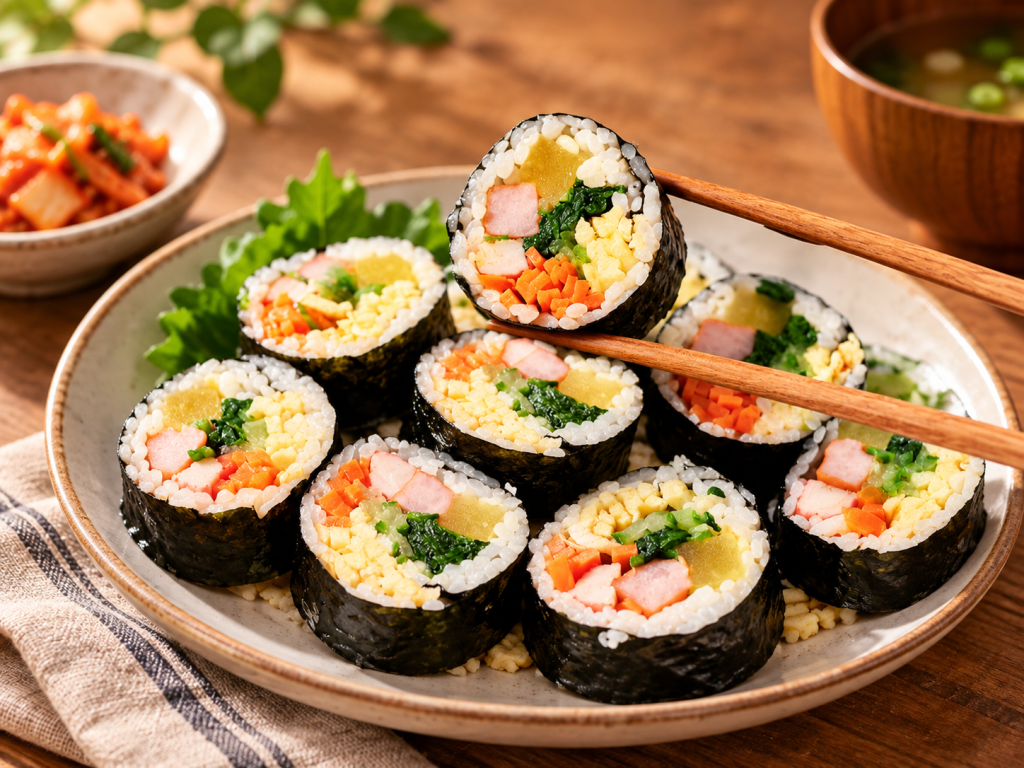
Gimbap (김밥), also spelled kimbap, is one of Korea’s most recognizable grab-and-go foods. “Gim” means dried laver and “bap” means cooked rice. An official Korean Cultural Center publication describes gimbap as rice and assorted fillings rolled inside dried laver and highlights its nostalgic connection with Korean childhood picnics and lunchboxes. Today, you can find it everywhere from convenience stores and school cafeterias to specialty restaurants and highway rest stops. Korean Culture
Although gimbap can resemble Japanese sushi at first glance, its flavor is quite different. The rice is typically seasoned with sesame oil and salt rather than sushi vinegar, while the fillings are generally cooked or seasoned. Korea Tourism Organization describes a familiar version as rice seasoned with salt and sesame oil and rolled with spinach, carrots, and pickled white radish.
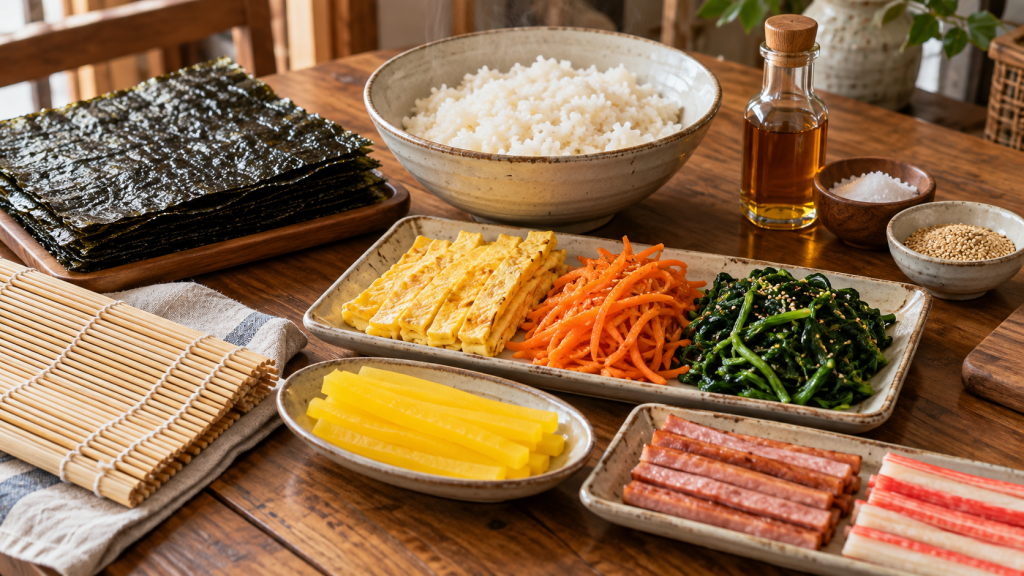
Ingredients — Makes 4 Rolls
- 4 sheets roasted gim (dried laver)
- 3 cups (about 600 g) warm cooked short-grain rice
- 1 tbsp toasted sesame oil, plus a little for brushing
- 1/2 tsp fine salt
- 2 large eggs
- 1 medium carrot (about 120 g), cut into thin matchsticks
- 5 oz (140 g) fresh spinach
- 4 long strips yellow pickled radish (danmuji)
- 4 strips cooked ham or imitation crab, optional
- 2 tsp neutral cooking oil
- 1 tsp toasted sesame seeds
How to Make Gimbap
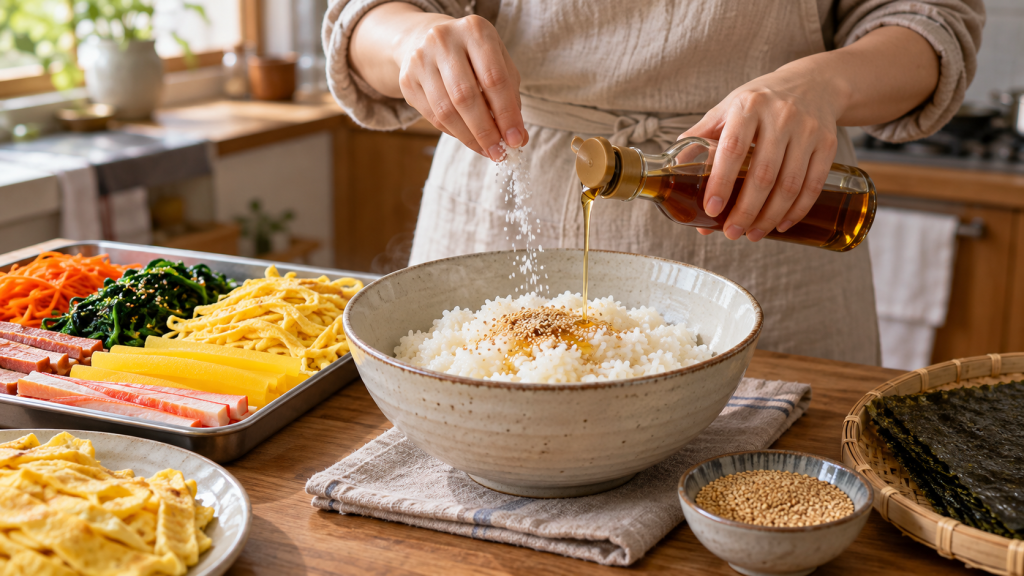
1. Season the Rice
Place the warm rice in a wide bowl. Gently fold in 1 tablespoon sesame oil and the salt without crushing the grains.
Allow the rice to cool until comfortably warm. Rice that is still steaming hot can soften the gim too quickly and make rolling difficult.
2. Prepare the Fillings
Briefly blanch the spinach, rinse it under cold water, and squeeze it thoroughly. Season lightly with salt and a few drops of sesame oil.
Sauté the carrot with a little neutral oil until just tender. Beat the eggs, cook them into a thin omelet, and cut them into long strips. If using ham or imitation crab, warm it briefly in the pan.
3. Assemble the Gimbap
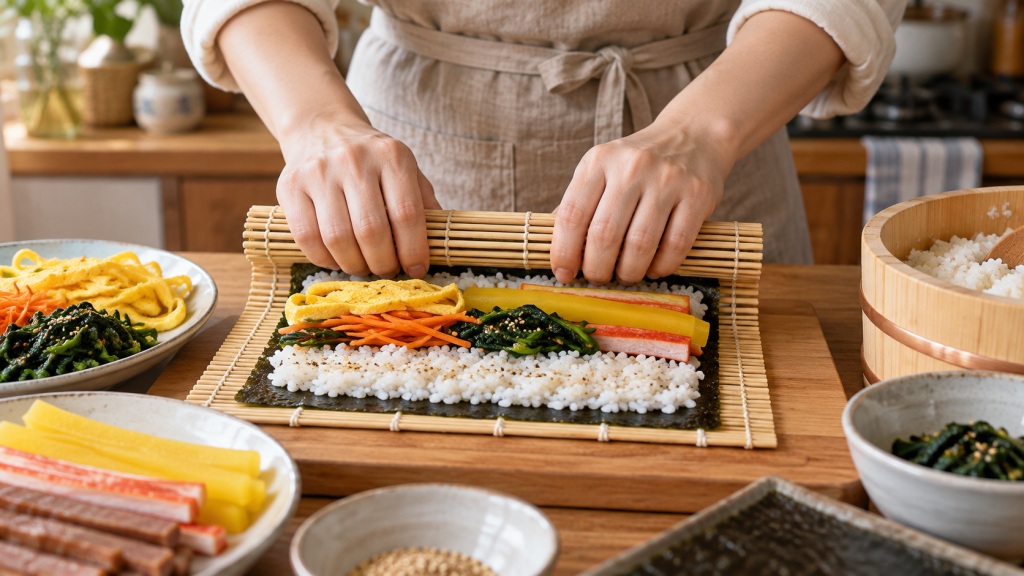
Place one sheet of gim shiny-side down on a bamboo rolling mat. Spread approximately one-quarter of the rice into a thin layer, leaving about 1 inch (2.5 cm) uncovered along the far edge.
Arrange the carrot, spinach, egg, danmuji, and optional protein horizontally across the lower third of the rice.
4. Roll Firmly
Lift the near edge of the mat over the fillings and tuck the roll tightly. Continue rolling forward while applying gentle, even pressure.
Avoid squeezing too hard, which can push the fillings out of the ends. Place the completed roll seam-side down and repeat with the remaining ingredients.
5. Slice and Serve
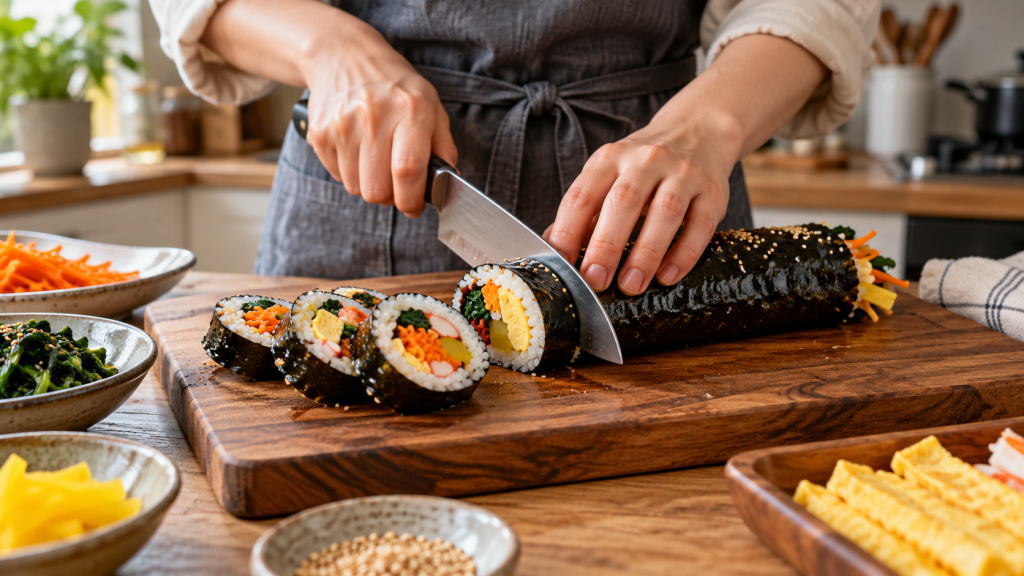
Lightly brush the outside of each roll with sesame oil and sprinkle with sesame seeds. Use a sharp knife lightly coated with sesame oil or water to cut each roll into 8–10 pieces.
Gimbap is best enjoyed soon after it is made.
Practical Substitutions
If Korean danmuji is unavailable, try another crisp, mildly sweet pickled vegetable, although the flavor will be different. Baby spinach works perfectly well in place of mature spinach.
For a vegetarian version, skip the ham and add sautéed mushrooms, seasoned tofu, or extra egg. Brown rice can also be used, but because it is generally less sticky, rolling may be more difficult.
Common Gimbap Mistakes
Overfilling is the most common problem. A thin layer of rice and modest portions of each filling produce a much cleaner roll.
Wet vegetables are another frequent culprit. Squeeze the spinach thoroughly so excess moisture does not make the gim soggy. Finally, avoid refrigerating finished gimbap for long periods before serving because cold temperatures harden cooked rice and change its texture.
Calories & Nutrition per Serving
A sufficiently reliable precise nutrition calculation for this exact recipe cannot be supported from the official sources consulted because values can vary substantially among packaged gim, danmuji, ham or imitation crab, sesame oil, and rice products.
For that reason, I have not invented numerical values for calories, carbohydrates, protein, fat, fiber, or sodium. For a publishable nutrition panel, enter the nutrition labels from the exact packaged ingredients you use together with fresh-ingredient data from USDA FoodData Central, total the recipe, and divide by four servings. USDA’s nutrition database covers calories, fat, sodium, carbohydrates, dietary fiber, protein, and other nutrients. USDA FoodData Central
Actual figures will vary with brands, portion sizes, substitutions, and cooking methods.
FAQ
Is gimbap the same as sushi?
No. They may look similar, but classic gimbap generally uses sesame-oil-seasoned rice and cooked or seasoned fillings rather than vinegar-seasoned sushi rice.
Can I make gimbap ahead of time?
You can prepare the fillings ahead, but assemble the rolls closer to serving time for the best rice and seaweed texture.
Do I need a bamboo rolling mat?
It helps create a tight, even roll, but parchment paper or a clean kitchen towel can work in a pinch.


Leave a comment