Tteokguk Recipe: Korean Rice Cake Soup for New Year
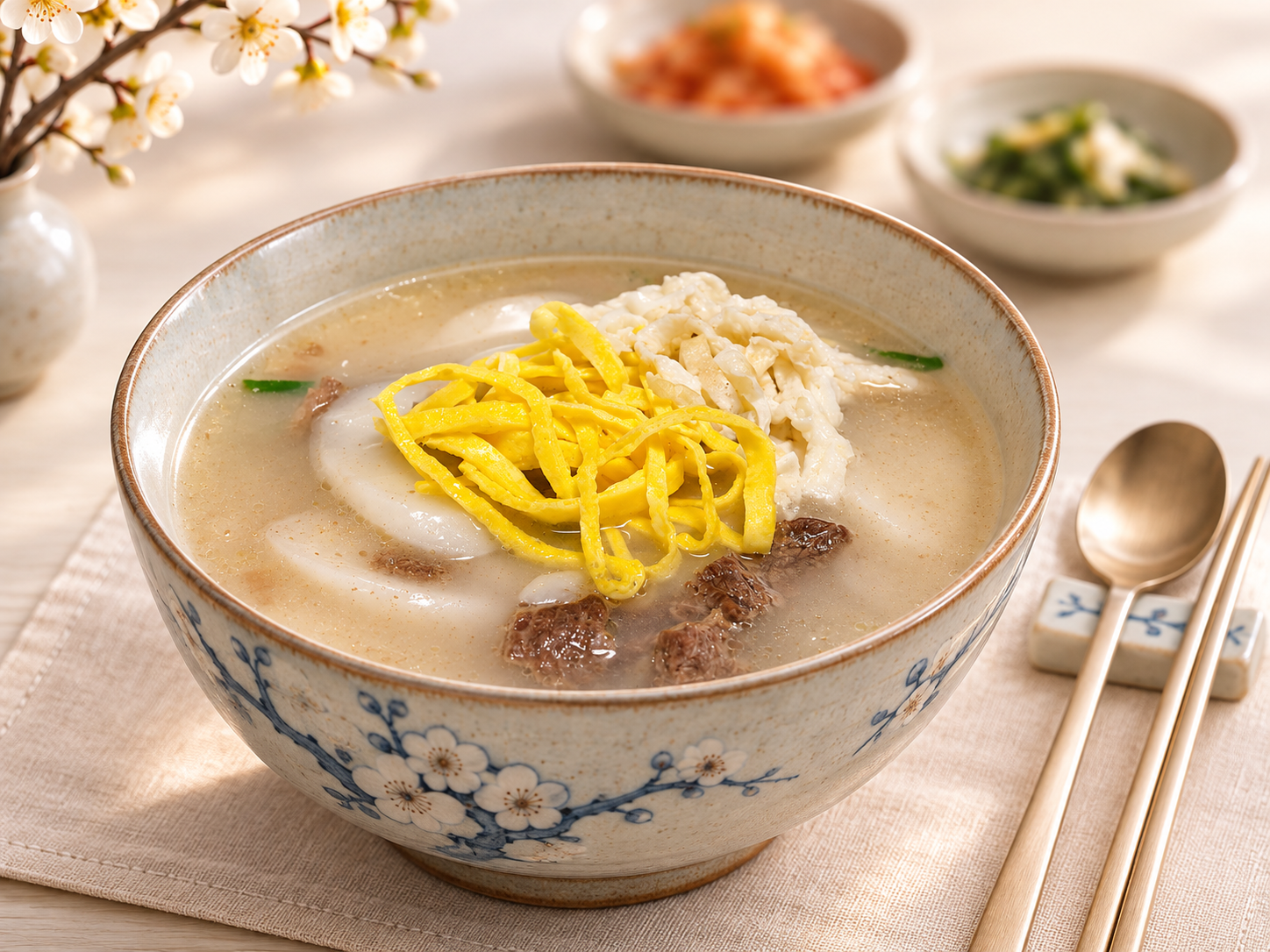
A comforting Korean rice cake soup with oval rice cakes, lean beef, a savory broth, and egg, scallion, and seaweed garnishes.
In Korea, a steaming bowl of tteokguk (떡국) is much more than comfort food. This gentle, savory soup contains tender oval slices of rice cake in broth, usually finished with egg, scallions, and toasted seaweed.
Tteokguk is traditionally served for Seollal, the Korean Lunar New Year. Its white rice cakes are associated with a fresh start, while their coin-like shape is often linked to hopes for prosperity. Although families have their own broth traditions, the Korea Tourism Organization highlights beef and seafood versions. This version starts with unsalted beef stock and adds sirloin and garlic.
Recipe at a Glance
Prep time: 15 minutes | Cook time: 20 minutes | Total time: 35 minutes | Servings: 3 bowls | Category: Soup or main course | Cuisine: Korean

Ingredients
For the soup
- 12 ounces (340 g) sliced Korean rice cakes for soup (tteokguk-tteok)
- 4 cups (950 mL) unsalted beef stock
- 4 ounces (115 g) lean beef sirloin, sliced into bite-size strips
- 1 teaspoon (5 mL) toasted sesame oil
- 2 garlic cloves, minced
- 2 teaspoons (10 mL) reduced-sodium soy sauce
- 2 scallions, thinly sliced
- 1/8 teaspoon ground black pepper
For the garnish
- 1 large egg, beaten
- 1 sheet plain roasted gim (nori), cut into thin strips
How to Make It
1. Soften the rice cakes
If using chilled rice cakes, cover them in cold water for 10 minutes while you prepare the other ingredients, then drain. If frozen solid, soak until separated and pliable; this may take longer than the listed prep time.

2. Cook a thin egg garnish
Pour the beaten egg into a lightly heated nonstick skillet and swirl into a thin layer. Cook until set, about 1–2 minutes; transfer to a board and cut into narrow strips.
3. Start the beef broth
In a medium saucepan, warm the sesame oil over medium heat. Add the beef and cook for 2–3 minutes, stirring until no longer pink on the outside. Add the garlic and stir for 30 seconds.
4. Simmer the soup
Pour in the unsalted beef stock and bring to a gentle boil. Skim off any foam, reduce to a simmer, and cook for about 5 minutes so the beef flavors the broth.

5. Cook the rice cakes
Add the drained rice cakes and reduced-sodium soy sauce. Simmer 5–7 minutes, stirring occasionally, until the slices are tender and chewy without a hard center. Stir in half the scallions and the black pepper.
6. Garnish and serve
Divide the hot soup into three bowls. Top each with egg strips, the remaining scallions, and roasted gim. Serve immediately, before the rice cakes absorb too much broth.
Substitutions, Serving Tips & Common Mistakes
Substitutions: For a meatless bowl, omit the beef and use unsalted vegetable or kelp broth instead of beef stock. For a more traditional longer-simmered beef flavor, start with raw beef and water, but allow additional cooking time beyond this shortcut recipe.
Shopping tip: Buy the flat oval sliced rice cakes marked tteokguk-tteok or “rice cake for soup.” Cylindrical tteokbokki rice cakes can work in a pinch, but their shape and cooking time differ. Check the package, especially if the rice cakes are frozen.
Common mistakes: Boiling aggressively can cloud the broth and make rice cakes overly soft. Cooking the rice cakes far in advance makes them swell as they sit. Taste before adding extra salt: commercial stock and rice-cake brands vary significantly in sodium.
Calories & Nutrition per Serving
| Nutrient | Estimated amount |
|---|---|
| Calories | 380 kcal |
| Carbohydrates | 59 g |
| Protein | 15 g |
| Fat | 8 g |
| Fiber | 1 g |
| Sodium | 520 mg |
Approximate per serving, based on three bowls and the exact 340 g rice cakes, 115 g sirloin, 950 mL unsalted stock, 5 mL sesame oil, egg, soy sauce, aromatics, and garnishes. Rice-cake estimates use an actual Korean manufacturer label (230 kcal and 50 g carbohydrates per 100 g), with USDA-style reference values for the other ingredients and a representative unsalted-stock label. Sodium in particular may change substantially by rice-cake, soy-sauce, and stock brand. All figures vary with portions, substitutions, and cooking methods.
Frequently Asked Questions
Do Koreans eat tteokguk only on New Year’s Day?
No. It is closely linked to Seollal celebrations, but many households also enjoy it as an everyday meal during colder months.
Can I use frozen rice cakes?
Yes. Soak them in cold water until separated and flexible, then simmer until the centers are fully soft. Start early because very frozen cakes may need additional soaking time.
How should leftovers be stored?
Refrigerate promptly in a covered container and eat within 1–2 days. Reheat gently with extra broth or water because the cakes continue to absorb liquid.
Leave a Reply