Simple Dakjuk Recipe: Korean Chicken and Rice Porridge
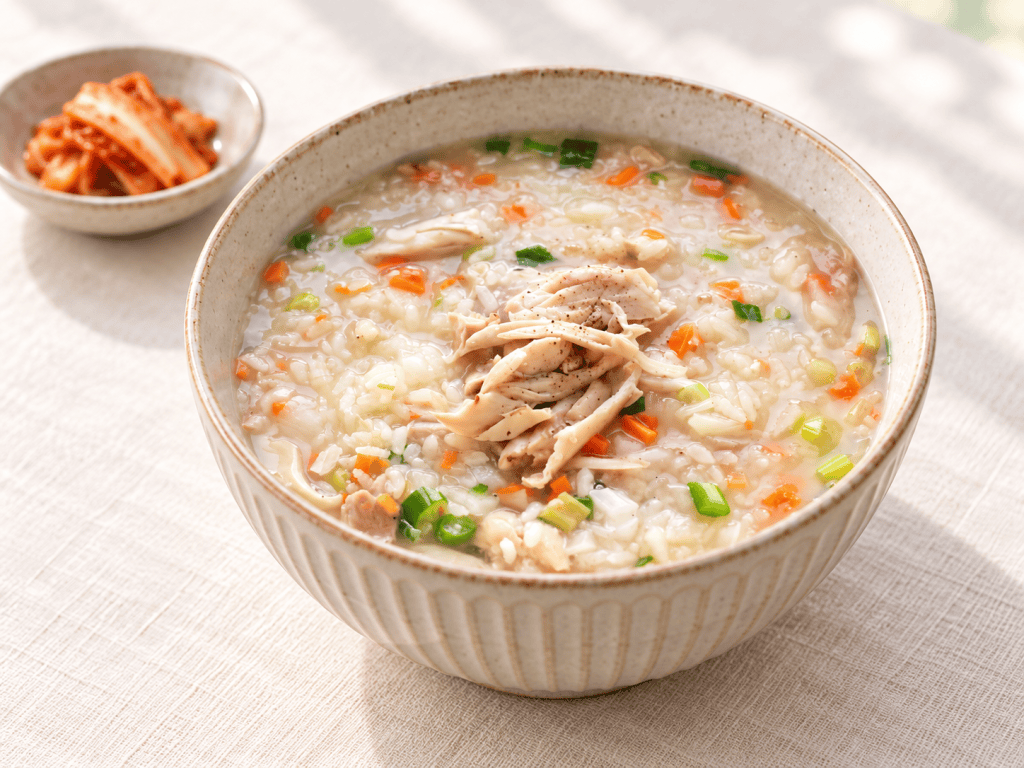
Warm, silky, and savory, dakjuk (닭죽) is Korean chicken-and-rice porridge. Rice simmers in broth until creamy, while shredded chicken and finely chopped vegetables make each spoonful satisfying. This approachable version uses cooked chicken and packaged stock, so you can enjoy Korean comfort food without preparing a whole bird.
What Is Dakjuk?
In Korean, dak means chicken and juk means porridge. The Korea Tourism Organization describes juk as a longstanding dish made by simmering grains in plenty of liquid. It can be an everyday meal or gentle food for someone feeling unwell. Dakjuk also makes good use of broth and meat left after boiled chicken dishes such as baeksuk.
Unlike chicken-and-rice soup, dakjuk is deliberately thick and spoonable. Softened rice releases starch, creating a creamy texture without dairy or flour. Toasted sesame oil gives the porridge a subtle nutty aroma.
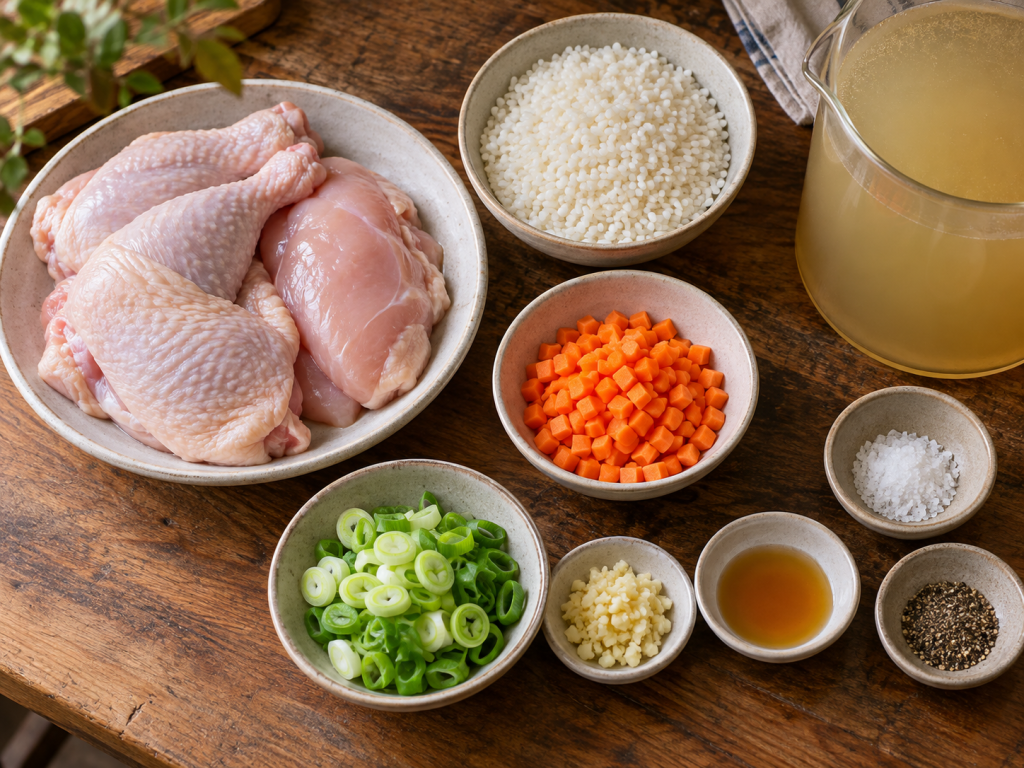
Ingredients — 4 Servings
For the Porridge
- 160 g (about ¾ cup) uncooked short-grain white rice
- 240 g (about 1½ cups) cooked, shredded skinless chicken breast
- 5 cups (1.2 L) unsalted chicken stock, plus water as needed
- 80 g (½ cup) finely diced carrot
- 80 g (½ cup) finely diced onion
- 15 g (2 tbsp) sliced scallions
- 8 g (2 cloves) minced garlic
- 2 tsp (9 g) toasted sesame oil
- ⅓ tsp (2 g) fine salt, or to taste
- Black pepper, optional
Nutrition calculations use Swanson Unsalted Chicken Stock; other brands may contain different amounts of sodium.
How to Make Dakjuk
Step 1. Rinse and Soak
Rinse the rice until the water looks less cloudy. Soak in fresh water for 30 minutes, then drain. Soaking helps the grains soften evenly. If skipped, allow additional cooking time.
Step 2. Sauté the Aromatics
Heat sesame oil in a heavy saucepan over medium heat. Stir in onion and garlic for one minute without browning. Add drained rice and stir for two minutes to coat the grains in oil.
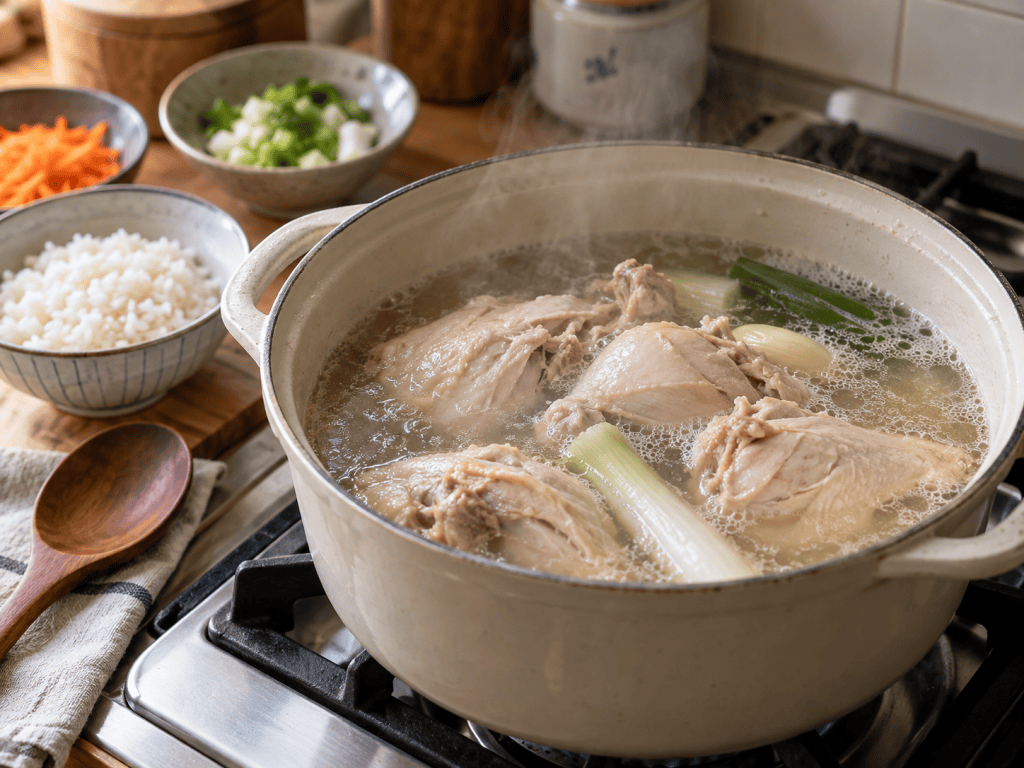
Step 3. Simmer the Rice
Pour in the stock and bring to a gentle boil. Reduce to medium-low and simmer uncovered for 25–35 minutes, stirring frequently. The grains should become extremely soft, and the porridge should slowly flow off a spoon. Add hot water if it becomes too thick.
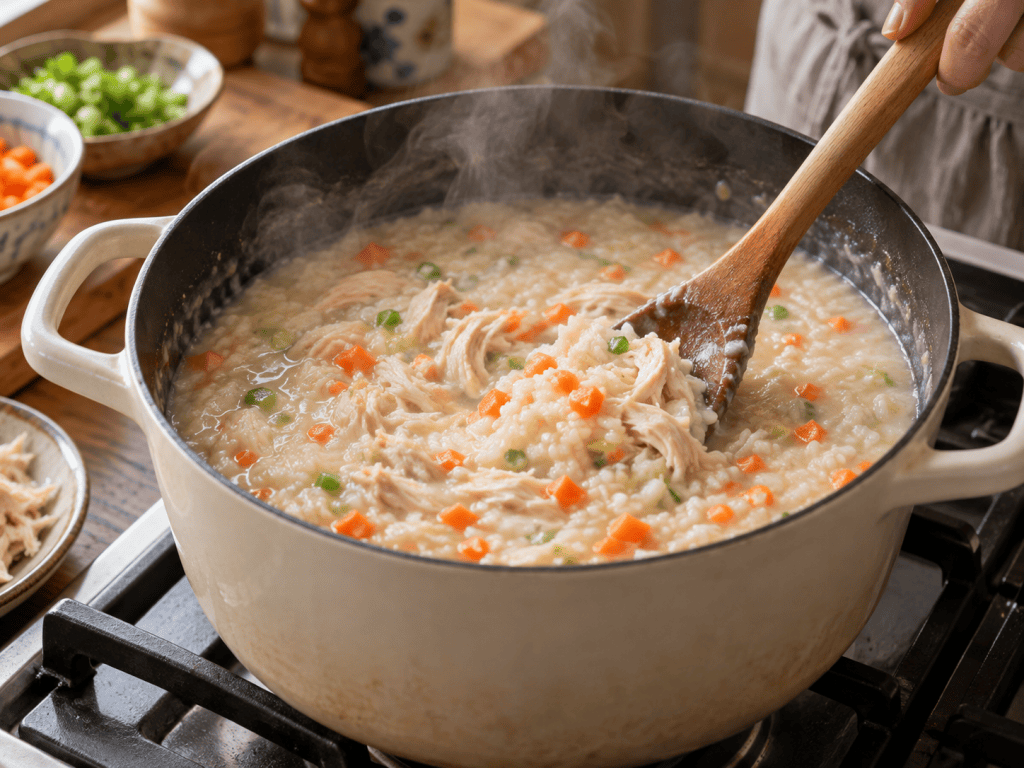
Step 4. Add Vegetables and Chicken
Stir in carrot and cook for 5–7 minutes until tender. Fold in cooked chicken and warm for another 3–5 minutes. Adding chicken late keeps it moist. Season with salt and pepper.
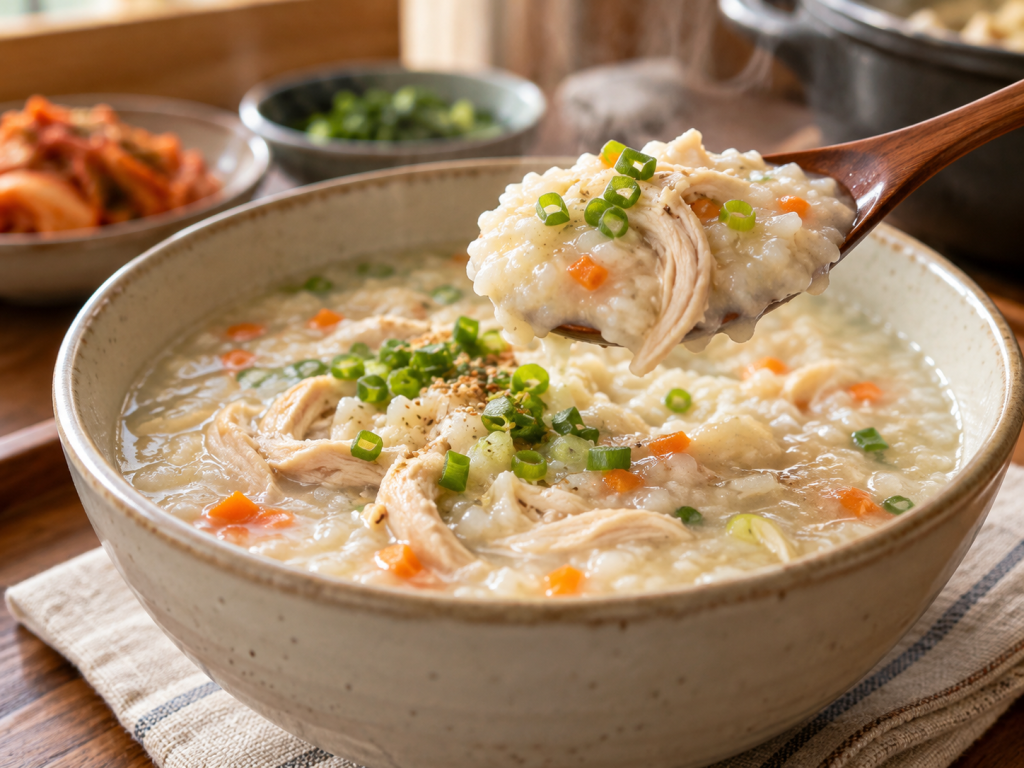
Step 5. Serve
Divide among four bowls and scatter scallions on top. Serve immediately. Korean diners often enjoy juk with kimchi, although side dishes are excluded from the nutrition calculation.
Substitutions and Serving Ideas
Leftover rotisserie chicken works if you remove skin and bones; reduce added salt if it is already seasoned. Replace some regular rice with sweet (glutinous) rice for a thicker result. Long-grain rice works, but the texture will be less cohesive. Mushrooms, zucchini, or celery can replace some carrot.
For a vegetarian variation, use vegetable stock and tofu, though that would be vegetable juk rather than dakjuk. Check broth and side-dish labels if avoiding gluten.
Common Mistakes to Avoid
High heat can scorch the starchy bottom, so stir often and keep the simmer gentle. Add liquid gradually rather than allowing the pot to dry out. Do not add chicken too early. The porridge also thickens considerably as it cools; loosen leftovers with water or broth.
Calories & Nutrition per Serving
Estimated for one-quarter of the recipe, without side dishes:
Calories: approximately 320 kcal
Carbohydrates: approximately 38 g
Protein: approximately 28 g
Fat: approximately 5 g
Fiber: approximately 1.5 g
Sodium: approximately 385 mg
These are estimates, not laboratory-tested values. The calculation uses all specified ingredient quantities, divided into four servings: USDA FoodData Central references for rice, cooked chicken, vegetables, and oil, plus Swanson Unsalted Chicken Stock’s label (100 mg sodium per cup). Actual figures vary with brands, portions, substitutions, and cooking methods, particularly broth sodium and added water.
FAQ
Can I Make Dakjuk Ahead?
Yes. Refrigerate promptly in shallow containers. Reheat until steaming hot, stirring in extra liquid to restore the creamy texture.
Is Dakjuk Spicy?
No. This version contains no chili. Serve kimchi separately for diners who prefer a spicy contrast.
Can I Use Cooked Rice?
Yes. Start with roughly three cups of cooked rice, use less stock, and simmer until the grains soften. Cooking time will be shorter.
A Comforting Korean Classic
Dakjuk turns everyday ingredients into a warming meal through slow simmering. Keep the heat gentle and serve it fresh for a taste of Korean home cooking.
More to Read
Andong Jjimdak — another comforting Korean chicken dish.
Easy Andong Jjimdak Recipe: Korean Soy-Braised Chicken
Gyeran Mari — an easy Korean egg side dish.
Easy Gyeran Jjim Recipe: Korean Steamed Eggs at Home


Leave a Reply