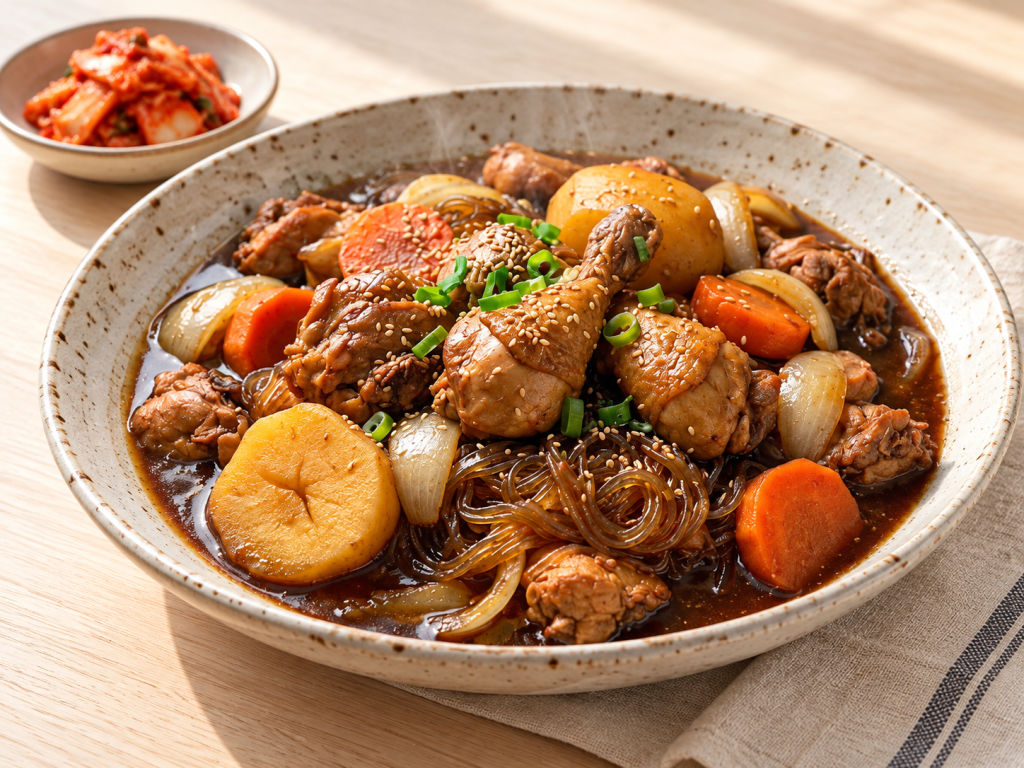
Sweet, savory, and gently spicy, Andong jjimdak (안동찜닭) is Korean soy-braised chicken cooked with potatoes, carrots, and slippery glass noodles. The glossy sauce is flavorful without requiring many Korean pantry staples. This home version serves four and works beautifully for family dinner.
What Is Andong Jjimdak?
Jjimdak refers to steamed or braised chicken. The Andong version became associated with the city’s old market, where chicken restaurants developed an affordable, shareable meal during the 1980s. Korea Tourism Organization describes its combination of soy sauce, vegetables, potatoes, and glass noodles, with chili providing some heat.
Unlike fiery red Korean chicken stews, Andong jjimdak is primarily seasoned with soy sauce. Its noodles soak up the broth, while potatoes become tender. Restaurants often serve large platters for groups, but you can recreate the dish in a covered skillet or Dutch oven.
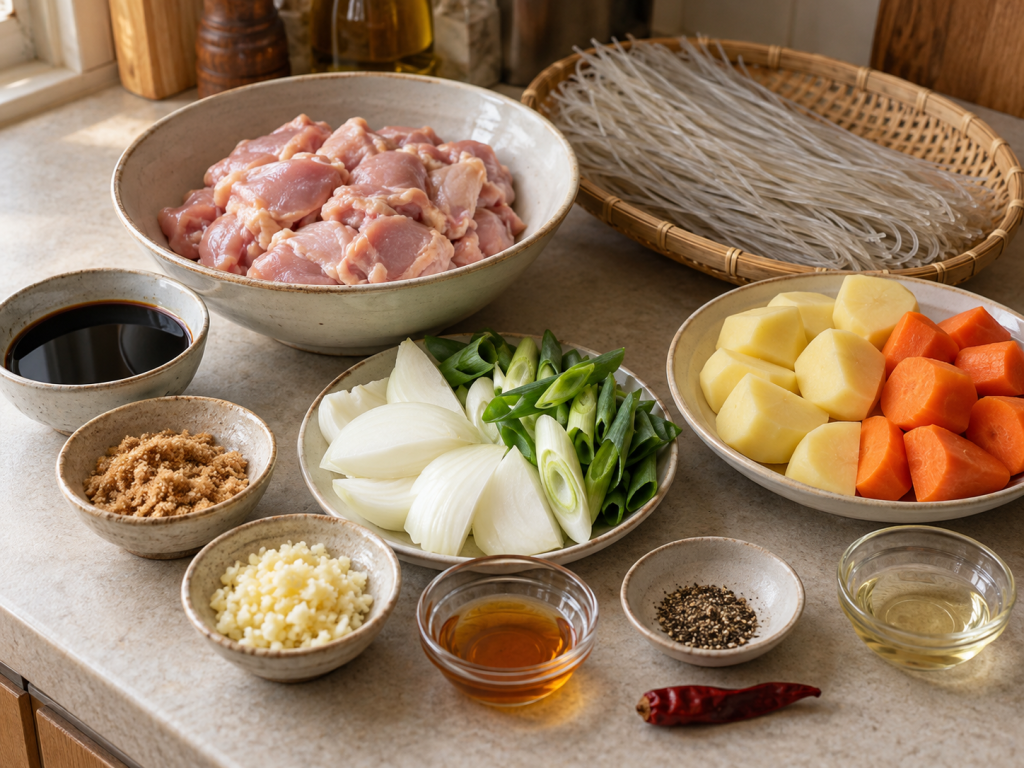
Ingredients — 4 Servings
Chicken, Vegetables, and Noodles
- 1.3 lb (600 g) boneless, skinless chicken thighs, cut into 2-inch pieces
- 3.5 oz (100 g) dry Korean sweet potato glass noodles (dangmyeon)
- 10.6 oz (300 g) potatoes, cut into 1-inch chunks
- 5.3 oz (150 g) carrots, thickly sliced
- 5.3 oz (150 g) onion, cut into wedges
- 1 oz (30 g) green onions, sliced
- 2 tsp (9 g) neutral cooking oil
Braising Sauce
- 3 tbsp (48 g) regular soy sauce
- 1 tbsp (15 g) brown sugar
- 3 garlic cloves (15 g), minced
- 2½ cups (600 ml) water
- 1 tsp (4.5 g) toasted sesame oil
- Black pepper, to taste
- Optional: 1 dried red chili
How to Make Andong Jjimdak
Step 1. Soak the Glass Noodles
Place the dry dangmyeon in warm water for 25–30 minutes, until pliable. Drain before cooking. These translucent noodles are usually made from sweet potato starch and absorb sauce differently from wheat pasta.
Step 2. Brown the Chicken
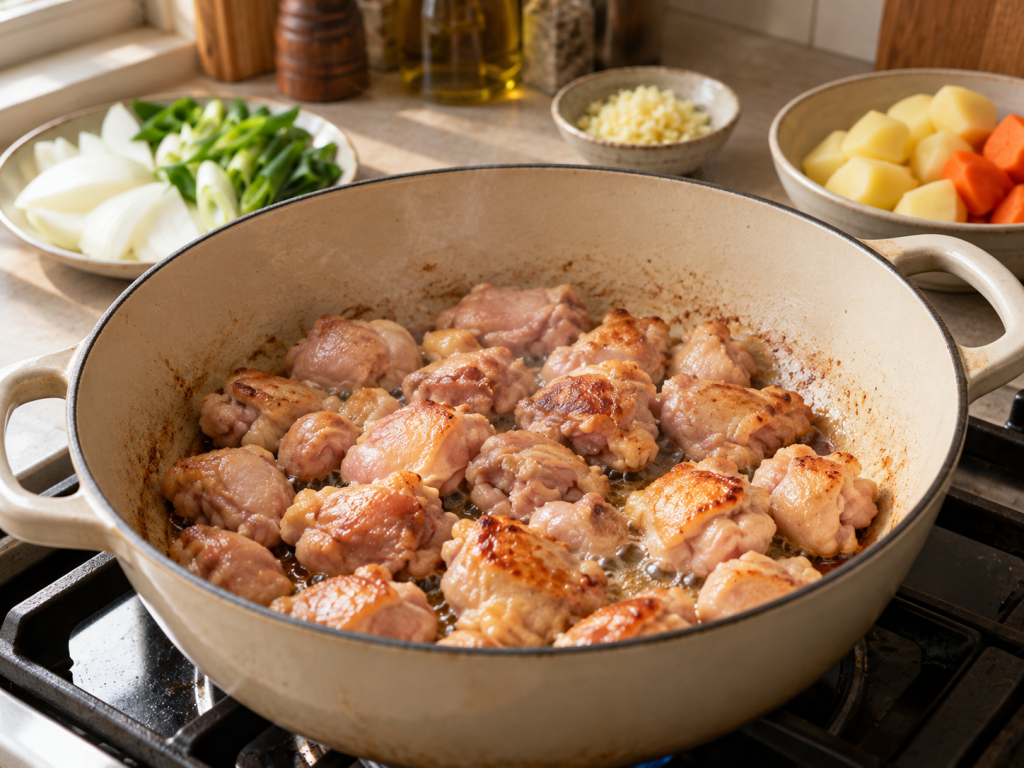
Heat the neutral oil in a deep skillet over medium-high heat. Add chicken in one layer and cook about 3 minutes per side, until lightly golden. The chicken does not need to be fully cooked yet.
Step 3. Simmer the Sauce and Vegetables
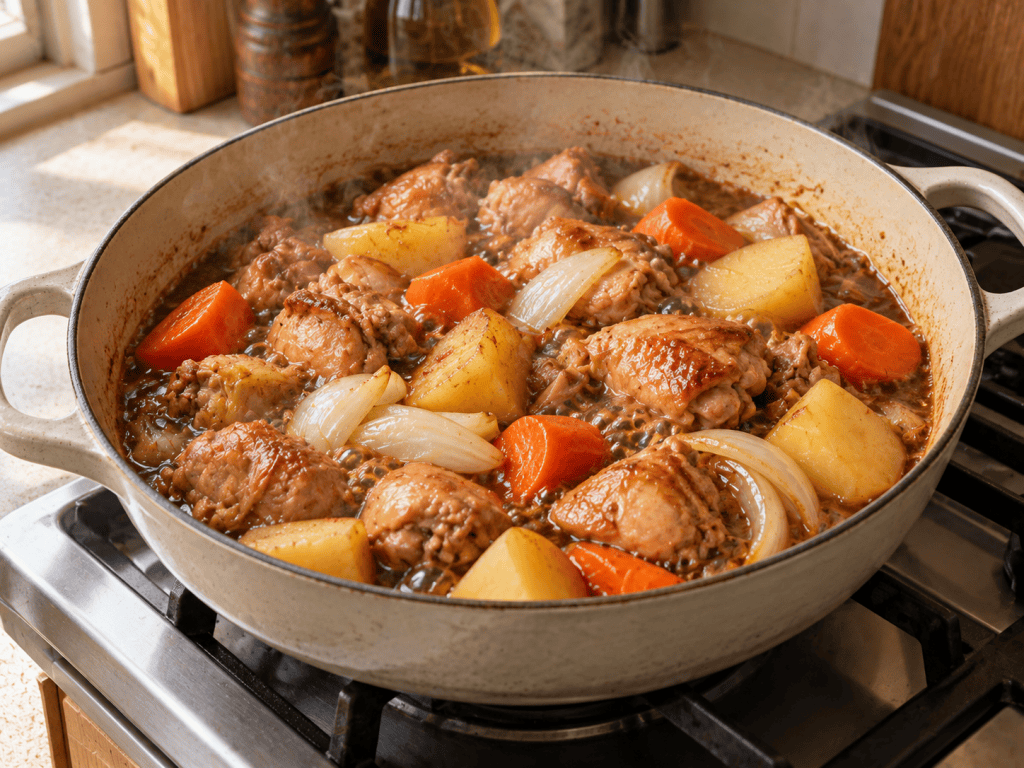
Mix soy sauce, brown sugar, garlic, water, and black pepper. Pour over chicken, then add potatoes, carrots, and onion. Bring to a boil, cover, and simmer over medium heat for 12–15 minutes, stirring occasionally, until potatoes are almost tender.
Step 4. Finish with Noodles
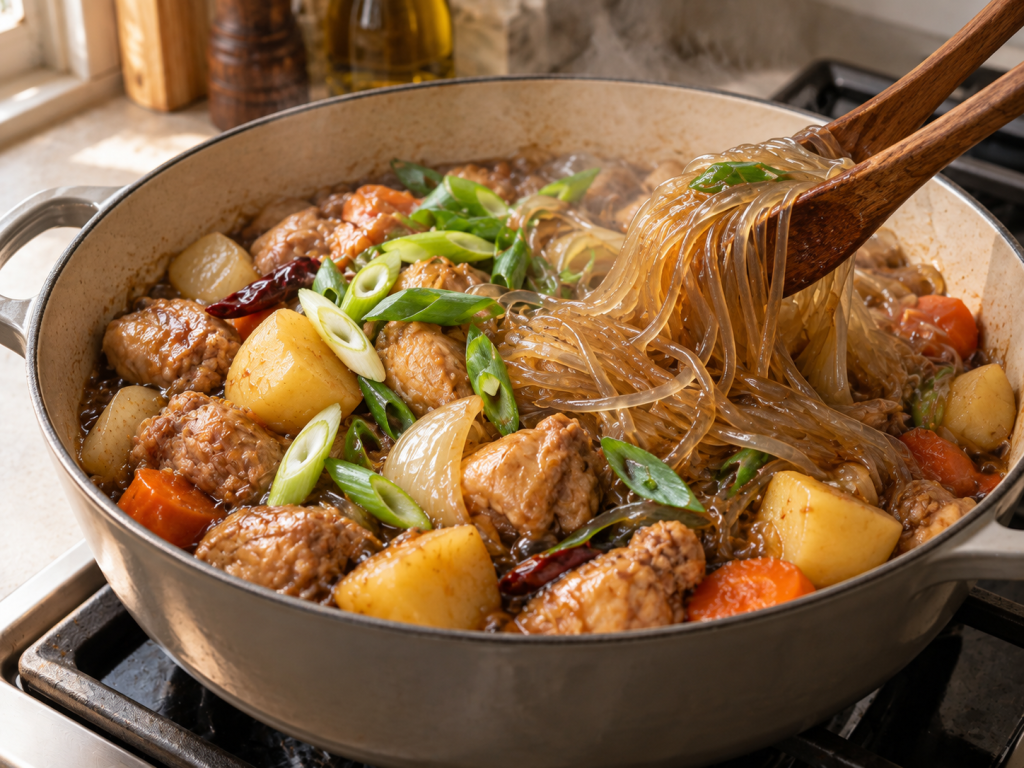
Add drained noodles and optional chili. Simmer uncovered for 5–8 minutes, stirring gently, until noodles are translucent and sauce reduces slightly. If the pan becomes dry, add water. Confirm chicken reaches 165°F (74°C) with a food thermometer.
Step 5. Serve
Turn off heat, stir in sesame oil, and scatter green onions over the top. Serve in a wide bowl with steamed rice if desired. Rice is excluded from the nutrition estimate.
Practical Substitutions
Chicken breast can replace thighs, but it cooks faster and may dry out. Yukon Gold or red potatoes hold their shape; russets may break apart. If Korean glass noodles are unavailable, other sweet potato starch noodles are the closest substitute. Rice noodles need different cooking times.
For a gluten-free version, use certified gluten-free tamari and check the noodle package. Omit chili for a mild version. Gochugaru creates a spicier variation but is not essential to this soy-based dish.
Common Mistakes to Avoid
Do not add unsoaked noodles to a nearly reduced sauce; they can absorb the remaining liquid before softening. Cut potatoes evenly. Avoid vigorous stirring after vegetables soften, and taste before adding extra soy sauce: reduction concentrates saltiness.
Calories & Nutrition per Serving
Estimated for one-quarter of the recipe, without rice or optional chili:
- Calories: approximately 435 kcal
- Carbohydrates: 48 g
- Protein: 32 g
- Fat: 16 g
- Fiber: 4 g
- Sodium: 790 mg
These are calculated estimates, not laboratory-tested nutrition facts. They use USDA FoodData Central values for raw chicken thighs, potatoes, vegetables, soy sauce, and oils, plus a labeled 100 g serving of dry sweet potato glass noodles. The calculation assumes all sauce and oil are consumed. Results vary with brands, trimming, portions, substitutions, and cooking methods.
FAQ
Is Andong Jjimdak Very Spicy?
Not necessarily. The soy-based sauce is sweet and savory; chili can be omitted.
Can I Prepare It Ahead?
Yes. Cook chicken and vegetables ahead, then add soaked noodles before serving. Refrigerate leftovers promptly and reheat thoroughly.
What Is Dangmyeon?
Dangmyeon is a chewy Korean glass noodle commonly made from sweet potato starch. It is also used in japchae.
Andong jjimdak introduces Korean braising through familiar vegetables, a simple sauce, and a satisfying shared meal.


Leave a Reply