Easy Kimchi Fried Rice Recipe (Kimchi Bokkeumbap)
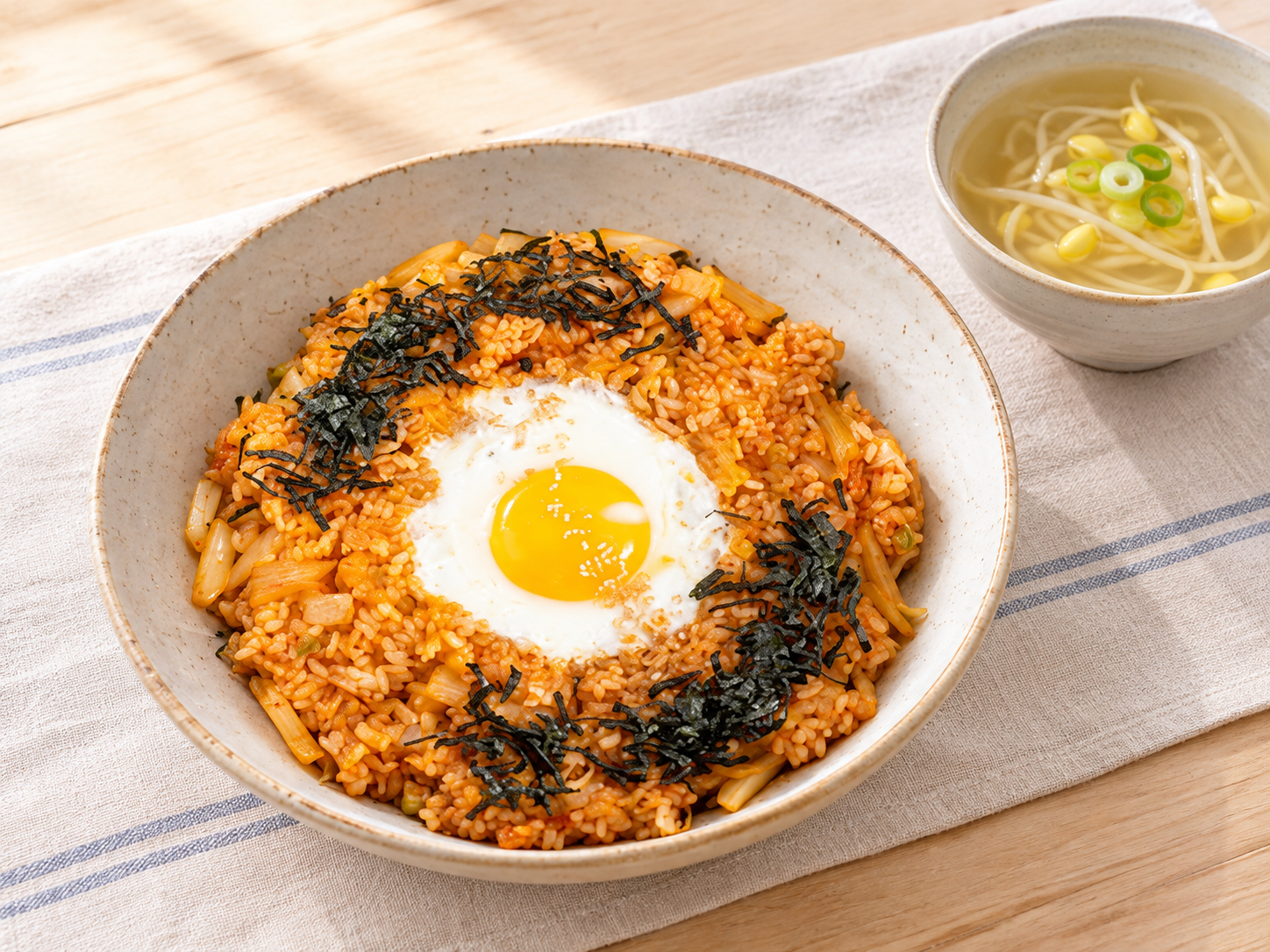
Kimchi fried rice, or kimchi bokkeumbap (김치볶음밥), transforms leftover rice and tangy fermented cabbage into a satisfying Korean meal. It is spicy, savory, slightly sour, and ready in about 20 minutes. This version adds a fried egg for protein and a finishing drizzle of sesame oil for fragrance. You need just one skillet.
What Is Kimchi Bokkeumbap?
Bokkeumbap means fried rice in Korean. Unlike plain fried rice, this everyday dish gets much of its character from well-fermented kimchi. Cooking softens the cabbage and mellows its sharp acidity, while gochujang adds gentle sweetness and chili depth. Home cooks readily adapt it.
Kimchi also reflects Korea’s broader food culture: the Korea Tourism Organization identifies fermented foods, including kimchi and gochujang, as central to Korean cuisine. Choose mature, pleasantly sour napa cabbage kimchi.

Ingredients (2 Main-Dish Servings)
- 2½ cups (400 g) cooked white rice, cooled and refrigerated promptly
- 1¼ cups (200 g) chopped napa cabbage kimchi, including any liquid clinging to it
- ¼ cup (40 g) finely diced onion
- ¼ cup (20 g) sliced scallions
- 1 tablespoon (15 g) gochujang, Korean red chili paste
- 1 tablespoon (15 g) canola oil, divided
- 1 teaspoon (5 g) toasted sesame oil
- 2 large eggs (100 g edible weight, without shells)
- 2 teaspoons (6 g) toasted sesame seeds
Timing: 5 minutes preparation, approximately 15 minutes cooking. Skip added salt initially.


How to Make Kimchi Fried Rice
Step 1. Prepare the Rice and Kimchi
Break cold rice into loose grains with a spoon. Chop the kimchi into bite-size pieces, reserving the juices coating the cabbage. Prepare the onion and scallions. Fresh rice should release steam briefly, not sit for hours.
Step 2. Cook the Aromatics and Kimchi
Heat 10 g of the canola oil in a wide skillet over medium-high heat. Add onion and cook for one minute. Stir in kimchi and cook another three minutes, until softened and fragrant. Stir in the gochujang, allowing it to coat the vegetables without scorching.

Step 3. Fry the Rice
Add the 400 g of rice. Reduce heat to medium and toss for three to four minutes, breaking clumps until evenly red-orange. Spread the rice across the skillet and let it sit undisturbed for about one minute to develop a few toasted spots. Avoid adding water unless the mixture begins to stick badly.

Step 4. Fry the Eggs
Move the rice to two bowls. Add the remaining 5 g canola oil to the skillet and fry the eggs until their whites and yolks are cooked to your preference; cook until firm. Place one egg on each bowl. Drizzle the sesame oil evenly over both servings and finish with scallions and sesame seeds.

Substitutions and Serving Ideas
Brown rice works, although its texture is chewier. For less heat, reduce the gochujang; for more heat, add a pinch of gochugaru. To make a vegan version, omit the eggs and use kimchi made without fish sauce or salted shrimp. Check gochujang labels for wheat or other allergens.
For extra vegetables, add mushrooms or diced carrots while cooking the onion. Bacon, tuna, or tofu also work but change nutrition. Serve with cucumber salad or a mild soup to balance the rich flavors.
Common Mistakes to Avoid
Fresh, mild kimchi can taste flat; mature kimchi gives the rice its characteristic tang. Too much liquid makes the grains soggy, and excessive gochujang can make the dish overly salty. Use a large skillet so moisture evaporates quickly. Add sesame oil only at the end to preserve its aroma.
Calories & Nutrition per Serving
For one-half of the complete recipe, including one egg, all measured oils, and toppings:
| Nutrient | Estimated amount |
|---|---|
| Calories | About 480 kcal |
| Carbohydrates | 66 g |
| Protein | 14 g |
| Fat | 17 g |
| Fiber | 3.4 g |
| Sodium | About 770 mg |
These rounded estimates were calculated from the exact gram weights above, divided by two, using USDA FoodData Central ingredient values and Sempio gochujang label data. All 20 g of oil and all ingredients are assumed consumed. Actual values vary with kimchi and gochujang brands, portions, substitutions, moisture loss, and cooking methods; sodium varies especially widely.
FAQ
Can I Use Freshly Cooked Rice?
Yes. Let it release steam briefly before frying, or use properly refrigerated rice. Separate the grains first to avoid gummy clumps.
Is Kimchi Fried Rice Vegetarian?
Not automatically. Many kimchi brands contain anchovy fish sauce or salted shrimp. Choose explicitly vegan kimchi, and omit the egg for a vegan meal.
How Should I Store Leftovers?
Cool promptly in shallow containers and refrigerate within two hours, or one hour in very hot weather. Reheat thoroughly to 165°F (74°C). Discard rice left unrefrigerated for hours.
Kimchi bokkeumbap turns leftover rice into a flavorful Korean comfort meal.
More to Read
- Dubu Jorim (Korean Braised Tofu):
Easy Dubu Jorim Recipe: Korean Braised Tofu - Gyeran Mari (Korean Rolled Omelet):
Easy Gyeran Mari Recipe: Korean Rolled Omelet with Vegetables
Leave a Reply