Korean Cucumber Salad (Oi Muchim): Easy 15-Minute Recipe
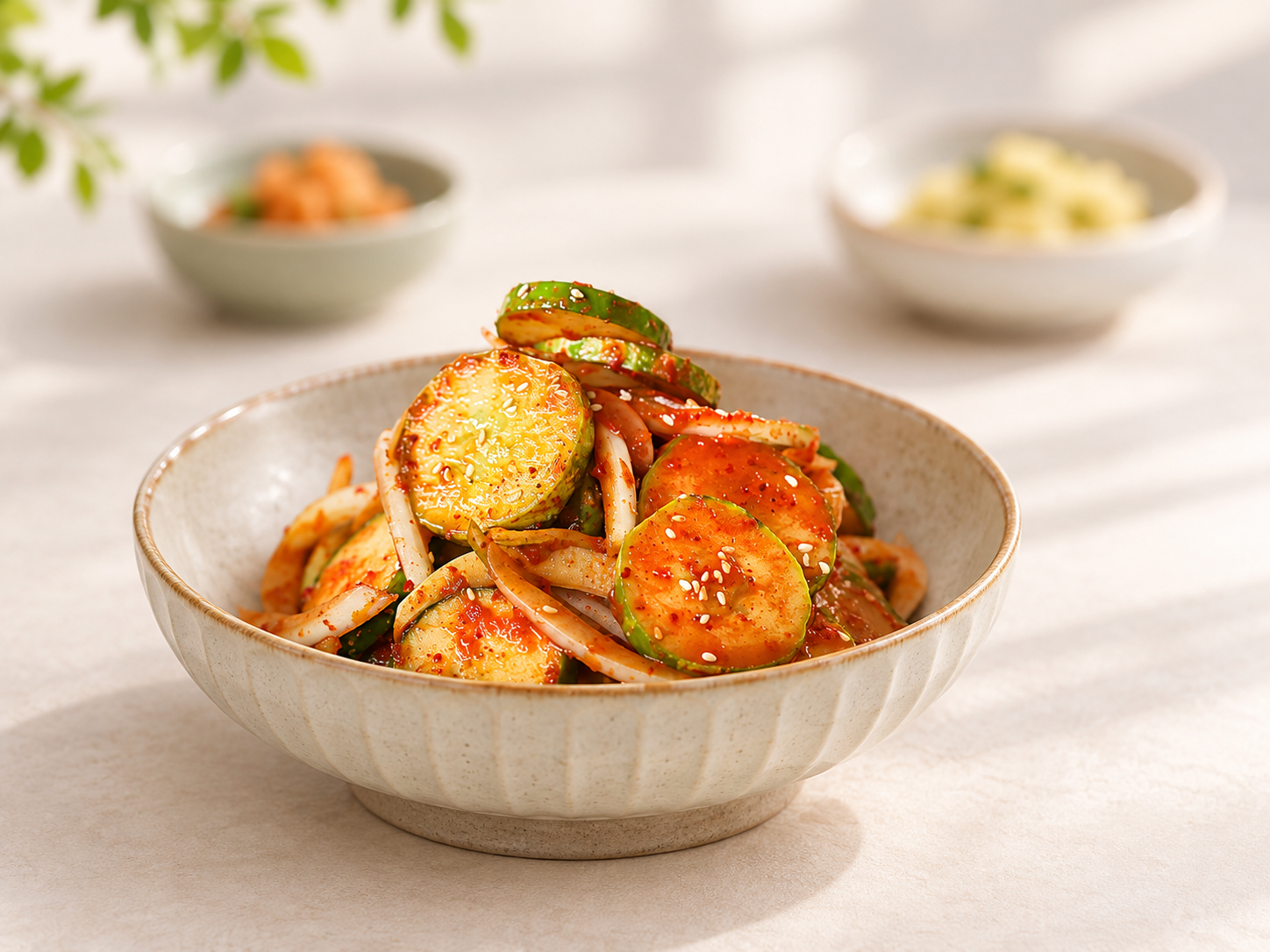
Looking for a fresh Korean side dish that takes less time than cooking rice? Oi muchim (오이무침), or Korean cucumber salad, delivers crunchy cucumber, fragrant sesame, garlic, and a gentle chili kick in about 15 minutes. The secret is using crisp cucumbers and dressing them shortly before serving, so every bite stays lively rather than soggy. This version makes four small side-dish portions.
What Is Oi Muchim?
Oi means cucumber, while muchim describes ingredients tossed with seasonings. Oi muchim belongs to the family of banchan, the small shared dishes commonly served beside rice and soup in Korean meals. Unlike fermented cucumber kimchi, this is a quick, freshly dressed salad. Korean home cooks make it in different ways: some briefly salt the cucumbers first, while others mix everything immediately.
English, Persian, or Kirby cucumbers all work, making it especially practical for cooks shopping outside Korea.
Recipe Summary
| Detail | Information |
|---|---|
| Prep time | 15 minutes |
| Cook time | 0 minutes |
| Total time | 15 minutes |
| Yield | 4 side-dish servings |
| Category | Side dish |
| Cuisine | Korean |

Ingredients for 4 Servings
- 14 oz (400 g) English or Persian cucumbers, unpeeled
- ½ small onion (2 oz / 60 g), very thinly sliced
- 2 scallions (¾ oz / 20 g), finely chopped
- 2 small garlic cloves (6 g), minced
- 1 tablespoon (15 ml) regular soy sauce
- 1 tablespoon (15 ml) unseasoned rice vinegar
- 2 teaspoons (4 g) Korean red pepper flakes (gochugaru)
- 1 teaspoon (4 g) granulated sugar
- 1 teaspoon (4.5 g) toasted sesame oil
- 2 teaspoons (6 g) toasted sesame seeds
Time: 15 minutes. Yield: 4 side-dish servings. Use unseasoned vinegar, not sweetened sushi vinegar, to keep the seasoning predictable.
How to Make Korean Cucumber Salad

Step 1: Prepare the Vegetables
Wash and dry the cucumbers. Slice them diagonally into thin half-moons, about ⅛–¼ inch (3–6 mm) thick. Thin slices absorb dressing quickly; thicker slices stay crunchier. Slice the onion thinly and chop the scallions.
Step 2: Make the Dressing
In a medium mixing bowl, stir together soy sauce, rice vinegar, gochugaru, sugar, minced garlic, and sesame oil until the sugar dissolves. Start with the stated chili quantity, then adjust after tasting. The dressing should taste savory, tangy, slightly sweet, and pleasantly spicy—not aggressively salty.

Step 3: Toss Just Before Serving
Add cucumber, onion, and scallions to the bowl. Toss gently with clean hands or two spoons until the slices are evenly coated. Sprinkle in sesame seeds and toss once more. Serve immediately, ideally alongside freshly cooked rice or a Korean main dish. If liquid collects at the bottom, lift the salad out with a slotted spoon rather than pouring every drop onto the plate.
Substitutions and Flavor Adjustments
Persian or Kirby cucumbers provide a particularly firm bite. For a milder salad, reduce gochugaru to 1 teaspoon or leave it out; the result will be less traditional in color but still refreshing. Gluten-free tamari can replace soy sauce, although sodium content may differ. Apple cider vinegar works in a pinch, but start with slightly less because its flavor is stronger.
Common Mistakes to Avoid
Do not dress the salad hours in advance: salt and vinegar draw moisture from cucumber, diluting the sauce. Avoid cutting uneven pieces, which makes the texture inconsistent. Also, never substitute gochujang paste in equal quantity for gochugaru flakes; the paste changes the salad’s sweetness and thickness. Taste before adding any extra salt because regular soy sauce already contributes substantial sodium.
Calories & Nutrition per Serving
For one-quarter of this exact recipe, including all dressing and sesame seeds, the estimated values are:
| Nutrient | Estimated per serving |
|---|---|
| Calories | 53 kcal |
| Carbohydrates | 8.1 g |
| Protein | 1.9 g |
| Fat | 2.2 g |
| Fiber | 1.4 g |
| Sodium | 245 mg |
These are calculated estimates, not laboratory measurements. Calculations use USDA FoodData Central ingredient data, Kikkoman regular soy sauce and rice vinegar labels, and USDA dried red-pepper values as a proxy for gochugaru. All dressing is assumed eaten. Actual nutrition varies with brands, cucumber size, portion sizes, substitutions, and preparation; draining dressing lowers the amount consumed.
Frequently Asked Questions
Is Oi Muchim the Same as Cucumber Kimchi?
No. Oi muchim is seasoned and usually eaten fresh. Cucumber kimchi recipes may use salting, stuffing, or fermentation and have a different texture and flavor.
Can I Make It Ahead?
Slice the vegetables and mix the dressing separately, then refrigerate both. Combine shortly before eating. Refrigerate leftovers promptly and use within one to two days for best texture.
Is This Recipe Vegan?
Yes, if your soy sauce and other packaged seasonings contain no animal-derived ingredients. It also pairs well with grilled tofu or steamed rice for a simple plant-based meal.
Once you master oi muchim, you have a quick, colorful banchan that brings freshness to almost any Korean-inspired dinner.
Leave a Reply