A bowl of soup can tell a K-drama viewer that someone remembered a birthday before a cake appears. The detail is easy to miss if you expect celebrations to begin with candles, presents, and a group photograph.
Korean birthday culture offers a useful way to read those quieter moments. Food can connect an occasion to family history, while the way someone prepares, delivers, or receives it can reveal a relationship. The cultural reference matters, but the person and the particular story matter too.
Why seaweed soup belongs in the birthday conversation
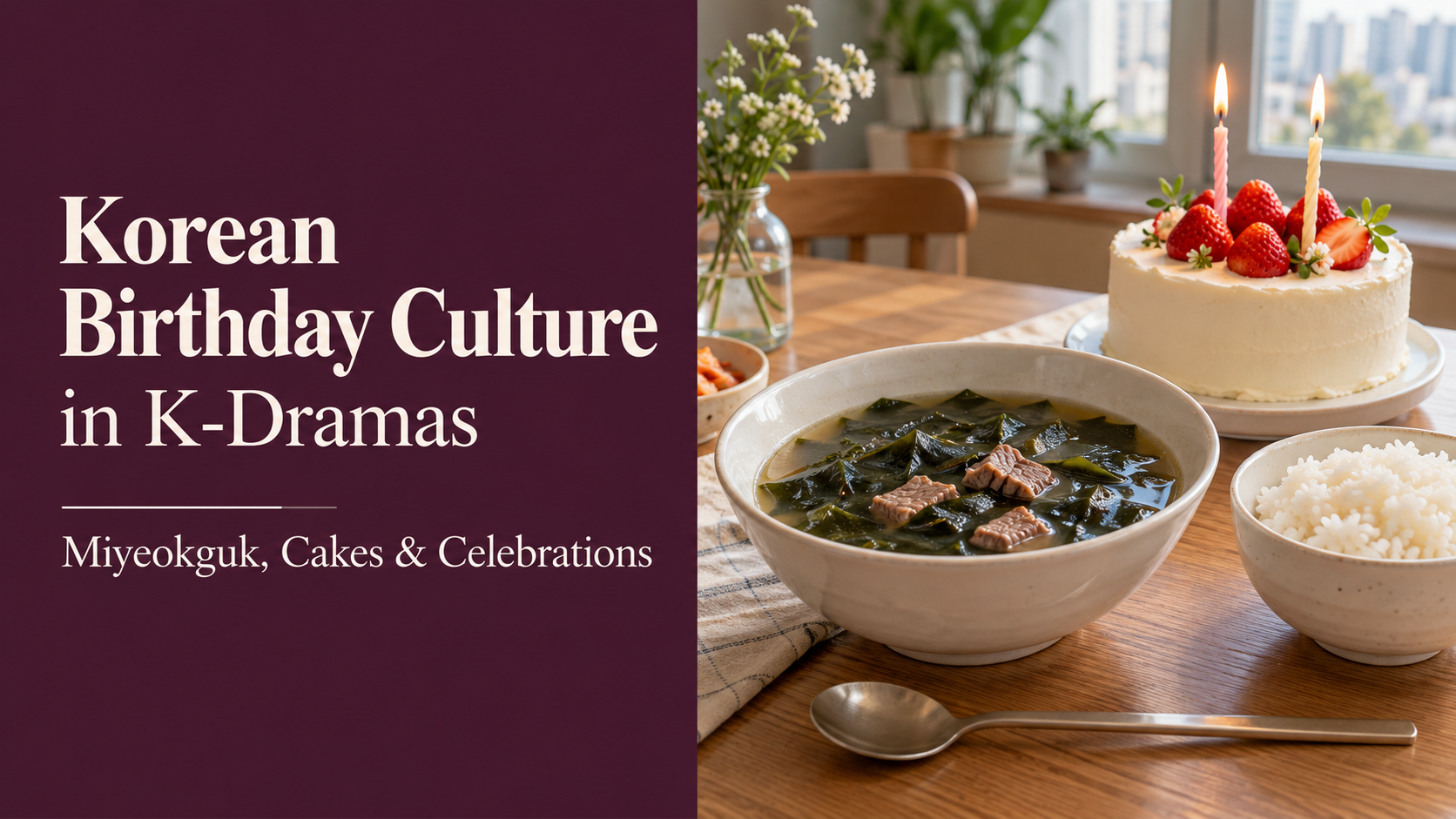
Miyeokguk (미역국) is seaweed soup. The Korea Tourism Organization’s food introduction identifies its birthday association and describes a beef-broth version, alongside coastal variations using seafood.
A separate KTO cultural feature connects the custom to the tradition of eating the soup after childbirth and remembering mothers on birthdays. That gives the dish a reference beyond simply being a favorite breakfast.
This is cultural context, not a demand that every person follow the same routine. Nor does a bowl’s appearance reveal its complete recipe. If you want to try miyeokguk, ask about the broth and other ingredients rather than assuming a seaweed-based dish is vegetarian.

Example of birthday meal with beef miyeokguk meal; ingredients and household recipes vary.
Read the gesture alongside the food
KTO’s feature names Our Blues and Guardian: The Lonely and Great God among dramas featuring miyeokguk. For a spoiler-light starting point, Netflix’s official description of Our Blues presents interconnected lives on Jeju Island. The cultural reference can help you notice an ordinary meal without needing an episode’s outcome explained.
When a birthday scene arrives, ask who remembered the date. Who made time to prepare something? Does the recipient welcome the gesture, hesitate, or change the subject? A reaction can carry as much meaning as the food.
Do not assign one automatic emotion to every bowl. A solitary meal is not proof that someone feels lonely, and a large gathering is not proof of closeness. Dialogue, editing, and the wider relationship determine what the moment means.
The useful viewing habit is to recognize the custom, then stay curious about the individual. Age, region, household routines, personal history, and preferences can shape how a birthday is marked.
A cake can mark a different kind of moment
Soup and cake do not need to compete for the role of “authentic” celebration. One can belong to a meal; the other can create a shared moment later in the day.
KBS WORLD’s birthday-party learning dialogue includes a gift, a meal, candles, and singing. It also models 생일을 축하해요, meaning “Happy birthday.” This is scripted language-learning material, not a documentary record or a drama episode.
On screen, notice how the gathering is arranged. A carefully planned surprise may tell you about the organizer, but the recipient’s response deserves attention too. The camera can turn a small gesture into a major emotional moment without establishing how everyone celebrates in daily life.
Celebrate the person rather than copying the scene
If you are joining a birthday gathering, use the cultural background as a starting point. The following are practical suggestions, not a fixed national ceremony:
- Ask whether the person wants a gathering, a quiet meal, or something else.
- Coordinate with the organizer before bringing a cake or arranging a surprise.
- Check food preferences and ingredients before choosing soup or dessert.
- Choose a gift that suits the relationship instead of trying to match a television budget.
- Ask before photographing people or posting their celebration online.
For a cafe or restaurant celebration, ask the venue about outside cakes, storage, and serving arrangements before buying anything. If several friends are planning separately, agree on who is bringing what. Those small checks can make the occasion easier for both the guest of honor and the people hosting it.
Offering to cook can be thoughtful when it fits the person’s plans. So can a simple greeting or remembering a preference. Preparing miyeokguk does not need to become a test of cultural knowledge or a task assigned to one family member.
A birthday scene becomes richer when you recognize both the familiar reference and the choices around it. Look beyond the candlelit reveal: sometimes the meaningful action is someone making time, remembering a detail, or quietly setting down a bowl.
Viewing note: Streaming catalogs and subtitle options vary by country and account. Check your local service for the titles mentioned.
FAQ
Why is miyeokguk associated with birthdays?
KTO connects the custom with the tradition of eating the soup after childbirth and remembering mothers. It is cultural context for the occasion, not a requirement that every household follow the same routine.
Is miyeokguk vegetarian?
Not necessarily. KTO describes beef-broth and seafood versions. Ask about the actual ingredients when ordering or cooking; the visible seaweed alone does not establish the broth.
Can a birthday include both soup and cake?
They can mark different moments, such as a meal and a shared celebration. There is no need to choose one as the only authentic option or assume every person wants both.
How can I wish someone a happy birthday in Korean?
KBS’s learning dialogue models 생일을 축하해요, meaning “Happy birthday.” Follow the lesson’s audio and context rather than assuming one expression suits every relationship or occasion.
Where can I watch the dramas mentioned?
Check your local streaming catalog and preferred subtitle options. Netflix has an official Our Blues title page, but its presence does not establish availability in every country or account.
More to Read
- Korean bathhouse culture (Jjimjilbang) :
Korean Bathhouse Culture in K-Dramas: Jjimjilbang Explained - Korean Terms You Would Like to Know :
Korean Drama Terms You Should Know: Listen for the Relationship
Sources
Checked October 21, 2026 (Asia/Seoul). Sources below were actually consulted.
- Korea Tourism Organization — Do Koreans Eat Based on the Weather and Their Feelings? The Story Behind K-Food in K-Content: August 27, 2025. Supports the birthday association, childbirth-related cultural explanation, and identification of Our Blues and Guardian as dramas featuring miyeokguk. Health claims and past event listings are not repeated.
- Korea Tourism Organization — Seaweed Soup / Miyeokguk: October 19, 2023. Supports the beef-broth description and seafood variations. Used to explain why ingredients should be checked, not as a complete recipe.
- KBS WORLD — Let’s Learn Korean, birthday-party dialogue: official scripted lesson with a greeting, gift, meal, candles and singing. Publication date is not supplied; the site footer shows a 2012 copyright. It is identified as language-learning material, not an observed party or drama episode.
- Netflix — Our Blues: official Jeju-set ensemble premise. No later plot outcome or exact birthday-episode description is inferred.
- Netflix Help — Countries and regions and subtitle/audio availability: support the country/account viewing qualification.
Leave a Reply